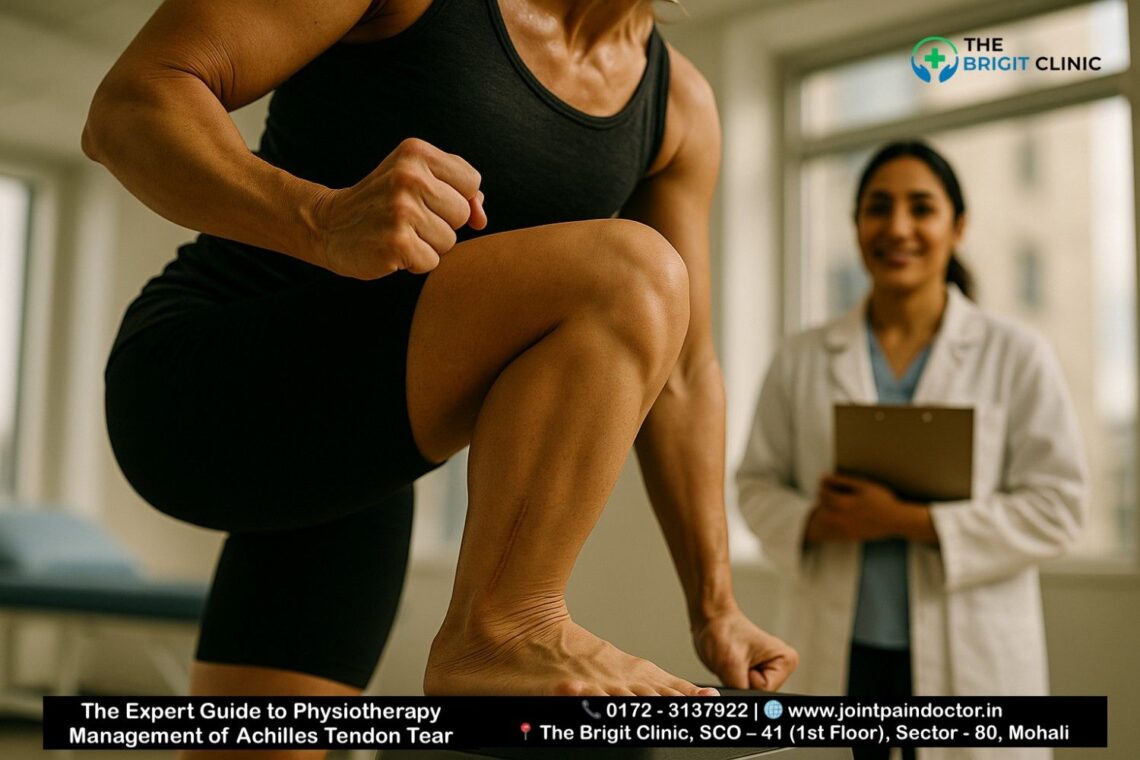
The Expert Guide to Physiotherapy Management of Achilles Tendon Tear

Physiotherapy management of Achilles tendon tear is crucial when dealing with the most commonly ruptured tendon in the human body. For patients seeking expert Physiotherapy for Achilles Tear in Mohali, understanding this structured rehabilitation process is the first step toward a successful recovery. This debilitating injury affects 1 in 15,000 people, increasing to 1 in 8,000 in competitive athletes, and represents 6-18% of all sporting injuries. If you’re among the “middle-aged weekend warriors” who account for approximately 70% of these cases, understanding proper rehabilitation is essential for your recovery.

The journey to full healing after an Achilles rupture is undoubtedly challenging. Your tendon requires at least two months to heal, with several additional months needed to regain strength and flexibility. Moreover, the return to sport typically takes between 4-12 months, depending on your activity level and rehabilitation progress. Without proper physiotherapy for Achilles tendon tears, you face a 12.1% probability of rerupture with nonoperative management, highlighting why structured Achilles tendon tear recovery exercises and clear rehabilitation goals after tendon rupture are critical.

Throughout this comprehensive guide, you’ll discover evidence-based protocols for managing an Achilles tendon tear effectively. From early intervention strategies to advanced conditioning for return to sport, we’ll walk you through each phase of rehabilitation with expert guidance. Whether you’re recovering from surgery or managing a conservative treatment approach, this 2025 protocol will equip you with the knowledge to navigate your recovery successfully.

Ready to start your recovery with Mohali's Top Physiotherapy Clinic? Schedule a consultation with our Achilles tendon specialist today.

Setting the Foundation: Early Goals of Physiotherapy

The initial phase following an Achilles tendon tear sets the critical foundation for successful rehabilitation. During these early weeks, your physiotherapy management focuses on three crucial goals that protect your healing tendon while preventing complications that could derail your recovery journey.

Protecting the repair site

Protection of the repair site is paramount during the first 2-3 weeks after an Achilles tendon tear. This phase allows initial tendon healing to begin while minimising the risk of complications. Initially, your foot will be immobilised in a position that promotes optimal healing of the tendon.

For surgical repairs, you’ll typically wear a splint that cannot be removed, as it serves to protect the newly repaired tendon. For non-surgical management, your foot is placed in a rigid cast or functional brace with your ankle positioned in full equinus (approximately 30° of plantarflexion) to maintain contact between the torn tendon ends.

Regarding weight-bearing, protocols vary based on your surgeon’s preference and the type of intervention:

  • For traditional approaches, you’ll remain non-weight bearing (NWB) with crutches, a walker, or a wheelchair for at least 6 weeks while wearing your splint or CAM boot
  • Some accelerated protocols may allow immediate partial weight-bearing with a CAM boot containing heel lifts

The use of heel lifts serves an important purpose beyond comfort—they can reduce plantar flexor muscle activity by up to 57% during normal gait, consequently decreasing strain on your healing tendon. During this critical protection phase, avoid any activities that stretch or stress the Achilles tendon.

Controlling swelling and pain

Effective management of swelling and pain accelerates healing and improves your comfort during the early rehabilitation phase. The RICE method (Rest, Ice, Compression, Elevation) forms the cornerstone of this approach:

Rest: Stop activities that stress your tendon and switch to low-impact alternatives that don’t strain your Achilles. Your physiotherapist will advise you on appropriate activity modifications.

Ice: Apply ice packs to your tendon for 15-20 minutes every 2 hours during the first 3-4 days after injury or surgery. Always use a waterproof barrier between the ice and your dressing or splint to keep it dry.

Compression: Use an athletic wrap or surgical tape to compress the injured area, which helps reduce swelling. Be careful not to wrap too tightly, as this could impair circulation.

Elevation: Perhaps the most crucial element for swelling control—keep your injured leg elevated above heart level whenever possible. This is particularly important during the first few days post-injury or surgery.

Additionally, your healthcare provider may prescribe pain medications. Use narcotic medications sparingly and try to gradually decrease the amount and frequency over the first two weeks. For milder pain, acetaminophen may be sufficient, although ibuprofen should be avoided as it can delay healing.

Maintaining strength in surrounding joints

While protecting your Achilles tendon, it’s essential to maintain strength in the surrounding joints and muscles to prevent deconditioning and facilitate a faster return to function later. Furthermore, this approach helps minimise the detrimental effects of immobilisation.

During the immediate post-operative phase, you can safely begin:

  • Proximal and core strengthening exercises as part of your home exercise program
  • Hip and knee muscle exercises to maintain lower extremity strength
  • Muscle pump exercises on your uninjured ankle to promote circulation
  • Submaximal plantarflexion isometrics in your boot or cast (if approved by your surgeon) to stimulate calf activity while in a protected position

At this point, your physiotherapist will also work to maintain a full range of motion in your hip and knee joints. Throughout this early phase, your therapist will assess your progress using specific criteria, including pain levels (should be less than 5/10) and swelling measurements.

To sum up, the initial goals of physiotherapy after an Achilles tendon tear focus on creating the optimal environment for healing while preventing complications that could prolong your recovery. With proper protection, swelling control, and maintenance of surrounding joint strength, you establish a solid foundation for the subsequent phases of rehabilitation.

Don't let pain and immobility slow you down. Our team at the Best Physio Clinic in Mohali can create a personalised early-stage recovery plan for you. Call 0172-3137922 to book an appointment.

Pain Management Techniques in Achilles Rehab

Effective pain management serves as a cornerstone of successful Achilles tendon rehabilitation, enabling you to progress through therapy milestones while maintaining comfort and function. Understanding the physiological mechanisms behind various pain control techniques helps optimise your recovery journey.

Cryotherapy and its timing

Cold therapy (cryotherapy) remains a fundamental approach for managing pain and inflammation following Achilles tendon tears. This technique works through several mechanisms that directly impact your healing process.

First, cryotherapy significantly reduces local blood flow to your injured Achilles tendon. Research shows that intermittent cold application decreases mid-portion capillary blood flow by an impressive 71%. This reduction helps control the inflammatory cascade that contributes to pain and swelling.

The timing and application method of cryotherapy substantially influence its effectiveness. Notably, intermittent applications of 3×10 minutes produce better clinical outcomes than a single 20-minute session for similar injuries. This protocol maximises the beneficial effects while allowing for tissue reperfusion between applications.

Within just 2 minutes after removing ice, tendon oxygen saturation returns to normal levels. This reperfusion pattern creates a beneficial environment for healing, as repetitive short periods of ischemia (reduced blood flow) followed by reperfusion have been shown to enhance oxygen delivery to tissues.

Beyond pain relief, cryotherapy provides additional physiological benefits:

  • It reduces postcapillary venous filling pressures, which improves venous outflow from the tendon
  • It decreases production of prostaglandin E2 (PGE2), a key inflammatory mediator in tendon pain
  • It lowers COX-2 protein expression, which contributes to the anti-inflammatory effect

For optimal results, apply ice to your Achilles region for 15-20 minutes every 2 hours during the initial 3-4 days post-injury or surgery, gradually decreasing frequency as acute symptoms subside.

Use of TENS or ultrasonics in tendon healing

The factual key points do not provide specific information about TENS or ultrasonic therapy for Achilles tendon healing. Your physiotherapist might incorporate these modalities based on individual assessment and the latest evidence available in clinical practice.

Manual therapy for pain modulation

Manual therapy techniques offer significant pain relief and functional improvements for Achilles tendon injuries through biomechanical, neurophysiological, and psychosocial mechanisms. Though historically underutilised in Achilles rehabilitation, recent evidence supports its effectiveness.

Joint mobilisation and manipulation techniques produce immediate improvements in several measurable outcomes:

  • Decreased pain levels during single-leg heel raises
  • Increased pressure pain thresholds (PPT), indicating reduced sensitivity
  • Improved joint mobility and ankle motion
  • Enhanced performance in functional tests like single-leg heel raises

Remarkably, these benefits occur not only when treatment targets the ankle complex but also when applied to remote body sites. This suggests that manual therapy influences central pain processing mechanisms rather than simply addressing local tissue dysfunction.

The neurophysiological effects of joint mobilisation include:

  • Decreased nociceptive reflex excitability (reducing pain signals)
  • Enhanced conditioned pain modulation (improving your body’s natural pain control)
  • Reduction of bilateral hyperalgesia following unilateral treatment

Studies tracking patients with chronic Achilles tendinopathy demonstrate that adding manual therapy to standard eccentric exercise programs leads to significant improvements in self-reported function measured by the Victorian Institute for Sport Assessment questionnaire (VISA-A). These improvements persist at 9-month follow-up assessments, suggesting long-term benefits.

To maximise outcomes, your physiotherapist will likely incorporate joint mobilisation techniques directed at both the ankle complex (talocrural and subtalar joints) and potentially remote sites that influence pain-processing pathways. This comprehensive approach addresses both local mechanical issues and systemic pain mechanisms for optimal recovery.

Struggling with pain from your Achilles injury? Our Achilles Tendon Specialist in Mohali uses advanced pain modulation techniques to accelerate healing. Contact our clinic now.

Restoring Mobility: Range of Motion and Joint Work

Restoring proper mobility represents a critical turning point in your Achilles tendon rehabilitation journey. As you progress beyond the initial protection phase, a carefully structured range of motion work and joint mobilisation techniques become essential for optimal healing without compromising the repair.

Range of motion exercises after Achilles tendon surgery

The introduction of ankle range of motion (ROM) exercises follows a specific timeline based on healing phases. Generally, ankle ROM exercises begin around 4-6 weeks post-surgery, coinciding with the transition to full weight-bearing in a CAM boot.

Initially, ROM work focuses on these key movements:

  • Ankle pumps (avoiding dorsiflexion beyond neutral/0 degrees)
  • Ankle circles (staying within safe ranges)
  • Ankle inversion and eversion
  • Seated heel-slides for ankle dorsiflexion (limited to neutral)

Early initiation of active range of motion (AROM) plays a crucial role in facilitating proper collagen fibril formation. Research indicates that early mobilisation specifically helps reduce Achilles tendon elongation and improves clinical outcomes.

From weeks 7-8, you can safely progress to active assisted range of motion (AAROM) and passive range of motion (PROM) techniques as your repair strengthens. Throughout this phase, dorsiflexion limitations gradually ease—starting with restriction to neutral (0 degrees) until approximately week 8, after which you can gently progress dorsiflexion ROM according to tolerance.

Importantly, a sensation of tightness throughout early rehabilitation phases is both expected and often preferred, potentially indicating appropriate tendon elongation rates. In fact, patients rarely complain about their Achilles being “too tight” at long-term follow-up appointments.

Joint mobilisation techniques for ankle & subtalar joints

Joint mobilisation refers to specialised manual therapy techniques used to modulate pain and treat joint dysfunctions that limit the range of motion. For Achilles rehabilitation, assessment and treatment of joint mobility dysfunctions should begin within protected ranges to improve joint mobility without passively stretching the Achilles complex.

Specific joint mobilisation techniques include:

  • Talocrural joint mobilisations (anterior-posterior glides) to immediately improve dorsiflexion ROM
  • Subtalar joint mobilisations to address compensatory pronation patterns
  • Midfoot and metatarsophalangeal (MTP) mobilisations as indicated

The clinical rationale behind these techniques extends beyond mechanical benefits. AP talocrural joint mobilisations have been demonstrated to immediately improve dorsiflexion ROM, which may decrease compensatory subtalar joint pronation as the lower limb advances over the ankle during gait. This reduction in abnormal mechanics decreases abnormal loading through the Achilles tendon.

Furthermore, joint-based mobilisation creates immediate improvements in strength through both peripheral and central mechanisms. Patients with Achilles tendinopathy who receive joint-directed manual therapy as part of a comprehensive treatment plan demonstrate clinically significant improvements in functional measures and pain reduction.

Stretching protocols and precautions

Regarding stretching, a fundamental principle must be emphasised: avoid forceful active and passive range of motion of the Achilles for 10-12 weeks. This precaution prevents excessive strain on the healing tendon fibres.

The stretching protocol typically follows this progression:

  1. Weeks 4-6: No direct Achilles stretching; focus on toe mobility with great toe dorsiflexion and plantarflexion stretching (not exceeding neutral)
  2. Weeks 7-8: Continue seated heel-slides for dorsiflexion ROM to tolerance, as dorsiflexion restrictions begin to ease
  3. After week 8: Progress to standing ankle dorsiflexion stretch on a step

Throughout all phases, carefully monitor your tendon and incision sites for mobility and signs of scar tissue formation. Regular soft tissue treatments, including scar mobilisation (starting 4 weeks post-op) and friction massage, help decrease fibrosis. However, avoid any instrument-assisted soft tissue mobilisation (IASTM) directly on the tendon until at least 16 weeks post-operation.

Equally essential is the stretching of proximal muscle groups. As rehabilitation advances, incorporate gentle stretching of quadriceps, hamstrings, hip flexors, and piriformis as indicated to maintain optimal lower extremity mechanics.

Regaining full ankle mobility is critical. Our Physiotherapists in Mohali are experts in safe and effective joint mobilisation. Visit us to restore your movement.

Building Strength: Progressive Loading Strategies

Progressive strength building represents the foundation of successful Achilles rehabilitation once basic mobility has been restored. This critical phase introduces graduated loading to stimulate tendon healing and restore function to weakened calf muscles. Research consistently demonstrates that carefully structured strengthening protocols improve clinical outcomes and accelerate return to activity.

Isometric calf exercises post rupture

Isometric exercises—contractions where muscle length remains unchanged—serve as the ideal starting point for strengthening after Achilles tendon rupture. These exercises produce minimal tendon stress yet provide significant therapeutic benefits.

Isometric training should begin in the initial stages of rehabilitation to activate calf muscles with a focus on pain control. For optimal results:

  • Perform submaximal, non-painful isometric contractions at end-range plantarflexion, which puts the gastrocsoleus complex in a shortened position and minimises elongation stress on the repair
  • Start with gentle calf isometrics throughout the day, where you push the ball of your foot into the ground at a tolerable effort level
  • Aim for 2-3 sets of 15-45 second holds, performed 1-3 times daily depending on your tolerance

Recent research indicates that isometric plantarflexion holds can provide approximately 50% immediate reduction in Achilles tendon pain during functional loading tests. Interestingly, performing isometrics with the knee extended may produce a 20% larger reduction in symptoms compared to knee-flexed positions, though this difference wasn’t statistically significant.

Unlike patellar tendinopathy, where immediate pain relief follows isometric exercise, Achilles tendinopathy doesn’t consistently show the same immediate analgesic response. Nevertheless, isometrics remain valuable for their ability to promote muscle activation without overstressing the healing tendon.

Theraband exercises for Achilles rehabilitation

Following successful isometric training, resistance band exercises provide the next logical progression in strengthening your Achilles complex. These exercises introduce controlled resistance while maintaining protection of the healing tendon.

To implement Theraband exercises effectively:

  • Begin seated with a moderate to heavy resistance band placed around the ball of your foot (not the toes)
  • Hold each end with your hands, ensuring appropriate tension by removing any slack from the band
  • Straighten your leg while holding the straps, then point your toes as if pushing a gas pedal
  • Maintain straight leg position and slow, controlled motion without ankle wobbling
  • Perform 10-15 repetitions for 2-3 sets on each leg

As your rehabilitation advances, plantar flexion isometrics can progress to limited range isotonic progressive resisted exercises with blood flow restriction (BFR) as range of motion and contraction tolerance improve. The use of BFR has shown promising results in post-operative Achilles tendon rupture rehabilitation, with one randomised controlled trial demonstrating greater isokinetic strength in the operative calf muscle at 3 months when using BFR compared to standard rehabilitation.

Eccentric and concentric loading phases

The introduction of eccentric and concentric loading represents a pivotal advancement in your strength progression. Eccentric exercise—where the muscle lengthens under tension—has been associated with significant clinical improvements in pain and function for patients with Achilles tendinopathy.

Eccentric loading provides several unique benefits:

  • It improves tendon structure, which historically was considered a mechanism for improvement in some persons with Achilles tendinopathy
  • It reduces tendon thickness, with studies showing localised decrease in tendon thickness correlated with patient satisfaction
  • It potentially increases tendon stiffness, enhancing its response to strain

A standard progressive loading protocol typically follows this pattern:

  • Begin with double-leg heel raises standing on flat ground (3 sets of 10-15 repetitions)
  • Progress to single-leg seated heel raises (3 sets of 15)
  • Advance to two-legged heel raises at the edge of a stair (3 sets of 15)
  • Move to one-legged heel raises at the edge of a stair (3 sets of 15)
  • Finally, incorporate quick-rebounding heel raises (3 sets of 20)

For eccentric training specifically, the classic Alfredson protocol recommends 3 sets of 15 repetitions twice daily with an extended knee, followed by 3 sets of 15 repetitions twice daily with a flexed knee. Resistance should be added once you can perform these exercises without discomfort.

As strength improves, gravity-assisted devices (such as AlterG) and aquatic therapy can be valuable when developing single-leg strength and the ability to perform heel raises without compensation. By progressively increasing load as the tendon and muscle develop strength and show fewer symptoms, you create the optimal environment for complete rehabilitation and eventual return to full function.

Need a structured strengthening program for your Achilles Rupture Rehab in Mohali? We use evidence-based protocols for maximum results. Get expert guidance today.

Improving Balance and Proprioception

Balance and proprioception training form a vital bridge between basic strength building and functional movement in your Achilles rehabilitation journey. Given that proprioception provides essential information needed to modify ankle position during complex motor tasks, restoring this neural sense becomes indispensable for preventing future injuries.

Ankle proprioception training

Proprioception—the neural process by which your body takes in sensory input from the environment and integrates that information to produce appropriate motor responses—dramatically affects recovery outcomes. After Achilles injury, this neural feedback system often becomes compromised, making targeted retraining essential.

For optimal rehabilitation, physiotherapists typically incorporate ankle proprioceptive neuromuscular facilitation (PNF) techniques using the contract-relax approach. Research indicates these techniques should be performed with ten repetitions for one set, twice daily. Early enhancements in joint proprioception through these interventions aid in earlier mobilisation, creating a positive cycle of improvement.

The most compelling evidence supports beginning proprioception training once you’ve established basic weight-bearing tolerance. Physiotherapists design specific exercises based on orthopaedic loading recommendations coupled with your clinical condition. One study demonstrated that athletes with functional ankle instability showed significant improvements in eversion, plantarflexion, dorsiflexion, and inversion joint position sense following eight weeks of ankle proprioceptive exercises.

Balance & stability training for Achilles injury

Effective balance training encompasses exercises that challenge your neuromuscular system’s ability to maintain stability. Studies examining proprioceptive training’s prophylactic effectiveness found a significant 35% reduction in ankle sprain risk for individuals who completed such programs.

Common balance exercises include:

  • Double limb standing balance on uneven surfaces like wobble boards
  • Single-leg balance exercises, first on flat surfaces, then progressing to unstable surfaces
  • Balance training with perturbation challenges—where balance is deliberately disrupted
  • BAPS (Biomechanical Ankle Platform System) board exercises in the standing position
  • Walking on mini trampolines

First thing to remember is that balance training should start with simple, supported exercises before advancing to more challenging variations. As per research findings, compliance with rehabilitation protocols substantially affects outcomes—studies showed noncompliance levels between 10-40%, which aligned with real-world clinical practice. Hence, exercises should be engaging yet manageable to ensure adherence.

Progression from bilateral to single-leg stance

The systematic progression from bilateral to unilateral stance represents a crucial advancement in your rehabilitation. Initially, you’ll begin with double-leg balance activities on stable surfaces, henceforth progressing to more challenging environments and positions.

A structured progression typically follows this pattern:

  1. Double leg balance on firm ground with eyes open
  2. Double leg balance on air pads or balance boards (aiming for 10-second holds)
  3. Single leg stance with eyes open (10-second holds)
  4. Single leg stance while throwing and catching a ball against a wall
  5. Single leg stance with eyes closed (10-second holds)
  6. Single leg balance on air pads or balance boards
  7. Advanced training on BOSU balls or trampolines

Throughout this progression, focus on proper ankle mechanics rather than compensating through hip movements. For patients transitioning out of the protective boot phase, single-leg balance exercises help normalise walking patterns and eliminate limping. Practising for 3 sets of 60 seconds can significantly improve stability.

Studies reveal that implementing balance and proprioception training can prevent one ankle sprain for every 17 patients who complete the protocol, regardless of prior injury history. Above all, those with previous Achilles injuries show even greater benefits, with a 36% reduction in reinjury risk.

Prevent future injuries with our specialised balance training programs at our Physiotherapy Clinic in MohaliBook your assessment now.

Gait Training and Functional Movement Re-education

Regaining natural walking patterns stands as a crucial milestone in your Achilles tendon rehabilitation. Studies reveal that gait abnormalities often persist for more than a year after surgery, including increased dorsiflexion range of motion, co-activation of lower leg muscles, and decreased step length. These lingering issues directly impact your overall quality of life and physical activity levels.

Gait training after Achilles tear

Following an Achilles rupture, your tendon typically elongates during healing, causing increased dorsiflexion during walking. Research shows this anatomical change forces your calf muscles to work harder—EMG studies demonstrate significantly increased muscle activity in the triceps surae on the affected side. This heightened muscle activation represents your body’s attempt to compensate for increased tendon slack during walking.

Your rehabilitation should follow a structured progression for weight bearing:

  • Weeks 0-2: Non-weight bearing in protective splint
  • Weeks 3-6: Begin partial progressive weight bearing with an assistive device and boot with three heel wedges
  • Weeks 6-7: Full weight bearing in boot with gradually decreasing heel wedges
  • Weeks 8-12: Gait training to wean off assistive devices while normalising gait pattern

Interestingly, aquatic therapy and unweighted treadmills prove especially beneficial for restoring proper mechanics simultaneously with gradual weight-bearing progression.

Correcting compensatory patterns

Patients with Achilles injuries typically develop specific compensatory patterns to reduce tendon loading. Research identifies common adaptations, including reduced ankle dorsiflexion and knee flexion during heel drop exercises. Another study revealed that even after 4.5 years, patients still exhibit 13.4% larger peak dorsiflexion in stance on the injured leg.

As a physiotherapist, identifying these compensations through careful observation remains essential. Look for prolonged stance phase and avoidance of push-off in terminal stance. In tandem with visual assessment, techniques like in-line tandem walking effectively highlight and correct remaining asymmetries.

Use of assistive devices and weaning off

Initially, crutches or a walker with strict non-weight bearing protect your surgical repair. The transition away from these devices follows a methodical approach coordinated with your weight-bearing status. By week 4, you’ll typically begin partial progressive weight bearing on crutches in an Achilles boot with three wedges.

An often-overlooked tool—the “Even Up” shoe leveller for your uninvolved foot—prevents secondary musculoskeletal problems by equalising leg lengths. Correspondingly, gait training with assistive devices should emphasise that your weight-bearing progression aligns with ideal mechanics, as poor patterns lead to joint dysfunction and adverse muscle tone.

By week 8, you should achieve full weight bearing in the boot without crutches, demonstrating a normalised gait pattern. Subsequently, progress to walking in athletic shoes with a heel lift around weeks 8-10 under clinical supervision before community ambulation.

Walk with confidence again. Our Best Physiotherapist for Achilles Tear in Mohali will correct your gait and eliminate limping. Start your functional re-education.

Advanced Conditioning and Return to Sport

The final phase of Achilles tendon rehabilitation focuses on advanced conditioning and sport reintegration. Despite successful surgical repair, studies reveal that 20-25% of patients cannot return to sport after an Achilles tendon tear, making this transition particularly challenging yet crucial for athletes and active individuals.

Return to activity guidelines after Achilles repair

The journey back to sports typically begins 6+ months post-surgery, with return to play ranging from 61-100% in elite athletes. Before advancing to sport-specific activities, you must meet several objective criteria:

  • Standing heel rise test >90% compared to the uninjured side
  • Lower extremity functional tests ≥90% compared to the contralateral side
  • Completion of both phases of a return-to-running program without pain/swelling
  • No major deficits with core and single-leg squat testing

Research indicates plantar flexion strength deficits often persist between 10-30% even after one year post-operative. Due to this, a target of >90% Limb Symmetry Index (LSI) for strength assessment is recommended before sport reintegration.

Sport-specific drills and plyometrics

Plyometric training becomes essential for developing the stretch-shortening cycle of your tendons—a key requirement for running and jumping activities. Remarkably, research shows jumping exercises can create forces exceeding seven times your bodyweight through the Achilles tendon.

Your plyometric progression should follow this sequence:

  • Double-leg hops with slightly bent knees
  • Double-leg hops with stiff knees (isolating Achilles work)
  • Single-leg hops with gradual intensity increases
  • Sport-specific movement patterns

For optimal tendon adaptation, limit plyometric sessions to 1-2 weekly with adequate recovery between strength training days. Sport-specific conditioning typically initiates around 18-20 weeks post-surgery, with formal testing including the Vail Sport Test, agility T-test, and three-cone drill to assess readiness.

Psychological readiness and functional testing

In essence, psychological factors significantly impact recovery during rehabilitation and return to sport. Fear of reinjury emerges as the primary barrier, reported by 41.30% of patients who didn’t return to their previous activity levels.

The Ankle Ligament Reconstruction-Return to Sport Injury (ALR-RSI) score provides a valid assessment of psychological readiness. This tool demonstrates strong correlation with functional outcomes and excellent discriminant validity—patients who returned to sport scored significantly higher (83.2) than those who didn’t (60.7).

Before full clearance, comprehensive functional testing should include:

  • Sport-specific movement assessments
  • Reactive strength index testing for explosive sports
  • Single-leg hop tests with >95% LSI compared to the uninjured leg
Ready to return to your sport? Our Achilles Tendon Tear Treatment Mohali program includes advanced sport-specific conditioning. Achieve your comeback with us.

Home Exercise Program and Long-Term Maintenance

Mastering long-term self-management marks the final frontier in your Achilles tendon tear rehabilitation. Even after formal physiotherapy concludes, your commitment to consistent home exercises and vigilant monitoring determines the ultimate success of your recovery journey.

Home exercises program for the Achilles tendon

A well-structured home exercise program remains fundamental to your continued progress. Most patients can return to normal activity in 4-6 months with proper home exercise adherence. Your program should evolve as you heal:

Early Phase (Weeks 2-4):

  • Seated calf stretch with knee straight: Hold 15-30 seconds, repeat 2-4 times
  • Passive toe stretch: Gently bend your toe forward and backwards, holding each position for 15 seconds
  • Submaximal plantarflexion isometrics in a protected position

Intermediate Phase:

  • Calf stretch on a step: Lower heels below step edge, hold 15-30 seconds
  • Heel raises: Progress from seated to standing exercises

Advanced Phase:

  • Single-leg heel raises: 3 sets of 8-12 repetitions
  • Lower calf strengthener: 30 repetitions with knees slightly bent

For instance, the calf stretch involves standing facing a wall, placing one leg behind with the heel down, then gently leaning forward until you feel a stretch. Exercise frequency should be consistent—aim for daily stretching and strengthening sessions to maximise recovery outcomes.

Monitoring for signs of overuse or re-rupture

In parallel with your exercise program, vigilant monitoring for warning signs prevents setbacks. After healing, you face a greater risk of re-injuring your Achilles tendon. Key warning signs include:

  • Sudden sharp pain in the tendon area
  • New swelling or redness
  • Inability to rise onto tiptoes
  • Altered gait mechanics
  • Pain that persists more than 24 hours after activity

The contralateral limb likewise requires attention—studies show a higher incidence of contralateral Achilles rupture following initial ATR compared to general population rates. Ultimately, maintaining awareness of both tendons safeguards your long-term function.

Patient education and lifestyle modifications

Beyond exercises, specific lifestyle adjustments support lasting recovery. Essential modifications include:

  • Footwear selection: Avoid high-heeled shoes, which increase tendon stress
  • Activity preparation: Always stretch before exercise and incorporate a proper warm-up
  • Sport considerations: Consult your provider before returning to sports involving rapid starts/stops like tennis, racquetball or basketball
  • Progressive loading: Increase exercise intensity gradually—never more than 10% weekly

As you continue rehabilitation, swimming, cycling, jogging, or walking effectively enhances muscle strength and range of motion. Gradually introducing low-impact activities before returning to high-impact exercises protects your tendon for the initial 6 months post-injury. Following these protocols not only prevents re-rupture but also creates optimal conditions for lifelong tendon health.

Get a personalised home exercise program from the Best Physio Clinic in Mohali. We ensure you recover fully and stay healthy. Contact us for long-term support.

Conclusion

Rehabilitation after an Achilles tendon tear undoubtedly represents a lengthy process requiring patience, dedication, and expert guidance. Throughout this comprehensive guide, you’ve learned the essential components of effective physiotherapy management—from initial protection strategies to advanced sport-specific training. Accordingly, your recovery journey progresses through distinct phases, each building upon the previous while addressing specific rehabilitation goals.

The early phase focuses on protecting your healing tendon while managing pain and swelling. Subsequently, careful mobility work prepares your ankle for progressive loading, which stimulates proper tendon healing. Balance training and gait re-education, then restore normal movement patterns before sport-specific exercises, prepare you for return to activity.

Despite following optimal protocols, most patients still experience some strength deficits even a year after rupture. Nevertheless, these deficits rarely impact daily function when properly managed. Your commitment to home exercises after formal physiotherapy concludes significantly determines your long-term outcomes.

Many patients wonder about their ultimate recovery potential. Research shows that while complete recovery takes time, most individuals return to previous activities, albeit sometimes at modified levels. Your dedication to rehabilitation directly correlates with recovery quality—those who adhere strictly to protocols generally achieve better functional outcomes than those who don’t.

Remember that healing continues well beyond the initial repair phase. Therefore, maintaining vigilance for warning signs while gradually increasing activity levels safeguards your recovery investment. Though challenging at times, proper physiotherapy management after an Achilles tendon tear provides your best path toward restored function and return to the activities you enjoy.

Your journey to recovery starts with a single step. Trust Mohali's Top Physiotherapy team to guide you every step of the way. Schedule your comprehensive assessment at our clinic today.

Key Takeaways

This comprehensive guide reveals evidence-based strategies for successful Achilles tendon tear rehabilitation, from initial injury through complete recovery and return to sport.

• Early protection is critical: Maintain non-weight bearing for 6+ weeks with proper immobilisation to prevent re-rupture (12.1% risk without proper care)

• Progressive loading accelerates healing: Begin with isometric exercises, advance to eccentric training using the Alfredson protocol (3 sets of 15 reps twice daily)

• Balance training prevents future injury: Proprioception exercises reduce ankle sprain risk by 35% and reinjury risk by 36% in previously injured patients

• Strength deficits persist long-term: Expect 10-30% plantar flexion weakness even one year post-surgery; achieve >90% limb symmetry before sport return

• Home exercise adherence determines success: Daily stretching and strengthening exercises are essential for a 4-6 month recovery timeline and long-term tendon health

• Psychological readiness matters equally: Fear of reinjury affects 41% of patients who don’t return to sport; address mental barriers alongside physical rehabilitation

Recovery typically takes 4-12 months, depending on activity level, with formal physiotherapy progressing through distinct phases of protection, mobility restoration, strength building, and sport-specific conditioning. Success depends on strict protocol adherence and gradual activity progression.

FAQs

Q1. How long does physical therapy typically last for an Achilles tendon tear?

A1. Physical therapy for an Achilles tendon tear usually lasts 4-6 months, but can extend up to 12 months depending on the severity of the injury and the individual’s activity level. The rehabilitation process progresses through distinct phases, from initial protection to advanced sport-specific training.

Q2. What is the Alfredson protocol for Achilles tendon rehabilitation?

A2. The Alfredson protocol is a specific eccentric exercise program for Achilles tendon rehabilitation. It involves performing 3 sets of 15 repetitions twice daily with an extended knee, followed by 3 sets of 15 repetitions twice daily with a flexed knee. This protocol has shown significant clinical improvements in pain and function for patients with Achilles tendinopathy.

Q3. When can I start weight-bearing after an Achilles tendon tear?

A3. Weight-bearing typically follows a structured progression. You’ll usually remain non-weight bearing for the first 2-3 weeks, then begin partial progressive weight bearing around weeks 3-6 with an assistive device and protective boot. Full weight bearing in a boot often starts around 6-7 weeks post-injury, with gradual weaning off assistive devices in the following weeks.

Q4. How effective is balance training in preventing future Achilles injuries?

A4. Balance and proprioception training are highly effective in preventing future injuries. Research shows that implementing such training can reduce ankle sprain risk by 35% in general and decrease reinjury risk by 36% in previously injured patients. These exercises are crucial for restoring proper neuromuscular control and stability.

Q5. What are the key indicators that I’m ready to return to sports after an Achilles tear?

A5. Before returning to sports, you should meet several criteria: achieve >90% strength in the affected leg compared to the uninjured side, complete a return-to-running program without pain or swelling, demonstrate no major deficits in core and single-leg squat testing, and score well on psychological readiness assessments. Additionally, sport-specific movement assessments and functional tests should show comparable performance to the uninjured leg.

About the Physiotherapist – Dr. Aayushi

Dr. Aayushi is a renowned physiotherapist and the driving force behind one of Mohali’s leading physiotherapy clinics. With extensive experience and a deep commitment to patient care, she specialises in the management of complex musculoskeletal conditions, including Achilles tendon tears. Dr. Aayushi believes in a holistic and evidence-based approach to rehabilitation, combining advanced manual therapy techniques with tailored exercise programs to ensure optimal outcomes for every patient. Her expertise in Achilles Tendon Tear Treatment in Mohali has helped numerous athletes and active individuals successfully return to their desired levels of activity, making her a trusted name for Physiotherapy in Mohali.

Your Journey to Recovery Starts Here. Let’s Take the First Step Together.

Recovering from an Achilles tear is a marathon, not a sprint. It requires expert guidance, unwavering dedication, and a personalised plan that adapts to your unique healing process. You don’t have to navigate this challenging path alone.

At our Mohali clinic, we don’t just treat injuries; we rebuild confidence and restore function. Under the expert care of Dr. Aayushi, you will receive a comprehensive treatment program based on the latest evidence, designed to get you back to the life and sports you love, stronger and safer than before.


Stop searching for the “Best Physiotherapist for Achilles Tear in Mohali.” You’ve found her.
📞 Call us at 0172-3137922 to speak directly with our team and book your initial assessment.
📍 Visit our Google My Business profile to see reviews from patients who have successfully completed their recovery journey.
🌐 Schedule your appointment online and begin your personalised Physiotherapy for Achilles Tear in Mohali today.
Your comeback story begins now. Let’s write it together.

Breast Cancer Recovery: Why Physiotherapy Makes a Real Difference, A Patient’s Guide

Breast cancer affects 1 in 8 women during their lifetime, making the role of physiotherapy in breast cancer patients increasingly crucial for comprehensive recovery. If you’re looking for the Best Physiotherapy for Breast Cancer Recovery in Mohali, expert care can significantly enhance your rehabilitation journey. As someone who works closely with cancer survivors, I’ve seen how the right rehabilitation approach can transform recovery.

The physical challenges following breast cancer treatment can be overwhelming. However, research shows that physiotherapy interventions specifically designed for rehabilitation after breast cancer surgery help women regain confidence in their bodies and restore a sense of control during an otherwise disempowering experience. Furthermore, educational programs followed by proper physiotherapy have proven to reduce the risk of lymphedema by 65%. Exercise therapy for breast cancer survivors doesn’t just address physical limitations—it comprehensively tackles the multifaceted challenges that come with cancer treatment.

In this guide, we’ll explore how physiotherapy makes a real difference in breast cancer recovery, from managing post-surgical complications to improving quality of life. Whether you’re a patient, caregiver, or healthcare provider, understanding these approaches can significantly impact the recovery journey after breast cancer treatment.

Looking for the Best Physiotherapist for Breast Cancer Recovery in Mohali? Book a Consultation Today or call 0172-3137922 for expert care.

Understanding the Physical Impact of Breast Cancer Treatment

The journey through breast cancer treatment brings numerous physical challenges that go beyond defeating the disease itself. These physical impacts create the foundation for why physiotherapy becomes essential in recovery.

Common post-surgical complications

Breast cancer surgery, while life-saving, often leads to several post-surgical complications that can affect a patient’s recovery journey. Studies show that approximately 88% of breast cancer patients experience pain in everyday life, primarily resulting from surgical treatment. Post-surgical complications can range from minor to serious, including:

  • Seroma and fluid collection: Fluid sometimes collects near the wound and around the armpit, causing swelling, pain, and increased risk of infection
  • Infection: Any surgery carries an infection risk, requiring antibiotics and potentially extending hospital stays
  • Hematoma: Blood occasionally collects in tissues around the wound, causing pain, swelling, and hardness that may take months to resolve
  • Cording: Some women develop scar tissue in the armpit after lymph node removal, forming tight bands that can extend down the arm, causing pain and limiting movement

Additionally, nerve damage during surgery might cause numbness, tingling, or shooting pain in the armpit, upper arm, shoulder, or chest wall. Although nerves usually repair themselves, this process can take many weeks or months.

How treatment affects mobility and strength

The physical toll of breast cancer treatment extends far beyond the immediate post-surgical period. Research reveals that as many as 67% of breast cancer survivors suffer from diminished shoulder mobility and impaired upper limb function. Moreover, up to 30% of patients may experience significant shoulder impairment even two years after surgery.

Breast cancer patients show markedly impaired muscle strength and joint dysfunctions both before and after anticancer treatment. On average, patients demonstrate up to 25% lower strength in lower extremities and 12-16% in upper extremities compared to healthy women. Shoulder flexibility is particularly affected, with the operated side averaging 12% less flexible in patients with radical mastectomy compared to those with partial mastectomy.

Consequently, common physical challenges include:

  • Restricted shoulder mobility
  • Reduced upper and lower body strength
  • Muscle or joint stiffness (reported by 67% of patients)
  • Loss of strength (reported by 59% of patients)
  • Fatigue (reported by 56% of patients)
  • Aches and pains (reported by 71% of patients)

The physical impact becomes even more pronounced with treatments like chemotherapy, which can lead to chemotherapy-induced peripheral neuropathy (CIPN), causing numbness in the hands or feet. About 15 out of 41 patients report polyneuropathy or nerve-related pain issues.

Emotional and psychological toll

The physical challenges of breast cancer treatment are inextricably linked to emotional and psychological effects. Essentially, the body and mind respond as one system to this major life challenge.

Studies indicate that the psychological dysfunction rate in breast cancer patients ranges from 30% to 47%, with no significant difference between those who underwent breast-conserving surgery versus modified radical mastectomy. Notably, 20-45% of patients continue to have a psychiatric disorder one year after operation, and 10% still experience serious disorders six years after the operation.

The emotional toll manifests in various ways:

  • Anxiety (rates ranging from 10-30%)
  • Depression (rates between 10-30%)
  • Body dysmorphic disorder
  • Sexual dysfunction and concerns about fertility
  • Fear of recurrence and death
  • Changes in female identity and body image

Moreover, certain treatments directly affect mental health. Chemotherapy has been linked with depression, anxiety, and sleep disturbances. Hormonal therapies can cause side effects affecting mood, and medical menopause, triggered suddenly by treatments, can cause significant mood changes.

The psychological burden particularly impacts younger patients who may still be employed and have dependent family members. Alternatively, elderly patients may face unique challenges, including decreased social support and biases toward undertreatment.

Understanding these physical and emotional impacts creates the foundation for comprehensive physiotherapy interventions in breast cancer recovery, addressing not just the physical rehabilitation but also supporting psychological well-being through movement, achievement, and restored function.

Need a Breast Cancer Physiotherapy Specialist in Mohali? Visit Our Clinic or call 0172-3137922 to start your recovery journey.

Why Physiotherapy Matters in Breast Cancer Recovery

Physiotherapy emerges as a cornerstone in breast cancer recovery, offering far more than just physical rehabilitation. According to research, physiotherapists play a crucial role throughout the entire cancer journey—from diagnosis through treatment and into survivorship.

Restoring function and independence

Physical activity and physiotherapy treatments have been proven to reduce the incidence of post-cancer musculoskeletal disorders. This is vital since many breast cancer patients experience significant impairments after treatment, including decreased upper extremity strength, reduced shoulder mobility, scar tightness, and various types of pain.

The benefits of early physiotherapy intervention are striking. In the Prevention of Shoulder Problems Trial (PROSPER), patients who began structured exercise programs just one week after surgery showed markedly improved upper limb function, reduced postoperative pain, and better physical quality of life at 12 months.

What truly stands out is how physiotherapy helps women regain control during a time when many feel powerless. As one study noted, participants described that exercise interventions helped them “feel confident in what their body could do and helped them regain a sense of control in the context of cancer treatment, which was largely disempowering”.

The sense of progress through physiotherapy creates a powerful psychological advantage. Improvements are measurable and tangible, with participants highlighting the central role of physiotherapists in creating this sense of progress. Indeed, being able to perceive measurable improvements in strength and movement helps restore bodily autonomy for women who often feel disempowered by cancer treatment.

Reducing long-term disability

Chronic upper extremity disability remains one of the most troublesome long-term complications of breast cancer treatment. Persistent arm and shoulder impairments occur in 30–50% of breast cancer survivors, often leading to prolonged disability.

The impact on employment cannot be overstated. For the 40% of cancer survivors in the U.S. who are working age, long-term disability threatens economic well-being through loss of earnings and job-related health insurance. Even more concerning, cancer survivors suffer from work limitations at a higher rate than individuals with other chronic diseases.

Early physiotherapy intervention represents our best defence against these outcomes. Research demonstrates that physiotherapy techniques such as early mobility exercises, range of motion protocols, manual therapy, lymphedema education, and scar management have shown a lower incidence of arm and shoulder morbidity. Furthermore, through a breast cancer rehabilitation surveillance program, early diagnosis and treatment for lymphedema have been able to potentially reverse and reduce the risk of chronic lymphedema onset.

Improving quality of life

Beyond physical recovery, physiotherapy significantly enhances overall quality of life. One study found that compared to a control group receiving only standard care, patients who received physical therapy interventions showed remarkably improved quality of life scores (43.57 points higher), along with better physical functioning (48.76 points higher), role functioning (53.3 points higher), emotional functioning (56 points higher), cognitive functioning (37.66 points higher), and social functioning (52.85 points higher).

The mechanisms behind these improvements are multifaceted. Exercise is increasingly recognised as a therapeutic tool for patients with breast cancer. Research has consistently shown that physical activity and exercise effectively improve quality of life, cardiorespiratory fitness, and physical functioning in breast cancer patients and survivors.

Moreover, continuation of exercise fosters motivation, provides crucial support networks, and enables social and psychological well-being. It gives patients a sense of control over their lives, offering stability and routine during an otherwise chaotic period. In essence, it allows them to “regain themselves” and return to being active in their communities.

Exercise rehabilitation proves particularly effective in improving shoulder mobility and limb strength, addressing the most common physical limitations after breast cancer treatment. A supervised physical therapy program consisting of aerobic and resistance exercises has been shown to improve cardiorespiratory fitness, strength, and quality of life in women with early-stage breast cancer.

Mohali’s Top Physiotherapist for Breast Cancer Rehabilitation! Schedule an Appointment Now or dial 0172-3137922.

Post-Mastectomy Physiotherapy: What to Expect

Beginning your physiotherapy journey after a mastectomy can feel daunting, yet understanding what lies ahead helps create realistic expectations. Unlike general rehabilitation programs, post-mastectomy physiotherapy addresses specific challenges unique to breast cancer surgery.

Initial assessment and goal setting

The first step in post-mastectomy physiotherapy involves a comprehensive physical assessment that examines several key components:

  • Functional level evaluation
  • Manual muscle testing
  • Active range of motion measurement
  • Scar tissue examination
  • Pain assessment

This initial evaluation helps physiotherapists develop an individualised treatment plan tailored to your specific needs. Research shows that physiotherapists achieve better outcomes through longer appointment times coupled with an emphasis on shared goals and shared decisions. This collaborative approach fosters exercise adherence throughout your recovery journey.

Goal setting becomes a crucial element of your rehabilitation process. Physiotherapists work with you to establish realistic, achievable goals that progressively restore function. Throughout this process, improving self-efficacy through physical rehabilitation may substantially enhance your quality of life.

Timeline of recovery phases

The typical mastectomy recovery timeline spans approximately 3-4 weeks, regardless of the mastectomy type. Nevertheless, individual factors like overall health, surgery extent, and whether you underwent reconstruction can affect this timeline.

Immediate post-operative phase (Days 1-3): Initially, your physiotherapist introduces gentle arm movements. On the first or second day post-surgery, mobilisations begin with joint rotations, though abduction and flexion remain limited to 40°. Many patients leave the hospital within 3 days or less, sometimes even on the same day as surgery, if they had no or minimal lymph node removal.

Early recovery phase (Days 4-14): Around day 4, flexion and abduction gradually increase to 45°, subsequently increasing by 10-15° daily depending on your pain tolerance. Your physiotherapist will teach you specific exercises to prevent shoulder stiffness. First follow-up appointments with surgeons typically occur within 1-2 weeks after hospital discharge.

Intermediate recovery phase (Weeks 2-4): Throughout this period, you’ll work on progressively increasing your range of motion and strength. Drain removal typically occurs within 2-3 weeks, at which point additional movements become possible.

Advanced recovery phase (Weeks 4-8): Most patients can return to work between 4-8 weeks after surgery, depending on job requirements. Your physiotherapist will gradually introduce more challenging exercises, potentially including elastic bands, performed twice weekly for 2 sets of 10-15 repetitions.

Role of physiotherapists in the early stages

Physiotherapists play an integral role in your recovery beyond just prescribing exercises. Research indicates they provide crucial emotional support throughout your cancer treatment journey. They help restore a sense of control that many patients feel they’ve lost during treatment.

In the early stages, physiotherapists primarily focus on:

  1. Teaching appropriate movement patterns to prevent complications
  2. Introducing motion exercises to improve tissue extensibility
  3. Performing manual therapy techniques (joint mobilisation, soft tissue release)
  4. Educating about lymphedema prevention
  5. Monitoring for potential complications

Physiotherapists target specific muscle groups, including the rotator cuff, serratus anterior, trapezius, rhomboids, biceps, and pectoralis muscles. They may utilise various treatment approaches, from myofascial release to neurodynamic techniques.

Despite feeling confident in identifying and treating physical shoulder problems, many physiotherapists express a need for additional training about breast cancer, its treatments, and cancer-specific complications. They often report feeling disconnected from the surgical or oncology team treating breast cancer patients, which presents challenges to comprehensive care.

Remember that your physiotherapist’s guidance regarding restrictions remains paramount during recovery. These typically include avoiding heavy lifting, keeping arms below shoulder height on the surgical side, and refraining from driving until cleared by your surgeon.

Find the Best Physiotherapy for Breast Cancer Patients in Mohali Contact Us Today or call 0172-3137922.

Managing Lymphedema Through Physiotherapy

Lymphedema remains one of the most challenging complications for breast cancer survivors, requiring specialised physiotherapy interventions for effective management. As someone who has worked with many patients dealing with this condition, I’ve witnessed firsthand how proper physiotherapy techniques can dramatically improve outcomes.

What is lymphedema and why does it occur

Lymphedema is characterised by the buildup of protein-rich fluid in tissues due to a disturbance in the lymphatic system. In breast cancer patients, this condition typically results from surgery, radiation therapy, and certain types of chemotherapy or immunotherapy. The incidence rate ranges from 13.5% at 2-year follow-up to an alarming 41.1% at 10-year follow-up, making it a significant long-term concern.

Primarily, lymphedema develops when lymph nodes are removed or damaged during cancer treatment, disrupting normal lymph flow. Risk factors include extensive surgical procedures (especially axillary lymph node dissection), radiation to the axilla area, infections, and patient-related factors like obesity. Between 5-17% of patients with sentinel lymph node biopsies develop lymphedema, while the percentage jumps dramatically to 20-53% for those who undergo axillary lymph node dissection.

Manual lymphatic drainage techniques

Manual lymphatic drainage (MLD) is a specialised physiotherapy technique performed by trained therapists who use gentle, rhythmical hand movements to redirect excess fluid from swollen areas into unaffected regions. Unlike regular massage, MLD follows specific pathways—first treating unaffected areas before addressing the swollen limb.

The MLD process consists of three key steps: opening the lymphatic pathway, softening scar tissue, and stimulating lymphatic drainage. Physical therapists typically follow an 18-step protocol that they customise for each patient based on individual factors like scarring and range of motion limitations.

Research on MLD effectiveness shows mixed results. Some studies report significant positive effects on reducing lymphedema incidence and pain relief, yet others find no statistical differences in volume reduction. MLD appears most effective for patients under 60 years old with mild (stage I) lymphedema who receive more than 20 sessions over a month-long period.

Compression therapy and exercise

Compression therapy forms a cornerstone of lymphedema management, working by decreasing pressure gradients from the wrist to the upper arm. Most commonly, compression garments providing 15-20 mmHg pressure are prescribed, with research showing no additional benefits from pressures exceeding 30 mmHg.

Regarding exercise, contrary to old beliefs, physical activity does not worsen lymphedema when performed appropriately. Exercise helps improve lymph drainage because muscle contractions pump fluid through the lymphatic system. The National Lymphedema Network confirms that most people with lymphedema can exercise safely, provided they:

  • Wear compression garments during activity
  • Avoid exercising the affected limb to the point of fatigue
  • Make appropriate modifications to prevent trauma

For optimal results, exercises should be introduced gradually under professional guidance. Recommended activities include gentle stretching, walking, swimming, yoga, and tai chi. Additionally, deep breathing exercises help lymph flow by creating pressure changes in the abdomen.

Patient education for prevention

Effective patient education dramatically reduces lymphedema risk and improves management. Patients who receive proper lymphedema information report significantly fewer symptoms and more frequent practice of risk-reduction behaviours. Education should cover:

  • Understanding the lymphatic system and risk factors
  • Recognising early warning signs and symptoms
  • Practising meticulous skin care to prevent infection
  • Learning appropriate exercises and their limitations
  • Proper use of compression garments

Educational programs vary in delivery methods, from one-on-one sessions to small group meetings and digital resources. Most effective programs include printed materials, visual aids, demonstrations, and practical feedback opportunities. Sessions typically last 30-90 minutes, with shorter programs showing higher completion rates.

Through comprehensive physiotherapy approaches combining these techniques, many patients experience significant volume reduction, as high as 50-63% when fully adherent to treatment protocols.

Trusted Breast Cancer Rehabilitation Centre in Mohali! Get Expert Help Now or call 0172-3137922.

Improving Shoulder and Chest Mobility After Surgery

Restoring arm and shoulder movement forms the backbone of recovery after breast cancer surgery. Surgery and radiotherapy commonly cause adverse musculoskeletal problems in the upper body, primarily loss of strength and range of motion. Without proper intervention, these limitations can persist long after treatment ends.

Range of motion exercises after breast cancer surgery

Getting your arms moving again requires a methodical approach. Arm and shoulder exercises help you regain the full range of motion on the affected side. A carefully designed exercise program allows you to gradually progress toward:

  • Moving your arm over your head and out to the side
  • Reaching behind your neck
  • Bringing your arm to the middle of your back

Exercise timing remains crucial—your healthcare team will advise when it’s safe to begin. Most patients start with gentle movements within days after surgery, then progress as healing permits. Simple exercises like backwards shoulder rolls provide an excellent starting point, gently stretching chest and shoulder muscles without straining healing tissues.

Gradually advancing to exercises like shoulder wings and arm circles helps restore outward movement. These exercises should be performed 3 times daily until you regain pre-surgery mobility, then continued once daily to prevent scar tissue formation.

Chest wall mobility physiotherapy

Post-surgery, many patients experience incision site pain that interferes with chest expansion, thereby reducing pulmonary function. Chest mobility exercises represent an effective physiotherapy approach for addressing these limitations.

Techniques focus on mobilising the upper chest, trunk, and shoulders while increasing ventilation. Research shows that thoracic mobility exercises significantly improve chest expansion at both the axillary and xiphisternum levels. These exercises typically involve 7-8 repetitions per session, performed 3 times daily for optimal results.

The chest wall stretch proves particularly beneficial—standing facing a corner with arms positioned on each wall, you move your chest toward the corner to feel the stretch across your chest and shoulders. This helps counteract the tightness that develops after surgery and radiation.

Shoulder rehab after mastectomy

Shoulder rehabilitation following mastectomy aims to restore normal movement patterns. Forward wall crawls help you regain overhead reaching abilities—standing facing a wall, you crawl your fingers upward as high as possible. For beginners, side wall crawls offer a gentler alternative, working one arm at a time.

Wall exercises provide immediate visual feedback on progress, as you can mark your highest reaching point with tape and track improvements. For shoulder blade mobility, exercises like shoulder blade stretch and shoulder blade squeeze help restore proper mechanics.

Pectoral stretching exercises post radiation

Radiation therapy often causes tissue tightening, requiring specific pectoral stretching. The “W” exercise effectively targets radiation-affected tissues—forming a W shape with your arms out to the side, you pinch your shoulder blades together while maintaining this position.

For deeper pectoral stretching, the hands-behind-neck exercise progressively opens the chest. Starting with your hands together in front, you slowly raise them toward your head, then behind your neck while spreading your elbows outward.

Remember to exercise within comfort limits—mild stretching sensations are normal, yet pain signals the need to modify your approach. Stop exercising immediately if you experience increased weakness, worsening pain, unusual swelling, or dizziness.

Best Physio Clinic in Mohali for Shoulder Rehab! Book a Session Today or call 0172-3137922.

Scar Tissue and Pain Management Techniques

Managing discomfort and scarring stands as a critical component of breast cancer recovery that many patients find challenging. After healing from surgery, addressing scar tissue formation and controlling pain becomes essential for regaining full function and comfort.

Scar tissue management post-mastectomy

Scar tissue formation is inevitable after mastectomy, often resulting in thickened scars that can impair shoulder function. First and foremost, effective scar management through mechanical stimulation has been shown to improve scar appearance, arm function, and quality of life in breast cancer survivors.

The optimal time to begin scar massage is approximately 2-3 weeks after surgery, once the wound has completely closed and skin has fully healed. For best results, perform scar massage for at least 10 minutes, twice daily, for six months. Three primary massage techniques prove beneficial:

  • Linear motions – Applied along the scar length to reduce skin tension
  • Circular motions – Used to break down fibrous tissue and promote better alignment
  • Cross-friction motions – Applied perpendicular to the scar to break down adhesions

Beyond physical benefits, scar massage offers psychological advantages by giving patients a sense of control over their healing process and contributing to their recovery.

TENS for post-surgical pain relief

Transcutaneous electrical nerve stimulation (TENS) represents a valuable non-pharmacological approach for managing post-mastectomy pain. In numerous studies, TENS has demonstrated significant benefits for breast cancer patients dealing with postoperative discomfort.

TENS works primarily through the gate control theory of pain, where stimulation of large-diameter nerve fibres “closes the gate” and reduces pain perception. The practical application typically involves:

  • Low frequency (15 Hz) or high frequency (100 Hz) settings
  • 20-30 minute application sessions
  • Electrodes placed near the surgical site

Research indicates that TENS therapy has significantly alleviated pain associated with breast cancer surgery. In addition, patients receiving TENS reported higher satisfaction rates than control groups. What’s more, TENS application reduced analgesic consumption and lowered the incidence of postoperative nausea and vomiting (18.4% vs 36.2% in control groups).

Cryotherapy and thermotherapy for swelling

Cryotherapy, as a physical therapy modality, offers promising results for managing post-mastectomy swelling. A study with 40 post-mastectomy patients found that adding pulsed local cryotherapy to traditional physical therapy programs produced superior outcomes for lymphedema management.

Cryotherapy works by decreasing interstitial fluid volume through multiple mechanisms. The cooling effect reduces inflammation, constricts blood vessels, and slows metabolic processes that contribute to swelling. For optimal results, cryotherapy applications should be:

  • Combined with traditional physical therapy approaches
  • Applied three times weekly
  • Continued for approximately 12 weeks

Evaluations using circumferential measurements and ultrasonography demonstrated that patients receiving cryotherapy in conjunction with standard therapy showed greater improvement in skin thickness and limb circumference than those receiving standard therapy alone.

Above all, these physical interventions—scar massage, TENS therapy, and cryotherapy—provide physiotherapists with valuable tools for addressing two common challenges in breast cancer recovery: pain management and scar tissue formation.

Need Pain Relief After Breast Cancer Surgery? Visit Our Physiotherapy Clinic in Mohali

Exercise Therapy for Breast Cancer Survivors

Exercise therapy stands at the forefront of breast cancer rehabilitation, offering evidence-based approaches that significantly improve recovery outcomes. Research consistently demonstrates its value across multiple domains of healing.

Aerobic and resistance training

Combined cardiorespiratory and resistance exercise programs, even those of brief duration, significantly improve quality of life and overall physical fitness in breast cancer survivors. Resistance training has been shown to preserve bone mineral density at the lumbar spine, whereas strength training improves muscle function. Correspondingly, machine-based and free-weight strength exercises enhance muscle strength when performed 2-3 times weekly.

For aerobic exercise, activities like walking, cycling, or swimming at moderate intensity (50-70% of maximum heart rate) for 10-45 minutes, 4-6 days weekly, effectively reduce cancer-related fatigue. Moreover, progressive aerobic exercise starting at 60% VO2peak and advancing to 80% has demonstrated anxiety reduction benefits.

FITT principles for cancer rehab

The FITT framework provides structured guidance for cancer rehabilitation:

  • Frequency: 3-5 days weekly for optimal results
  • Intensity: Moderate-to-vigorous intensity monitored via heart rate or perceived exertion
  • Time: 20-60 minutes daily, potentially divided into 10-minute intervals
  • Type: Both aerobic activities and strength training

Hence, tailoring these principles to individual needs remains crucial for successful recovery outcomes.

Post-cancer fatigue management

Cancer-related fatigue responds positively to physical activity, with exercise proving statistically more effective than control interventions. Primarily, aerobic exercise reduces fatigue during and post-cancer therapy, particularly for those with solid tumours. Alternatively, resistance training alone has shown promising yet less conclusive fatigue reduction benefits.

Light exercise increases energy levels, whereas excessive rest may intensify fatigue. Breaking activities into shorter sessions (three 15-minute segments versus one 45-minute block) helps manage energy limitations.

Shoulder proprioception training in cancer rehab

Shoulder joint hypomobility negatively influences proprioception—the neural information essential for quality movement. Proprioceptive Neuromuscular Facilitation (PNF) techniques promote functional joint movements while increasing flexibility and strength. Studies demonstrate PNF significantly improves upper extremity muscle strength, reduces pain, and enhances functionality compared to traditional approaches. Equally important, research confirms shoulder joint position sense is compromised in post-mastectomy patients, emphasising the need for personalised rehabilitation methods that restore proprioceptive abilities alongside traditional recovery protocols.

Customised Exercise Plans at Mohali’s Top Physiotherapy Clinic! Call Now or Book Online.

Posture, Balance, and Emotional Recovery

Beyond physical rehabilitation lies the crucial domain of posture, balance, and emotional well-being—elements often overlooked yet fundamental to complete recovery after breast cancer treatment.

Postural correction in breast cancer patients

Posture frequently suffers after breast cancer treatment, creating both functional and cosmetic concerns. Research indicates that breast cancer survivors may demonstrate significant gait and balance impairments when compared with normative values. Throughout recovery, pooled values of the functional reach task (22.16cm) and centre of pressure velocity (1.2cm/s) suggest balance impairment in survivors. These patients perform worse than those without breast cancer in challenging balance conditions that reduce sensory information or alter the base of support.

One-leg balance exercises prove particularly beneficial—standing on a soft surface while slowly bending one knee to lift the foot. For patients who underwent TRAM flap procedures, balance exercises become essential as core muscles that assist with posture, balance, and flexibility are relocated.

Relaxation techniques in cancer rehab

Relaxation training offers powerful benefits for physiological and psychological recovery. A reported 67% of breast cancer patients with depression seek evidence-based treatments, with complementary approaches becoming increasingly popular. Progressive muscle relaxation systematically cycles through tension and relaxation exercises, effectively slowing heart rate, decreasing muscle tension, and alleviating negative emotions.

Research demonstrates that relaxation techniques provide:

  • Reduced physiological symptoms like loss of appetite and nausea
  • Lowered anxiety during chemotherapy
  • Decreased pain in the postoperative period

A study examining telerehabilitation-based progressive relaxation exercises showed statistically significant improvement in pain, quality of life, cognitive function, sleep quality, anxiety-depression, and fatigue levels.

Building confidence through movement

For many survivors, regaining physical confidence parallels emotional healing. A cancer diagnosis changes everything—many women find their self-confidence suffers, affecting their comfort with daily activities. Movement-based rehabilitation helps patients “feel confident in what their body can do” and regain control during an otherwise disempowering experience.

Balance training combined with strength exercises creates a foundation for independence, thereby preventing falls while simultaneously building physical confidence. As patients progress through these structured programs, achievements in mobility become tangible markers of recovery, restoring both physical capability and emotional resilience.

Regain Strength & Confidence with the Best Physiotherapist in Mohali! Start Your Recovery Today

Conclusion

Physical rehabilitation after breast cancer treatment undoubtedly goes beyond merely addressing physical limitations. Throughout this guide, we’ve seen how physiotherapy creates a comprehensive foundation for recovery that encompasses both body and mind.

After working with countless breast cancer survivors, I’ve witnessed firsthand how structured rehabilitation transforms the recovery journey. Physiotherapy significantly reduces post-surgical complications, restores shoulder mobility, effectively manages lymphedema, and addresses scar tissue formation. Additionally, it provides patients with tangible progress markers that help rebuild confidence during an otherwise disempowering experience.

The evidence demonstrates that early intervention makes a substantial difference. Patients who begin physiotherapy shortly after surgery show markedly improved upper limb function, experience less pain, and report better quality of life outcomes. Therefore, seeking professional guidance as soon as medically cleared remains vital for optimal recovery.

Exercise therapy stands as a powerful tool against cancer-related fatigue while simultaneously building strength and endurance. Though each recovery journey looks different, the FITT principles provide a reliable framework that physiotherapists can tailor to individual needs and circumstances.

Most importantly, physiotherapy addresses the whole person, not just the physical body. The emotional benefits of regaining control, rebuilding confidence, and restoring independence often prove just as valuable as physical improvements. These psychological gains help survivors reclaim their sense of self after treatment.

While breast cancer recovery presents numerous challenges, appropriate physiotherapy interventions make these hurdles more manageable. The road to recovery might seem daunting at first, yet with proper guidance and personalised care, patients can achieve remarkable improvements in function, comfort, and overall well-being.

If you or someone you love faces breast cancer recovery, remember that physiotherapy represents more than just exercise—it offers a pathway back to independence, confidence, and quality of life. The journey may be challenging, but you don’t have to walk it alone.

Ready to Begin Your Breast Cancer Recovery Journey? Visit the Best Physiotherapy Clinic in Mohali or call 0172-3137922 for expert care.

Key Takeaways

Physiotherapy transforms breast cancer recovery by addressing both physical limitations and emotional well-being, helping survivors regain control during treatment.

• Start physiotherapy early: Beginning structured exercises within one week post-surgery significantly improves upper limb function, reduces pain, and enhances quality of life at 12 months.

• Prevent long-term complications: Early physiotherapy intervention reduces lymphedema risk by 65% and helps prevent the 30-50% chance of chronic arm/shoulder disability.

• Exercise fights fatigue effectively: Moderate aerobic activity (50-70% max heart rate) for 10-45 minutes, 4-6 days weekly, significantly reduces cancer-related fatigue better than rest.

• Comprehensive care matters most: Successful recovery requires addressing shoulder mobility, lymphedema management, scar tissue treatment, and emotional support through movement-based confidence-building.

• Professional guidance is essential: Physiotherapists provide specialised techniques like manual lymphatic drainage, TENS therapy, and progressive exercise programs that patients cannot safely perform alone.

• The evidence is clear: physiotherapy isn’t just about physical recovery—it’s about reclaiming independence, rebuilding confidence, and restoring quality of life after breast cancer treatment. Early intervention combined with professional guidance creates the foundation for optimal long-term outcomes.

FAQs

Q1. How does physiotherapy contribute to breast cancer recovery?

A1. Physiotherapy plays a crucial role in breast cancer rehabilitation by providing exercises and techniques to restore shoulder mobility, manage lymphedema, reduce pain, and improve overall physical function. It helps patients regain independence and confidence through targeted interventions that address both physical and emotional aspects of recovery.

Q2. When should breast cancer patients start physiotherapy?

A2. Patients should begin physiotherapy as soon as medically cleared, often within a week after surgery. Early intervention has been shown to significantly improve upper limb function, reduce pain, and enhance quality of life outcomes at 12 months post-surgery.

Q3. Can exercise help with cancer-related fatigue?

A3. Yes, exercise is highly effective in combating cancer-related fatigue. Moderate aerobic activities like walking or cycling for 10-45 minutes, 4-6 days a week, have been shown to significantly reduce fatigue in breast cancer survivors. This approach is often more beneficial than rest alone.

Q4. What techniques do physiotherapists use to manage lymphedema?

A4. Physiotherapists employ several techniques to manage lymphedema, including manual lymphatic drainage, compression therapy, and specific exercises. They also provide education on lymphedema prevention and self-management strategies to help patients maintain long-term control over their condition.

Q5. How does physiotherapy address the emotional aspects of breast cancer recovery?

A5. Physiotherapy incorporates movement-based exercises and relaxation techniques that help rebuild confidence and reduce anxiety. By focusing on restoring physical function and independence, physiotherapy also contributes to emotional healing, helping patients regain a sense of control over their bodies and lives after cancer treatment.

About the Physiotherapist

Dr. Aayushi is a highly skilled physiotherapist specialising in Breast Cancer Rehabilitation in Mohali. With extensive experience in post-surgical recovery, lymphedema management, and mobility restoration, she provides personalised care to help patients regain strength, function, and confidence. Her compassionate approach and evidence-based techniques make her one of the Top Physiotherapists in Mohali for breast cancer recovery.


Consult Dr. Aayushi for the Best Physiotherapy for Breast Cancer Recovery in Mohali! Book an Appointment Now or call 0172-3137922.

Trigger Finger Physiotherapy: What Really Works (& What Doesn’t)

Physiotherapy management of trigger finger offers hope to the 2-3% of the general population affected by this painful condition. For those seeking the Best Physiotherapist for Trigger Finger in Mohali, targeted treatments like splinting, exercises, and shockwave therapy can provide significant relief. Interestingly, this prevalence jumps to 10% among people with diabetes, with women being up to six times more likely to develop it than men. Most cases appear around age 58, typically affecting the thumb and ring finger of the dominant hand.

As a physiotherapist, I’ve seen firsthand how effective targeted treatments can be for trigger thumb and stiff fingers. From specific trigger finger exercises to specialised massage techniques, many conservative approaches show remarkable results. For instance, one 75-year-old patient experienced a complete elimination of pain (from a score of 6 to 0) after just two weeks of combined physiotherapy. Additionally, newer treatments like extracorporeal shock wave therapy demonstrate impressive outcomes, with studies showing a 91% reduction in pain after 12 months. Despite these successes, not all trigger finger physical exercise programs work equally well, and knowing which approaches to avoid is just as important as understanding effective treatments.

In this comprehensive guide, we’ll explore what works for managing trigger finger, when to consider more aggressive interventions, and how to perform a proper trigger finger test to track your progress.

Understanding Trigger Finger and Its Causes

Trigger finger occurs when the tendon responsible for finger movement can’t glide smoothly through its protective sheath. This seemingly simple mechanical issue can cause significant pain and functional limitations in daily activities. Furthermore, understanding the exact mechanism behind this condition is crucial for effective physiotherapy management.

What happens in the tendon and pulley system

The anatomy behind trigger finger involves a complex interplay between tendons, sheaths, and pulleys. In a healthy hand, flexor tendons act like strong cords connecting forearm muscles to finger bones. When you contract these muscles, the tendons pull on the bones, causing your fingers to bend. However, these tendons aren’t particularly stretchy and can be easily injured from excessive strain.

Each flexor tendon passes through a tubular structure called a tendon sheath as it travels across the palm into the digit. Along this sheath, specialised bands of tissue called pulleys hold the tendons close to the finger bones during movement. The primary role of this pulley system is remarkable—it converts linear force in the muscle-tendon into rotation and torque at the finger joints.

The A1 pulley, located at the base of the digit where it meets the palm, is the most frequently involved in trigger finger. In patients with this condition, this pulley becomes inflamed and thickened, making it difficult for the tendon to glide through smoothly. Over time, the flexor tendon itself may become inflamed and develop a small nodule (thickening) on its surface.

Consequently, when you bend your finger, this nodule must pass through the narrowed pulley. As you try to straighten the digit, the nodule gets caught at the edge of the A1 pulley, causing that characteristic catching or popping sensation. In severe cases, the digit becomes locked in a bent position, sometimes requiring manual straightening with the other hand.

Common causes and risk factors

While the exact cause of trigger finger remains somewhat mysterious, several factors significantly increase your risk. Notably, women experience trigger finger more frequently than men, particularly those over 50 years old. The condition typically affects people between 40 and 60 years of age.

Occupational and recreational activities involving repetitive gripping or forceful use of the fingers can substantially increase your risk. These include:

  • Industrial work or tool use
  • Farming or gardening
  • Playing musical instruments
  • Participating in racket sports like tennis or pickleball

Medical conditions play a major role as well. Diabetes is a significant risk factor—trigger finger is more common in diabetics, with both hands potentially affected across multiple digits. Over 60% of patients with trigger fingers usually have associated carpal tunnel syndrome.

Other medical conditions linked to increased trigger finger risk include:

  • Rheumatoid arthritis and osteoarthritis
  • Gout and pseudogout
  • Thyroid disease
  • Amyloidosis

Interestingly, microtrauma from repetitive use leads to inflammation and injury to the flexor tendon-sheath complex. The A1 pulley, which bears significant force, becomes the primary site of inflammation. Subsequently, the tendon adheres within its sheath, producing that characteristic locking sensation.

Trigger finger vs. trigger thumb

Trigger finger and trigger thumb are essentially the same condition—stenosing tenosynovitis—with the name simply indicating which digit is affected. Healthcare providers often use these terms interchangeably, depending on the affected digit.

Nevertheless, there are some notable differences. The thumb has a slightly different anatomical arrangement, and trigger thumb may involve a fourth pulley (variable annular pulley), causing stenosis in up to 75% of patients. Due to this anatomical variation, percutaneous release procedures (a minimally invasive treatment) that work well for trigger finger are typically not recommended for trigger thumb due to the risk of injuring the radial digital nerve that crosses near the surgical field.

In children, trigger thumb occurs more frequently than trigger finger. While rarely noticed at birth, trigger thumb can be present in infancy and is often diagnosed in children between ages of 1 and 4. Unlike adult cases, pediatric trigger thumb or finger typically develops idiopathically, not caused by injury or other medical issues. Interestingly, in very young children, trigger thumb resolves spontaneously in up to 30% of cases before their first birthday, but after that age, treatment is usually necessary.

Understanding these mechanical and physiological aspects helps guide appropriate physiotherapy interventions, from trigger finger massage to specialised exercises designed to improve tendon gliding and reduce inflammation.

Recognising the Symptoms and When to Seek Help

Identifying trigger finger in its early stages can significantly improve treatment outcomes and prevent progression to more serious symptoms. The condition typically follows a predictable pattern, beginning with mild discomfort and potentially advancing to painful finger locking if left untreated. Recognising these patterns helps determine when physiotherapy intervention is most beneficial.

Early signs: clicking and stiffness

The initial symptoms of trigger finger often appear subtly and might be easily dismissed. Most patients first notice a painful clicking or snapping sensation when bending or straightening the affected digit. This sensation typically improves with continued movement but worsens after periods of inactivity.

Morning stiffness is particularly common, making it difficult to perform simple tasks like gripping a coffee mug or fastening buttons. Upon examination, you might also detect:

  • A tender bump (nodule) at the base of the affected finger or thumb
  • Soreness in your palm near the base of the affected digit
  • Mild discomfort when grasping objects firmly
  • A popping or clicking sound during finger movement

These early symptoms tend to be intermittent rather than constant. Many patients report that symptoms are more pronounced after periods of heavy hand use rather than following a specific injury. Additionally, symptoms may temporarily improve throughout the day as the tendon warms up with movement.

Progressive symptoms: locking and pain

Without appropriate intervention, trigger finger typically worsens over time. The characteristic clicking gradually evolves into a more problematic catching or locking sensation. As the condition advances, the affected finger may become temporarily stuck in a bent position, requiring you to use your other hand to manually straighten it.

The pain also intensifies, extending from the base of the digit into the palm or radiating toward the fingertip. Throughout this progression, certain patterns emerge—symptoms consistently worsen:

First thing in the morning, when gripping objects firmly, during attempts to straighten the finger after bending

In severe cases, the finger may become permanently locked in a flexed position, significantly impairing hand function. Loss of full range of motion develops gradually, with both flexion and extension becoming increasingly limited. Moreover, inflammation may cause visible swelling around the base of the digit.

Trigger finger test and clinical diagnosis

Unlike many other conditions, trigger finger diagnosis relies primarily on physical examination rather than laboratory tests or imaging. During a clinical assessment, your healthcare provider will:

  1. Observe your hand’s appearance, looking for swelling or nodules
  2. Ask you to open and close your hand to check for smoothness of motion
  3. Palpate around the A1 pulley (located at the base of the digit) for tenderness and nodules
  4. Feel for catching or locking during active finger movement
  5. Assess pain levels during specific movements

The most reliable diagnostic indicator is the demonstration of locking or clicking. Your provider might ask specific questions about when symptoms occur, whether they improve or worsen throughout the day, and if you perform repetitive hand movements at work or during hobbies.

While X-rays aren’t typically necessary, ultrasound may occasionally be used to measure tendon sheath thickness and compare it to unaffected digits. The degree of thickening visible on ultrasound often correlates with symptom severity. In some cases, a diagnostic lidocaine injection into the flexor sheath can both confirm the diagnosis and temporarily relieve symptoms.

It’s important to differentiate trigger finger from Dupuytren’s contracture—another hand condition that can appear similar. In trigger finger, the skin remains normal without visible cords, and full extension is possible (though sometimes requiring manual assistance). Conversely, Dupuytren’s contracture presents with visible cords along the palm and fingers, with passive extension being impossible.

Experiencing clicking or stiffness? Get expert care at the Best Physio Clinic in Mohali! Call now.

Conservative Physiotherapy Treatments That Work

Effective conservative treatment for trigger finger focuses on four key areas that physical therapists have found consistently beneficial. These non-surgical approaches often provide significant relief, especially when implemented early and consistently.

Splinting strategies and duration

Splinting stands as a frontline conservative treatment for trigger finger, with research showing impressive success rates. Studies demonstrate that 6-10 weeks of proper splinting can eliminate triggering in up to 66% of affected digits. Remarkably, one study revealed that 87% of participants no longer required surgery or steroid injections one year after completing a splinting regimen.

Two primary splinting approaches exist, each with distinct advantages:

MCP (metacarpophalangeal) joint blocking splints position the joint at 10-15 degrees of flexion and prove successful in providing at least partial relief of triggering and pain in 77% of patients. These splints allow for tip-to-tip prehension, optimising hand function during wear.

DIP (distal interphalangeal) joint blocking splints, although less effective, still provide relief in approximately 50% of cases. They’re generally less restrictive for certain activities but may be less comfortable for extended wear.

Night splinting offers an excellent compromise for patients who need hand function during the day. In a recent study, 53% of patients reported complete resolution of triggering after 6 weeks of nighttime-only splinting.

Trigger finger massage and soft tissue mobilisation

Targeted massage techniques provide both immediate and long-term benefits for trigger finger management. Firstly, massage helps decrease inflammation in the tendon sheath, which directly reduces pain and catching sensations.

Concerning massage technique, focus on the A1 pulley area (opposite the knuckle in your palm) where trigger finger typically originates. Begin with gentle strokes and gradually increase pressure while ensuring comfort. Importantly, massage the entire hand—not just the affected finger—to reduce overall tension and promote blood flow.

For optimal results, apply warmth to your hand before the massage to loosen tissues. Consistent sessions provide greater benefit than occasional ones, so establishing a routine is essential.

Stretching and stiff fingers exercises

Gentle stretching helps maintain and improve flexibility in the affected digits. Initially, focus on simple stretches that don’t force the finger into full flexion (which can exacerbate symptoms).

The fingertip stretch serves as an excellent starting point: Lay your hand flat, use your other hand to gently lift the affected finger upward while keeping other fingers down, hold for a few seconds, then release. Perform 5 repetitions, 3 times daily.

Another beneficial stretch involves spreading affected fingers wide, then gently relaxing them. This helps loosen the web space between digits, relieving tension at the base where triggering often originates.

Trigger finger physical exercise routines

Targeted exercises help improve tendon gliding and strengthen surrounding structures. The following evidence-based exercises show particular promise:

Tendon gliding exercises improve mobility by promoting smooth movement of tendons through the pulley system. This involves progressively moving from a flat hand position to a hook fist, then to a full fist, and back again. These exercises allow differential gliding between superficial and deep flexor tendons (10-11mm), reducing overload on the A1 pulley.

Finger blocking exercises involve blocking the MCP joint while allowing PIP joints to bend—either simultaneously with all fingers or individually. This isolates specific tendon segments for improved mobility.

The “duck” exercise creates a duck-like motion with your hand by opening and closing while maintaining a specific position. This activates finger flexors without overloading the problematic A1 pulley.

Above all, exercise consistency matters more than intensity. Perform these routines for 10-15 minutes daily, increasing repetitions as strength improves. If fingers become sore, take a break for a few days until discomfort subsides.

Always remember that while conservative physiotherapy treatments work effectively for many patients, they require patience and consistency. Most importantly, these approaches should be implemented early before severe triggering develops for optimal outcomes.

Need a Trigger Finger Splint in Mohali? Visit our Physiotherapy Clinic in Mohali for custom solutions.

Advanced Physiotherapy Techniques: What Shows Promise

Beyond basic physiotherapy interventions, several advanced techniques have emerged, showing promising results for trigger finger management. These cutting-edge approaches offer alternatives for patients who don’t respond adequately to conventional treatments yet wish to avoid invasive procedures.

A1 pulley stretch: how it works

The A1 pulley stretch represents a sophisticated biomechanical intervention targeting the exact point of tendon restriction. This technique involves resisted proximal interphalangeal and metacarpophalangeal joint flexion achieved by fully grasping a block with the affected digit at a 45° angle. The brilliance of this approach lies in its dual-force mechanism, generating both active flexion and counteracting tendon forces simultaneously.

Studies using cadaveric models demonstrate that A1 pulley stretching increases the cross-sectional area (CSA) of the A1 pulley luminal region by an impressive 31.4% on average. Even more remarkably, the height of this region expands by approximately 43.6% during properly executed stretching. This expansion directly addresses the root cause of triggering by creating more space for tendon movement.

For optimal results, perform A1 pulley stretching at least 10 times daily, holding each stretch for 30 seconds. Clinical improvements typically include reduced pain scores and decreased snapping and locking sensations.

Dry needling: mechanism and safety

Dry needling offers a minimally invasive option utilising thin monofilament needles inserted into specific tissue points without injection. This technique works through several mechanisms, primarily:

  • Activating sensory pathways and noxious inhibitory control systems
  • Stimulating spinal segmental pain inhibitory pathways
  • Triggering endogenous opioid release at peripheral and spinal levels

Impressively, a single session of properly applied dry needling can reduce both pulley thickness and tendon volume, therefore improving clinical symptoms. The technique typically employs a “fast-in, fast-out” approach, with the needle positioned at a 45° angle at the nodule level. Each insertion typically lasts approximately one minute.

Safety protocols remain paramount—practitioners must clean the area with 70% alcohol, use disposable pre-sterilised needles, wear gloves, and dispose of materials in appropriate containers. Importantly, the needle targets the trigger finger nodule specifically rather than neighbouring joints.

Ultrasound therapy and its benefits

Therapeutic ultrasound delivers focused sound waves that generate healing tissue vibration. The vibration creates controlled heat, subsequently increasing blood flow and removing inflammatory exudates from the affected area. These physiological effects help reduce pain while increasing collagen fibre extensibility.

Optimal treatment parameters include:

  • Frequency: 3 MHz
  • Intensity: 0.5 W/cm²
  • Duty cycle: 50%
  • Duration: 5 minutes per session

The application involves applying ultrasonic gel between the applicator and skin directly over the flexor tendon at the A1 pulley nodule. The therapist then moves the applicator in constant circular motions throughout the treatment duration.

Studies reveal that multimodal approaches incorporating ultrasound with other treatments prevent symptom recurrence more effectively than standalone interventions. Indeed, patients receiving ultrasound as part of comprehensive therapy showed no symptom recurrence at 6-month follow-up assessments.

Extracorporeal shockwave therapy (ESWT)

Extracorporeal shockwave therapy represents one of the most promising advanced interventions for trigger finger. This non-invasive treatment utilises acoustic pressure waves to stimulate healing in the affected tissues. Two primary types exist:

  • Radial ESWT (rESWT): Delivers waves using a pneumatically operated pressure generator
  • Focused ESWT (fESWT): Concentrates waves at specific tissue depths

The therapeutic effects stem from several mechanisms. ESWT stimulates soft tissue healing by inhibiting nociceptors, reducing calcification, promoting neovascularisation, and creating therapeutic hyperemia. Additionally, it stimulates nitric oxide synthesis, which suppresses ongoing inflammation.

Multiple studies demonstrate ESWT’s efficacy. One clinical trial found that three sessions (1000 shocks at 2.1 bar, 15 Hz) provided comparable relief to corticosteroid injections. Another investigation showed continuous improvement over time, with pain reduction increasing from 67% at one month to an impressive 91% at 12 months post-treatment.

For patients hesitant about injections or surgery, ESWT offers a compelling alternative with minimal side effects. It’s particularly valuable for diabetic patients who may face complications from corticosteroid injections.

These advanced techniques demonstrate that physiotherapy management of trigger finger continues to evolve, offering increasingly sophisticated options before considering surgical intervention.

Try Shockwave Therapy for Trigger Finger in Mohali—ask Dr. Aayushi, the Best Physiotherapist in Mohali, if it’s right for you!

What Doesn’t Work (or Works Less Effectively)

When managing trigger finger, knowing what to avoid is just as crucial as understanding effective treatments. Many patients and even some practitioners fall into treatment traps that delay recovery or provide minimal benefit. Understanding these pitfalls helps create more efficient rehabilitation pathways.

Over-reliance on rest without movement

Contrary to popular belief, complete rest rarely resolves trigger finger effectively. Unfortunately, many patients assume that simply avoiding hand movements will fix the problem. Rest alone typically leads to:

  • Further stiffening of the affected digit
  • Weakening of the surrounding muscles
  • Potential adhesion formation within the tendon sheath

Immobilising the finger without appropriate exercise frequently worsens symptoms upon return to normal activities. The tendon and pulley system requires controlled movement to maintain flexibility and promote proper healing. Instead of complete rest, controlled, progressive movement within pain limits provides significantly better outcomes for stiff fingers.

Ineffective splinting positions

Not all splinting approaches yield equal results. Primarily, three splinting mistakes consistently undermine recovery:

  • Splinting in full extension – This position increases tension on the affected tendon, potentially worsening inflammation at the A1 pulley
  • Improper MCP joint positioning – Splints that fail to maintain 10-15° flexion at the MCP joint miss the optimal position for tendon healing
  • Inconsistent wearing schedules – Sporadic splint use provides insufficient time for tissue adaptation

Surprisingly, many commercial splints position the finger incorrectly or restrict beneficial movement patterns. Custom-fitted splints with proper anatomical positioning consistently outperform generic alternatives for trigger finger management.

Passive treatments without active rehab

Relying solely on passive treatments (massage, ultrasound, heat) without incorporating active exercises creates temporary relief without addressing underlying causes. This approach commonly fails because:

  • Passive treatments alone don’t retrain proper tendon gliding mechanics
  • Muscle imbalances remain uncorrected
  • Tendon strength isn’t restored

Beyond that, patients receiving exclusively passive trigger finger treatments typically experience symptom recurrence once therapy ends. Accordingly, effective physiotherapy management integrates both passive techniques to reduce pain and inflammation with active trigger finger physical exercise to restore function.

When to Consider Injections or Surgery

Despite conservative methods being frontline treatments for trigger finger, there comes a point where more invasive options warrant consideration. This decision typically arises when non-surgical approaches fail to provide adequate relief after 4-6 months of consistent effort.

Corticosteroid injections: pros and cons

Corticosteroid injections represent a middle ground between physiotherapy and surgery. These injections effectively reduce inflammation and resolve symptoms in 50-90% of patients, making them a valuable first-line intervention. Typically, the steroid is injected directly into the flexor tendon sheath to decrease inflammation and improve tendon gliding.

Yet, these injections come with limitations. A significant 33% of patients experience symptom recurrence within one year. Furthermore, diminished response correlates with symptom duration exceeding 4-6 months and an increasing number of injections. Among patients receiving one injection, 60% achieve pain relief, while only 36% of those requiring a second injection remain asymptomatic after three months.

Potential side effects include:

  • Skin lightening or discolouration at the injection site
  • Temporary increased blood sugar (particularly concerning for diabetic patients)
  • Rare but possible tendon rupture or infection

Surgical options: open vs. percutaneous release

When injections fail, surgical release of the A1 pulley becomes necessary. Two primary approaches exist—open and percutaneous release—with each showing comparable effectiveness.

Open surgery, considered the gold standard, involves making a small incision in the palm to visualise and release the A1 pulley. This approach boasts excellent results with 97% complete resolution of triggering.

Conversely, percutaneous release uses a needle inserted through the skin without direct visualisation. Recent meta-analyses comparing both techniques found no significant differences in revision rates, complications, or postoperative pain. Interestingly, percutaneous release yields better short-term satisfaction, whereas open release shows slightly better long-term satisfaction rates.

Post-surgical physiotherapy and recovery

Rehabilitation following trigger finger surgery plays a crucial role in restoring function. Most patients can move their fingers immediately after surgery once numbness subsides. Nonetheless, a structured recovery timeline includes:

  1. Wearing a bandage for 4-5 days while keeping the wound dry
  2. Performing gentle tendon gliding exercises 3-4 times daily for 3-4 weeks
  3. Resuming driving within approximately 5 days
  4. Avoiding sports for 2-3 weeks until wound healing completes

Complete recovery, including resolution of all swelling and stiffness, may take 3-6 months, though most patients return to daily activities much sooner.

Avoid surgery with early intervention! Consult our Top Hand Specialist Doctor in Mohali for a second opinion.

Conclusion

Physiotherapy management offers multiple effective pathways for trigger finger treatment, giving hope to millions affected by this painful condition. Throughout my years of practice, I’ve witnessed remarkable success with targeted conservative approaches when applied early and consistently. Most importantly, proper splinting combined with specific exercises provides significant relief for many patients without requiring invasive procedures.

Nevertheless, each trigger finger case requires individualised assessment. Therefore, starting with the least invasive options makes perfect sense—usually beginning with splinting and progressing through various physiotherapy techniques before considering injections or surgery. Additionally, advanced techniques like ESWT show tremendous promise, particularly for patients who haven’t responded to traditional methods.

Despite the effectiveness of physiotherapy, certain approaches simply don’t deliver results. Complete rest without movement, improper splinting positions, and passive treatments without active rehabilitation frequently delay recovery rather than promote it. Essentially, successful management requires both passive techniques to reduce inflammation and active exercises to restore proper tendon function.

Remember that timing matters significantly when dealing with trigger finger. Early intervention typically yields better outcomes, while long-standing cases might require more aggressive treatment. Accordingly, seeking professional assessment at the first sign of clicking or stiffness gives you the best chance of avoiding surgery.

Finally, even when surgery becomes necessary, physiotherapy plays a vital role in post-surgical rehabilitation. Gentle tendon gliding exercises help restore function while preventing adhesions, ultimately leading to better long-term outcomes. Though complete recovery may take several months, most patients return to daily activities much sooner with proper rehabilitation guidance.

Trigger finger might seem like a simple mechanical problem, but effective management requires a comprehensive understanding and targeted treatment. Fortunately, with the right approach, most patients can regain pain-free hand function and return to the activities they love.

Don’t let trigger finger limit you! Visit the Trigger Finger Rehab Centre in Mohali for lasting relief. 📞 Book now!

FAQs

Q1. How effective is physiotherapy for treating trigger finger?

A1. Physiotherapy can be highly effective for managing trigger finger, especially when started early. It helps reduce pain, improve flexibility, and restore proper tendon function through targeted exercises, splinting, and manual techniques. Many patients experience significant relief without needing more invasive treatments.

Q2. What are the most successful conservative treatments for trigger finger?

A2. The most successful conservative treatments include proper splinting (especially at night), specific tendon gliding exercises, and soft tissue mobilisation techniques. Advanced therapies like extracorporeal shockwave therapy (ESWT) also show promising results for many patients.

Q3. When should I consider more aggressive treatments like injections or surgery?

A3. Consider more aggressive treatments if conservative methods fail to provide adequate relief after 4-6 months of consistent effort. Corticosteroid injections may be the next step, with surgery typically reserved for cases that don’t respond to other interventions.

Q4. What’s the recovery process like after trigger finger surgery?

A4. Recovery after trigger finger surgery is generally quick for most patients. You can usually move your finger immediately after surgery, resume driving within about 5 days, and return to most daily activities within a few weeks. Complete recovery, including resolution of all swelling and stiffness, may take 3-6 months.

Q5. Are there any treatments for trigger finger that should be avoided?

A5. Yes, certain approaches are less effective and may even delay recovery. These include relying solely on rest without movement, using improper splinting positions, and focusing only on passive treatments without incorporating active rehabilitation exercises. A balanced approach combining both passive and active techniques is most beneficial.

About the Doctor

Dr. Aayushi is a leading Physiotherapist in Mohali, specialising in hand rehabilitation and non-surgical trigger finger treatment. With years of experience, she combines evidence-based techniques like shockwave therapytrigger finger exercises, and custom splinting to deliver exceptional results. Her clinic, one of the Best Physiotherapy Clinics in Mohali, is trusted for personalised care and affordable solutions.

📍 Visit our Physiotherapy Clinic for Hand Pain in Mohali today!

Ergonomics 101: Physiotherapy Tips for Desk Workers

Ergonomics 101: Physiotherapy Tips for Desk Workers may sound like a dry technical topic, but did you know that desk workers endure physical strain comparable to endurance athletes? The continuous sitting, repetitive movements, and static postures we maintain during office hours take a surprising toll on our bodies. If you’re searching for Physiotherapy in Mohali or the Best Ergonomics Physiotherapy Clinic Mohali, understanding these issues is the first step toward a pain-free work life.

In fact, prolonged sitting can lead to significant aches, pains, and discomfort throughout the day. When we sit in a flexed hip position for extended periods, our back muscles over-stretch, resulting in weakness and discomfort. Additionally, improper posture at work commonly leads to musculoskeletal disorders affecting various body parts, including arms, hands, shoulders, back, and legs. These issues aren’t just minor inconveniences—they can significantly impact our quality of life and work performance. If you’re experiencing Desk Worker Pain Relief Mohali, physiotherapy offers proven solutions.

Fortunately, physiotherapy offers effective solutions for desk workers to reduce the risk of physical injuries and address the root causes of pain. Through this guide, we’ll explore how to set up an ergonomic workstation, implement daily movement routines, and determine when professional physiotherapy support might be necessary. By understanding proper ergonomics and implementing targeted physiotherapy techniques, we can transform our workplace from a source of physical strain into a comfortable, productive environment.

Understanding the Impact of Desk Jobs on Your Body

Desk workers spend an average of 6.29 hours of an 8-hour workday sitting. This sedentary behaviour creates a perfect storm for physical problems that extend far beyond simple discomfort.

Common musculoskeletal issues from prolonged sitting

Office workers frequently experience a triad of pain: neck (53.5%), lower back (53.2%), and shoulder (51.6%) symptoms top the list of musculoskeletal complaints. Moreover, studies show that office workers have a prevalence of musculoskeletal disorders ranging from 40%-80%.

These issues don’t appear randomly. Prolonged sitting places excessive pressure on your spine, with intervertebral disk pressure rising to 140% compared to standing when sitting upright with no back support. This pressure skyrockets to 190% when leaning forward. Consequently, discomfort increases significantly across all body areas, becoming clinically meaningful after just 90-120 minutes of continuous sitting.

Why early posture correction matters

Fixing posture problems early prevents your spine from becoming fixed in abnormal positions. According to research, consistently poor posture can actually change the way your spine grows over time, making correction extremely difficult later in life.

Beyond skeletal concerns, proper posture:

  • Improves lung capacity by creating more space for expansion
  • Enhances mood and promotes positive thinking
  • Reduces abnormal wear and tear on joints that could lead to osteoarthritis

Early intervention also prevents the weakening of back muscles and development of muscle imbalances. As a result, addressing posture issues promptly can prevent chronic issues like varicose veins, blood clots, and even heart disease.

How physiotherapy addresses desk-related pain

Physiotherapy offers a multi-faceted approach specifically designed for desk-related problems. For office workers, physiotherapy focuses primarily on finding weak muscles and imbalances, then strengthening those muscles and loosening stiff joints.

Effective physiotherapy interventions include manual therapy techniques such as myofascial release, trigger point therapy, cervical spine mobilizations, and dry needling. Research suggests that even modest interventions can produce significant results—as little as one hour of general fitness training per week may effectively reduce neck pain.

Most compelling evidence supports a 20-minute strength training program, performed three times weekly for ten weeks, to effectively relieve desk-related neck pain.

Setting Up an Ergonomic Workstation

Properly setting up your workspace is the foundation of preventing desk-related injuries. Creating an environment that supports your body’s natural alignment can dramatically reduce strain on muscles and joints throughout your workday.

Chair height and lumbar support

The cornerstone of good ergonomics starts with your chair. To achieve proper sitting posture, adjust your chair height so that your feet rest flat on the floor with thighs slightly angled downward. This positioning creates a 90-degree angle at your knees while keeping your hips level. Furthermore, ensure your chair provides adequate lumbar support to maintain the natural curve of your lower spine. Without proper support, sitting for extended periods flattens this curve, putting excessive strain on your back structures.

Monitor and screen positioning

For optimal neck comfort, position your monitor directly in front of you with the top of the screen at or slightly below eye level. This placement allows your eyes to look slightly downward when viewing the screen’s center, reducing neck strain. Essentially, the monitor should be approximately an arm’s length away (20-40 inches) from your eyes. If you wear bifocals, consider lowering your monitor further and tilting it upward by 30-45 degrees for comfortable viewing.

Keyboard and mouse placement

Position your keyboard and mouse at elbow height to minimize strain on your upper arms, elbows, and shoulders. Both devices should be at the same level, enabling your forearms to remain parallel to the floor with wrists in a neutral position. Place these tools closer to the front of your desk to avoid stretching forward, which creates tension in your shoulders and back. Notably, your keyboard should lie flat or be angled slightly away from you—not propped up on keyboard legs.

Footrest and leg space considerations

Maintain enough clearance under your desk for legs and feet. If after adjusting your chair to the correct height your feet don’t comfortably reach the floor, a footrest becomes necessary. Primarily, a footrest provides stability when feet can’t touch the ground and helps maintain proper hip and knee angles. Select a footrest that’s 15-24 inches wide with an adjustable angle of 30-45 degrees to support both feet comfortably.

Daily Movement and Stretching Tips

Sitting stationary for hours takes a tremendous toll on your body. Studies show prolonged sitting increases your risk of heart disease, cancer, diabetes, and even early death. Nevertheless, strategic movement throughout your workday can counter these effects and relieve the discomfort associated with desk work.

Neck and shoulder mobility exercises

The neck and shoulders hold substantial tension from typing and hunching. For quick relief, try neck rolls by gently rolling your head in a circle for 10 seconds in each direction, repeating three times. Shoulder shrugs are equally effective—lift shoulders toward ears, squeeze for 1-2 seconds, then roll them back as you relax down for 8-10 repetitions. Indeed, these simple movements can dramatically reduce tension headaches and upper back pain.

Lower back and hip stretches

Your lower back suffers greatly during prolonged sitting. The spinal twist offers immediate relief—while seated, contract your abs and gently rotate your torso to one side, holding for 10-30 seconds before switching sides. Hip flexor stretches are vital since sitting shortens these muscles while stretching the glutes. From standing, take one leg back, bend both knees in a lunge position until you feel a stretch in the front hip.

Wrist and forearm relief techniques

Forearm tension from typing often goes unnoticed until pain develops. For effective relief, stretch your arm out with fingers pointing down, then gently pull fingers toward you with your other hand, holding 10-30 seconds. Wrist circles also help—extend your arm with palm facing down and make small circles in both directions.

How often to take movement breaks

Research recommends movement breaks every 30-45 minutes—or at minimum once hourly. These breaks need only last 1-3 minutes to effectively loosen muscles and improve circulation. Despite busy schedules, even brief moments of movement yield substantial benefits—breaks increase productivity, job satisfaction, mental health, and overall engagement in work. For optimal results, choose activities that use different brain regions than your work tasks.

When to Seek Physiotherapy Support

Many desk workers overlook crucial warning signs that indicate the need for physiotherapy intervention. Understanding when to seek professional help can make the difference between temporary discomfort and chronic pain conditions.

Signs your pain needs professional attention

Your body often communicates when something isn’t right through clear signals. Persistent pain that doesn’t improve with rest or basic stretching for more than a few days warrants professional attention. Primarily, look for these warning signs:

  • Limited mobility or stiffness that affects everyday movements like bending, reaching, or walking
  • Pain that interferes with sleep or daily activities
  • Recurring injuries or frequent muscle strains during routine tasks
  • Poor posture that you notice consistently despite attempts to correct it

Particularly concerning for desk workers are symptoms like numbness, tingling, or weakness when using your computer. Pain is your body’s warning system—not something to fear, yet definitely something to address promptly.

What to expect in a physiotherapy session

During your first appointment, a physiotherapist will conduct a thorough assessment of your condition and develop a customised treatment plan. For desk-related issues, physiotherapy sessions typically include:

  • Manual therapy techniques (myofascial release, trigger point therapy)
  • Soft tissue techniques to reduce pain and increase mobility
  • Exercise therapy focusing on strength and flexibility
  • Education on managing and preventing injuries

The frequency of sessions varies based on your specific condition. For desk workers, appointments every 2-4 weeks can be beneficial, although your physiotherapist will recommend a personalised schedule.

Long-term benefits of physiotherapy for desk workers

Regular physiotherapy offers substantial advantages beyond pain relief. Physiotherapy helps maintain flexibility and joint health, essential for counteracting the effects of prolonged sitting. Furthermore, it addresses alignment issues, reducing strain on your body and improving daily comfort.

For office workers specifically, physiotherapy:

  • Improves posture and workplace ergonomics
  • Enhances focus and energy levels, boosting productivity
  • Prevents future injuries through targeted strengthening
  • Addresses the root causes of pain rather than just symptoms

Given these points, incorporating physiotherapy into your wellness routine can transform your workday experience from painful to productive.

Conclusion

Taking care of our bodies while working at a desk represents more than just avoiding pain—it’s an investment in our long-term health and productivity. Throughout this article, we’ve explored how prolonged sitting creates significant physical strain comparable to endurance athletics, despite appearing sedentary.

Desk work certainly takes a toll on our bodies. The statistics speak volumes—with 40-80% of office workers experiencing musculoskeletal disorders and over half reporting neck, lower back, and shoulder pain. Therefore, implementing proper ergonomics isn’t optional but essential for preventing chronic issues.

Setting up our workstations correctly forms the foundation of ergonomic health. Proper chair height, screen positioning, keyboard placement, and adequate leg space work together to maintain natural body alignment throughout the day. Additionally, these adjustments reduce unnecessary strain on muscles and joints.

Movement proves equally important as setup. Breaking up sitting time every 30-45 minutes with targeted stretches for the neck, shoulders, back, hips, and wrists counteracts the negative effects of prolonged sitting. Even brief 1-3 minute movement sessions yield substantial benefits for our physical and mental well-being.

We must also recognise when self-care isn’t enough. Persistent pain, limited mobility, sleep disruption, or recurring injuries signal the need for professional physiotherapy intervention. Physiotherapists provide targeted treatments addressing the root causes of our discomfort rather than merely treating symptoms.

The path to comfortable, pain-free desk work requires consistency and attention. While making these changes might seem overwhelming at first, small adjustments gradually incorporated into our daily routines can transform our work experience. After all, our bodies deserve the same care and maintenance as the technology we use every day.

👉 Struggling with desk-related pain? Book a consultation with Dr. Aayushi, Mohali’s leading physiotherapist, today!

FAQs

Q1. How can I set up an ergonomic workstation?

A1. To set up an ergonomic workstation, adjust your chair height so your feet rest flat on the floor with thighs slightly angled downward. Position your monitor at eye level and arm’s length away. Place your keyboard and mouse at elbow height, and ensure adequate leg space under your desk. Use a footrest if needed to maintain proper posture.

Q2. How often should I take breaks from sitting at my desk?

A2. It’s recommended to take movement breaks every 30-45 minutes, or at least once an hour. These breaks can be as short as 1-3 minutes and should involve stretching or light movement to loosen muscles and improve circulation.

Q3. What are some effective stretches for desk workers?

A3. Effective stretches for desk workers include neck rolls, shoulder shrugs, spinal twists, and wrist circles. For the neck and shoulders, gently roll your head in circles. For the lower back, twist your torso while seated. Stretch your wrists by extending your arm with fingers pointing down and gently pulling them towards you.

Q4. When should I seek physiotherapy for desk-related pain?

A4. Seek physiotherapy if you experience persistent pain that doesn’t improve with rest or basic stretching, limited mobility affecting everyday movements, pain interfering with sleep, recurring injuries during routine tasks, or consistent poor posture despite attempts to correct it. Numbness, tingling, or weakness when using your computer are also signs to consult a professional.

Q5. What are the long-term benefits of physiotherapy for desk workers?

A5. Physiotherapy offers several long-term benefits for desk workers, including improved posture and workplace ergonomics, enhanced focus and energy levels, prevention of future injuries through targeted strengthening, and addressing the root causes of pain rather than just symptoms. It helps maintain flexibility and joint health, which is essential for counteracting the effects of prolonged sitting.

📞 Need expert help? Call Dr. Aayushi’s clinic now for personalised ergonomic solutions!

About the Doctor

Dr. Aayushi is one of Mohali’s Top Physiotherapists, specialising in Neck and Back Pain Treatment and Workplace Posture Correction. With years of experience in treating desk workers, IT professionals, and corporate employees, she provides customised physiotherapy plans to alleviate pain and improve ergonomics. Her clinic, recognised as the Best Physiotherapy Clinic in Mohali, offers advanced techniques like myofascial release, dry needling, and ergonomic assessments to ensure long-term relief.

📍 Visit her clinic today for a pain-free work life!


The Parent’s Guide to Physiotherapy in Cerebral Palsy: What Works

Physiotherapy in cerebral palsy stands as the cornerstone treatment for one of the most common developmental disabilities affecting 1.5 to more than 4 per 1,000 live births worldwide. If your child has recently been diagnosed with cerebral palsy, you’re likely overwhelmed with information and uncertain about which therapies work. For parents who are seeking the Best Physiotherapy For Cerebral Palsy in Mohali, understanding these options is critical. Despite advances in neonatal care, the incidence of CP hasn’t declined, with higher rates in developing countries reaching 3.5-4 cases per 1,000 live births.

Understanding cerebral palsy is your first step—it’s characterised by movement and posture disorders resulting from disturbances in the developing brain. Physical therapy is typically the first intervention recommended, especially because 80-90% of children have spastic cerebral palsy, where targeted exercises can significantly reduce muscle tension and stiffness. AtDr. Aayushi’sPhysiotherapy Clinic in Mohali, early intervention through physiotherapy for cerebral palsy can effectively improve motor function, strength, coordination, balance, and mobility. However, with so many approaches available—from traditional Bobath techniques to emerging technologies like virtual reality—knowing what truly works for your child’s specific needs can be challenging.

This guide cuts through the confusion to present evidence-based physiotherapy approaches that deliver real results in 2025, helping you make informed decisions about your child’s rehabilitation journey.

Understanding Cerebral Palsy and the Role of Physiotherapy

Cerebral palsy is a group of neurological disorders characterised by movement and posture challenges. It stems from damage to the developing brain before, during, or shortly after birth. As a parent navigating this diagnosis, understanding the condition’s nature and treatment options gives you crucial tools for your child’s development journey.

Cerebral palsy meaning and types

Cerebral palsy (CP) affects approximately 1 in 345 children in the United States, with India reporting about 3 cases per 1000 live births. This translates to approximately 25 lakh children with CP in India based on 2011 statistics.

CP encompasses a range of motor function disorders affecting body movement, muscle control, coordination, tone, reflexes, and both fine and gross motor skills. These movement challenges can subsequently lead to reduced functional strength, increased dependence, and limited participation in community activities.

The condition manifests in several distinct types:

Spastic cerebral palsy – Most common form (77% of cases), characterized by muscle stiffness and jerky movements. This type further divides into:

  • Hemiplegia/hemiparesis: Affecting one side of the body
  • Diplegia/diparesis: Primarily affecting legs with less involvement of arms and face
  • Quadriplegia/quadriparesis: The most severe form, affecting all four limbs with potential cognitive impairments

Dyskinetic/Athetoid cerebral palsy – Comprising about 2.6% of cases, involving slow, uncontrollable jerky movements and potentially overactive facial muscles.

Ataxic cerebral palsy – Making up approximately 2.4% of cases, it affects balance, coordination, and depth perception, resulting in unsteady walking and difficulties with precise movements.

Hypotonic cerebral palsy – Representing about 2.6% of cases, characterised by low muscle tone, causing floppy muscles.

Mixed type cerebral palsy – Approximately 15.4% of cases, showing symptoms of two or more types.

Why physiotherapy is essential in CP management

Physiotherapy plays a pivotal role in CP management, with virtually all diagnosed individuals receiving these services. As opposed to merely managing symptoms, physiotherapy aims to:

  1. Facilitate participation in daily activities
  2. Reduce physical impairments
  3. Maximise physical independence and fitness
  4. Improve the quality of life for both children and their families

Physical therapy typically serves as the first intervention step, helping improve motor skills while preventing movement problems from worsening over time. The effectiveness varies depending on each child’s specific CP type and severity.

Physiotherapy interventions target numerous aspects of physical function, including:

  • Coordination and balance enhancement
  • Strength building and flexibility improvement
  • Endurance development
  • Pain management
  • Posture and gait correction

Furthermore, physiotherapists employ various therapeutic approaches to enhance autonomy, strength, and coordination of voluntary movements. For children with spastic CP, physical therapy can effectively reduce muscle tension and jerky movements through specialized exercises. Meanwhile, children with athetoid CP benefit from therapy focused on increasing muscle tone and improving movement control.

How early intervention impacts outcomes

The human brain demonstrates remarkable plasticity during early development, allowing it to reorganise and form new neural pathways in response to experiences. This biological window creates an optimal timeframe for intervention.

Research indicates that 50-75% of children with CP acquire their brain lesion between 24 weeks post-menstrual age and term age. During this period, brain development undergoes widespread and complex processes, creating both age-specific vulnerabilities and tremendous opportunities for intervention.

Early identification and intervention are crucial for successful outcomes. With advancements in diagnostics, CP can now be identified within the first year of life rather than waiting until ages two or three. This earlier diagnosis allows therapies to begin during the brain’s most responsive period.

Children receiving therapy before age two show significantly greater improvements in motor skills compared to those starting later. Additionally, early intervention through physical therapy helps prevent secondary complications, including:

  • Joint contractures
  • Muscle atrophy
  • Orthopedic deformities

Moreover, early therapy addresses not just motor function but also cognitive and social development. Limited mobility can reduce opportunities for play, social interaction, and exploration, activities essential for holistic development. Play-based interventions targeting motor skills while encouraging social engagement help build problem-solving abilities and confidence.

For optimal results, interventions should involve repetitive, meaningful movements performed in varied conditions and contexts. This task-oriented approach may lead to experience-dependent plastic changes in the child’s brain, reinforcing neural connections that support functional activities.

Classifying CP: What Parents Need to Know

Classifying cerebral palsy accurately through standardised systems gives you a clearer roadmap for your child’s therapy. First and foremost, understanding these classifications helps you communicate more effectively with healthcare providers and anticipate your child’s potential functional abilities.

Topographical and motor classifications

Topographical classification describes which body parts are affected by cerebral palsy. This system combines specific prefixes (indicating the number of affected areas) with suffixes (indicating the severity of effects).

The key prefixes include:

  • Mono: One limb
  • Di: Two limbs
  • Tri: Three limbs
  • Quadri/Tetra: Four limbs
  • Hemi: One side of the body
  • Penta: Four limbs plus head and neck

These prefixes pair with two main suffixes: plegia (meaning paralysed) or paresis (meaning weakened). For instance, hemiplegia indicates paralysis affecting one side of the body, specifically an arm and a leg on the same side.

In essence, the most common topographical classifications include:

Monoplegia/monoparesis: One limb affected, though some experts believe this may be a form of hemiplegia where one limb is significantly more impaired.

Diplegia/diparesis: Two limbs affected, typically the legs more than the arms.

Hemiplegia/hemiparesis: The Arm and leg on one side of the body are affected.

Triplegia/triparesis: Three limbs affected in some combination.

Quadriplegia/quadriparesis: All four limbs affected.

Beyond topographical classifications, motor types describe movement characteristics:

  • Spastic: Increased muscle tone causing stiffness and rigid limbs. This hypertonic type accounts for 70-80% of CP cases.
  • Dyskinetic/Dystonic: Characterised by abnormal involuntary movements that can be painful.
  • Ataxic: Primarily affects balance, coordination, and proprioception.

Gross Motor Function Classification System (GMFCS)

Unlike the traditional classifications, the Gross Motor Function Classification System (GMFCS) focuses specifically on functional abilities. Created in 1997 and expanded in 2007, this five-level system provides a universal language for describing mobility, sitting, and self-initiated movements.

The GMFCS considers age-related differences across five age bands: under 2 years, 2-4 years, 4-6 years, 6-12 years, and 12-18 years. This recognition of developmental stages makes it particularly valuable for therapy planning.

The five GMFCS levels include:

Level I: Walks without limitations, though speed, balance, and coordination may be limited.

Level II: Walks with limitations. May require mobility devices when first learning to walk (usually before age 4) and might use wheeled mobility for long distances.

Level III: Walks using adaptive equipment like hand-held mobility devices indoors, but typically uses wheeled mobility outdoors and for longer distances.

Level IV: Self-mobility with significant limitations. Usually requires support when sitting and typically uses powered mobility or a manual wheelchair with assistance.

Level V: Severely limited head and trunk control. Transported in a manual wheelchair and requires extensive assistive technology.

Consequently, research shows the GMFCS has excellent reliability with a kappa of 0.75 in children 2-12 years of age.

Why classification matters for therapy planning

For this reason, accurate classification directly impacts therapeutic approach and goal-setting. Understanding your child’s specific classification helps therapists develop targeted interventions rather than using generalised approaches.

The GMFCS, in particular, provides several practical benefits:

  • Clear communication between families and medical professionals
  • Realistic goal setting based on functional level
  • Appropriate intervention planning at both impairment and activity levels

With this in mind, classification can help predict future mobility needs. For instance, if your child is classified as GMFCS Level IV at age 6, they will likely need mobility devices throughout life. This predictive aspect helps you prepare for long-term needs rather than pursuing unrealistic goals.

Specifically, classification guides therapeutic decisions about which movement skills to target, what assistive devices might help, and which interventions have proven most effective for similar functional profiles. It transforms therapy from a one-size-fits-all approach to a customised plan matching your child’s unique needs and potential.

What Really Works: Proven Physiotherapy Interventions

Evidence-based physiotherapy interventions have shown remarkable results for children with cerebral palsy. As therapy approaches continue to evolve, several methods consistently demonstrate effectiveness across multiple studies.

Constraint-Induced Movement Therapy (CIMT)

CIMT stands as one of the most convincing clinical treatments to improve sensory and mobility functions in children with hemiplegic cerebral palsy. This technique addresses “learned non-use” by restraining the less-affected limb, forcing the child to use their more affected arm or hand in daily activities.

Traditional CIMT involves restraining the unaffected limb for 90% of waking hours. Yet due to practical challenges, modified CIMT (mCIMT) protocols have emerged, typically involving:

  • Restraint time of 0.5-8 hours daily
  • Treatment duration of 1-10 weeks
  • Using mittens, gloves or slings as constraint devices

Research shows CIMT works through two primary mechanisms:

  • Overcoming developmental disregard of the affected limb
  • Use-dependent cortical reorganisation (verified through increased motor output area size)

High-quality studies demonstrate CIMT’s effectiveness compared to low-dose alternatives, with significant improvements in bimanual performance scores (5.44 AHA units higher). Importantly, research indicates CIMT appears safe for children with cerebral palsy.

Bimanual training and task-specific therapy

Unlike CIMT, bimanual training focuses on developing coordination between both hands, crucial since most daily activities require two-handed skills. Hand-Arm Bimanual Intensive Training (HABIT) maintains CIMT’s intensity but without restraints, making it more child-friendly.

HABIT emphasises:

  • Structured practice for bimanual coordination
  • Child-friendly activities chosen according to goals and preferences
  • Whole-task practice (15-20 minute activities) combined with part-task practice

For comprehensive treatment, HABIT-ILE (Hand-Arm Bimanual Intensive Therapy Including Lower Extremities) combines upper and lower extremity training, improving global postural control and cross-limb coordination. This approach typically involves:

  • Camp-like settings with small groups
  • Sessions lasting several hours daily
  • Total treatment duration of 30-90 hours

Task-specific training complements these approaches by focusing on activities relevant to your child’s daily life. Goals should be SMART—specific, measurable, attainable, relevant, and timed. This approach has strong evidence supporting its effectiveness in enhancing functional independence.

Serial casting and postural control techniques

Serial casting effectively manages spasticity-related contractures by gradually increasing joint range of motion. The process involves:

  • Immobilising tight joints with a semi-rigid, well-padded cast
  • Repeated applications every 1-2 weeks as the range improves
  • Promoting proper alignment and a stable support base

Evidence suggests serial casting improves passive range of motion and reduces hypertonicity. This technique works particularly well as part of a comprehensive approach targeting posture and movement patterns.

Postural control techniques focus on strengthening core muscles and teaching proper body alignment. These include:

  • Bobath techniques facilitate normal movement patterns in rolling, crawling, and walking
  • Sensory integration training enhances neurological processing
  • Functional training incorporating daily tasks

Motor relearning program for cerebral palsy

The Motor Relearning Program (MRP) developed by Janet Carr and Roberta Shephard, incorporates multiple aspects of motor learning theory to enhance functional skills. Research indicates MRP combined with conventional physiotherapy produces better outcomes than conventional approaches alone.

Key components include:

  • Analysis of motor performance through careful observation
  • Targeted attention through verbal instruction and demonstration
  • Quick passive stretches to reduce muscle stiffness before and during exercise
  • Active exercises in functional positions (sitting, standing)

MRP emphasises feedback as crucial for skill development, using both:

  • Extrinsic feedback (knowledge of action outcomes and performance)
  • Intrinsic feedback (natural sensory input occurring during activity)

Consequently, one study showed motor learning coaching resulted in 2.7 points higher retention of gross motor function compared to neurodevelopmental treatment in level-II functioning children. Furthermore, mobility performance in outdoor environments increased 13% after motor learning coaching while decreasing 12% after neurodevelopmental treatment.

Use of therapy balls in cerebral palsy

Resistance training using therapy balls and elastic bands has emerged as an effective intervention for children with cerebral palsy. Indeed, one study examining the effects of resistance exercises with elastic bands found positive impacts on respiratory function and grip strength in children with CP.

Upper extremity resistance exercise using elastic bands activated not only the respiratory muscles but also impacted major muscle groups necessary for improved function. Research demonstrated increases in forced vital capacity (6%), forced expiratory volume (15%), and peak expiratory flow (23%) following intervention. Furthermore, grip strength increased by 9% in the experimental group.

Additionally, progressive strengthening programs using resistance training have shown remarkable muscle volume increases. One study found muscle volume increased by 14-17% after a two-month training program, with benefits maintained three months after training concluded.

Mirror therapy and resistance band exercises

Mirror therapy activates the mirror neuron system in the premotor and inferior parietal cortex. This approach utilises a mirror placed between limbs, creating the visual illusion that the affected limb is moving normally when the child observes the reflection of their unaffected limb.

Studies show mirror therapy effectively enhances muscle strength, motor speed, and movement accuracy. The technique appears particularly beneficial for children with hemiplegic cerebral palsy, with one study reporting significant improvements in hand function.

Resistance band exercises represent another promising approach. These exercises can be performed with elastic bands (Thera-Band) while sitting in a chair, typically with 10 repetitions at appropriate resistance levels. Notably, resistance exercises targeting plantar flexors have demonstrated 14-17% increases in muscle volume.

Kinesio taping in cerebral palsy

Kinesio taping (KT) has emerged as a specialised therapeutic tool using latex-free elastic cotton tape that mimics muscle elasticity. Unlike restrictive taping, KT supports weak muscles while promoting the full range of motion.

KT applications on the upper limb have shown significant improvements in:

  • Active range of motion in wrist extension and thumb extension/abduction
  • Grip strength through correcting abnormal hand posture
  • Functional hand positioning

For the lower extremities, long-term KT application has demonstrated improvements in range of motion, reduction in spasticity, and enhanced functional mobility. Importantly, KT appears more beneficial for children at GMFCS levels 1 and 2 and for dynamic rather than static activities.

The specialised tape works through various mechanisms, including stimulating cutaneous receptors, providing joint support, enhancing proprioception, and normalising muscle tone. This makes it an affordable complementary therapy to traditional rehabilitation approaches.

Tailoring Therapy to the Child: Age, Severity, and Goals

Every child with cerebral palsy presents unique challenges requiring personalised therapeutic approaches. Physiotherapy interventions tailored to age, severity, and specific goals yield substantially better outcomes than generic protocols.

Customised exercise plans for cerebral palsy toddlers

Individualised exercise regimens directly address your toddler’s distinctive needs. Research recommends that children with cerebral palsy aim for at least 60 minutes of physical exercise five days a week. These customised plans might incorporate passive range of motion exercises, ideal for those with severe mobility impairments, performed pain-free at least twice daily. For toddlers with less severe impairments, active exercises like neck rotations, shoulder shrugs, and finger movements—often paired with music—make therapy enjoyable yet effective.

Trunk control therapy in quadriplegic cerebral palsy

Children with quadriplegic cerebral palsy often struggle with core stability, which affects overall function. Six-week dynamic surface exercise therapy combined with standard physiotherapy significantly improves trunk control and gross motor function. One study demonstrated remarkable improvements in Pediatric Balance Scale scores across different age groups: children under nine years gained 4.18 points, those between 10-12 years improved by 5.40 points, and children over 13 years increased by 3.70 points.

Core stability exercises on unstable surfaces create proprioceptive challenges that enhance trunk muscle development. These exercises deliver feedback through vestibular sensory cues, proprioceptors, and visual sensors, resulting in improved posture and functional capabilities.

Home exercise program for cerebral palsy

Consistency remains crucial for home programs. Effective exercises maintain mobility quality, strengthen the body, and alleviate pain. Exercises should focus on what children can do rather than limitations. Regular practice improves flexibility, strength, sleep quality, and self-esteem.

Task-oriented training and SMART goals

Task-oriented training focuses on functional movements within real-life contexts. This approach has demonstrated significant improvements in balance ability across all age groups and CP types. Studies show task-oriented circuits increase walking efficiency and balance, with gains maintained even four weeks after training concludes.

Effective goals follow the SMART framework:

  • Specific: Detailing exactly what will be accomplished
  • Measurable: Using metrics to track progress
  • Attainable: Ensuring the goal is realistic
  • Relevant: Confirming the goal serves your child’s needs
  • Time-bound: Establishing clear timeframes

Throughout therapy planning, prioritise activities relevant to your child’s daily life for maximum functional improvement.

The Parents’ Role in a Multidisciplinary Approach

Your active participation as a parent forms the foundation of successful cerebral palsy management. Throughout your child’s therapy journey, you’ll serve as both advocate and co-therapist, bridging clinical settings and everyday life.

Working with therapists and setting goals

Effective collaboration with your child’s therapy team requires clear communication and shared decision-making. Essentially, physiotherapists bring clinical expertise while you contribute vital insights about your child’s preferences, challenges, and daily routines. When attending therapy sessions, come prepared with observations about your child’s progress and challenges since the last appointment.

Goal-setting works best as a collaborative process, focusing on functional outcomes that matter in your child’s daily life. Successful parent-therapist partnerships typically include:

  • Regular communication about home program implementation challenges
  • Joint problem-solving around barriers to therapy adherence
  • Realistic timeframes for achievement based on your family situation

Community-based rehabilitation in cerebral palsy

Community-based rehabilitation (CBR) extends therapy benefits beyond clinical settings into everyday environments. This approach connects families with local resources while promoting social inclusion. CBR programs generally incorporate peer support groups, adaptive sports, and accessible community activities that reinforce therapy goals.

In many regions, CBR initiatives have reduced treatment costs while improving functional outcomes. These programs primarily focus on empowering parents through training in basic therapeutic techniques, adaptive equipment use, and advocacy skills.

Tracking progress and adapting plans

Consistent monitoring helps identify what’s working and what needs adjustment. Keep a simple log of your child’s milestone achievements, noting both physical improvements and functional gains. Photos and short videos can document progress more effectively than memory alone.

Regular reassessment should occur at predetermined intervals—typically every three to six months. During these evaluations, the therapy team can adjust interventions based on your child’s response. Alternatively, unexpected plateaus or regressions may warrant immediate plan modifications.

Remember that development rarely follows a straight line. Occasional setbacks are normal and don’t necessarily indicate treatment failure. Ultimately, your observations about what motivates your child and which activities produce the most engagement provide invaluable guidance for ongoing therapy refinement.

Conclusion

The journey through physiotherapy for a child with cerebral palsy requires patience, persistence, and above all, personalised care. Throughout this guide, you’ve learned that early intervention yields the most significant results, especially during the critical period when your child’s brain demonstrates remarkable plasticity. Additionally, understanding classification systems like GMFCS helps you communicate effectively with healthcare providers and set realistic expectations for your child’s developmental journey.

Evidence-based interventions such as CIMT, bimanual training, and task-specific therapies stand as cornerstones of effective treatment. Nevertheless, emerging technologies like virtual reality and robot-assisted therapy offer exciting new possibilities, particularly for children who may benefit from varied treatment approaches. These innovations, coupled with fundamentals like resistance training and kinesio taping, create a robust therapeutic toolkit tailored to your child’s specific needs.

Your role as a parent remains undoubtedly crucial. After all, you serve as both advocate and co-therapist, bringing vital insights about your child’s preferences and daily challenges to the therapeutic team. The most successful outcomes typically result from collaborative goal-setting focused on functional improvements that enhance your child’s quality of life.

Remember that progress rarely follows a straight line. Occasional plateaus or even temporary setbacks should be viewed as natural parts of the developmental process rather than treatment failures. The key lies in consistently monitoring, adapting, and celebrating every achievement, however small. Most importantly, with the right therapeutic approach, support system, and parental involvement, your child can maximise their potential and experience significant improvements in mobility, independence, and overall quality of life.

FAQs

Q1. What is cerebral palsy, and how does physiotherapy help?

A1. Cerebral palsy is a group of disorders affecting movement and posture due to brain damage. Physiotherapy is essential in managing CP as it improves motor skills, strength, coordination, and mobility while preventing movement problems from worsening.

Q2. How important is early intervention in cerebral palsy treatment?

A2. Early intervention is crucial for successful outcomes in cerebral palsy. Children receiving therapy before age two show significantly greater improvements in motor skills compared to those starting later. Early therapy also helps prevent secondary complications and addresses cognitive and social development.

Q3. What are some proven physiotherapy interventions for cerebral palsy?

A3. Effective interventions include Constraint-Induced Movement Therapy (CIMT), bimanual training, task-specific therapy, serial casting, and motor relearning programs. These approaches have shown significant improvements in mobility, hand function, and overall motor skills in children with cerebral palsy.

Q4. Are there any new promising therapies for cerebral palsy in 2025?

A4. Yes, emerging therapies include virtual reality and robot-assisted therapy, which create immersive environments for repetitive practice. Other promising approaches are therapy ball exercises, mirror therapy, resistance band exercises, and kinesio taping, all showing positive results in improving various aspects of motor function.

Q5. How can parents contribute to their child’s cerebral palsy therapy?

A5. Parents play a crucial role by actively participating in goal-setting, implementing home exercise programs, and providing valuable insights about their child’s daily challenges and preferences. Consistent communication with therapists, tracking progress, and adapting plans as needed are essential for successful outcomes.

About Dr. Aayushi

Dr. Aayushi is a renowned Pediatric Physiotherapist in Mohali, specialising in evidence-based interventions for cerebral palsy. With years of experience at Mohali’s Top Physiotherapy Clinic, she combines cutting-edge techniques like CIMT, bimanual training, and kinesio taping with compassionate care. Her holistic approach empowers children to achieve mobility milestones while guiding parents through every step of the rehabilitation journey. If you’re looking for the Best Cerebral Palsy Doctor in Mohali, Dr. Aayushi’s expertise ensures personalised therapy plans tailored to your child’s unique needs.