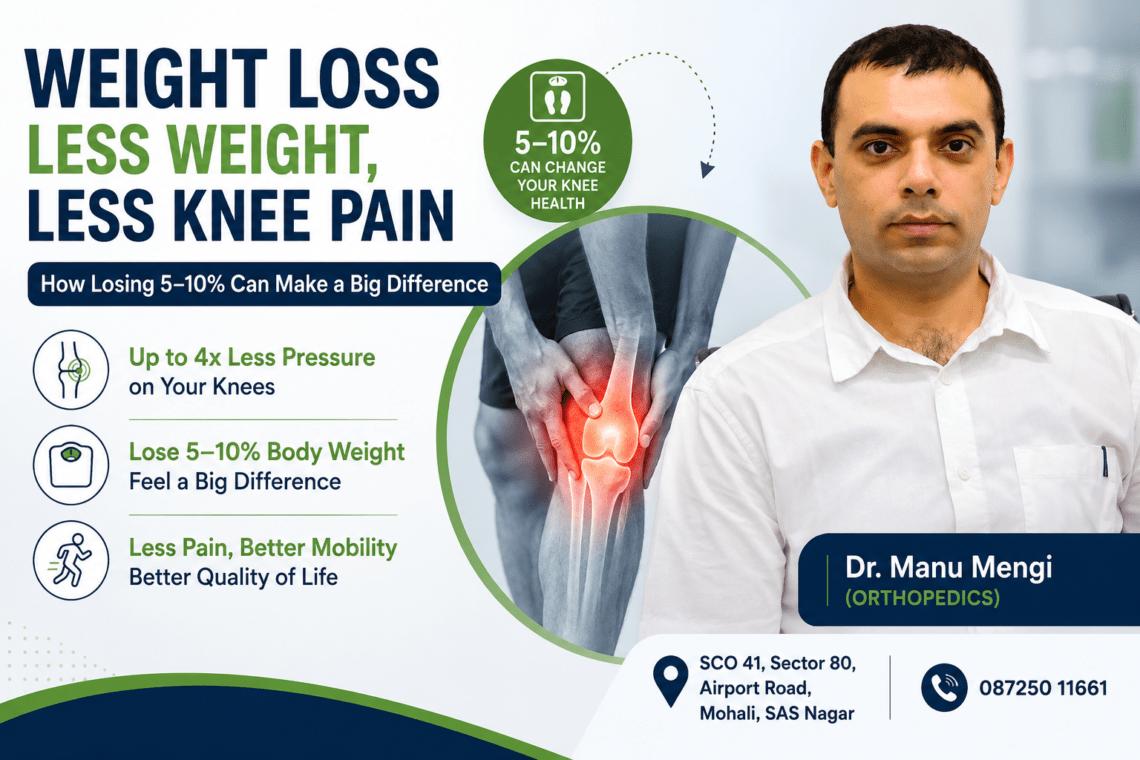
Can losing just 5-10% of your body weight reduce knee pain? The science says yes, and the numbers are more dramatic than you’d expect. Research shows that for every pound you lose, your knees experience four pounds less pressure with each step. That means dropping just 10 pounds removes 40 pounds of load from your knee joints. Studies confirm that people with a healthy BMI have only a 3.7% prevalence of knee osteoarthritis, while those with grade 2 obesity face a 19.5% rate. In this article, we’ll explore why even modest weight loss creates measurable improvements in knee function, pain levels, and long-term joint health.
While maintaining a healthy weight can significantly reduce knee pain, persistent discomfort, swelling, or difficulty walking should be evaluated by an Orthopedic Doctor in Mohali for an accurate diagnosis and personalized treatment plan.
The Science Behind Weight and Knee Pain
Your knees function as shock absorbers that handle forces far exceeding what most people realize. In reality, these weight-bearing joints don’t simply support your body mass. They absorb and distribute loads that multiply with every movement you make.
How Extra Weight Affects Your Knee Joints
When you carry extra weight, your knee joints bear significantly more pressure than they’re designed to handle. Each additional kilogram of body weight adds 3-4 kg of pressure on the knees. This isn’t a one-to-one ratio because your joints act as dynamic hinges framed by powerful lever arms.
The reaction forces from the ground, bone levers, and quadriceps muscle action amplify the joint load with each step. Over time, this sustained pressure causes knee cartilage to break down faster than normal. The protective cushioning between your bones wears away, eventually leading to bone-on-bone contact that creates chronic knee pain and stiffness.
Fat cells contribute another layer of damage beyond mechanical stress. These cells release chemicals that trigger inflammation throughout your body. The more fat present, the higher the concentration of inflammatory factors circulating in your system. This metabolic inflammation accelerates joint deterioration and increases the severity of osteoarthritis symptoms.
The 4:1 Pressure Rule You Need to Know
The pressure on your knees changes dramatically based on what you’re doing. Walking across level ground generates forces reaching 2.5 to 2.8 times your body weight on each knee. A 200-pound person puts 500-560 pounds of pressure on their knees with every step.
Going down stairs increases the load to 3.1 times body weight. Running pushes it even higher to 3.6 times body weight. Some activities like squatting to pick up an object create forces of four to five times your body weight.
Given that these multiplier effects, being just 10 pounds overweight translates to 30-60 pounds of additional force on your knee joints with each step. The math works in reverse too. Losing one kilogram removes approximately 4 kg of pressure with every step. Over the course of a day’s walking, that single kilogram of weight loss reduces knee stress by more than 20 tons.
Understanding Knee Osteoarthritis and Body Weight
Osteoarthritis develops when cartilage on the ends of bones deteriorates, leaving bare joints to rub against each other. Excess weight is a clear risk factor for this degenerative condition. Overweight women face nearly 4 times the risk of knee osteoarthritis compared to women at a healthy weight, while overweight men have a 5 times greater risk.
The numbers become even more striking when looking at obesity. People who are overweight are approximately 2.5 times more likely to develop knee osteoarthritis than those with normal weight. Obese individuals face 4.6 times the likelihood of developing this condition.
Body weight also influences how severe osteoarthritis becomes once it develops. Obese individuals experience significantly more severe joint degeneration in their knees compared to people at normal weight. Research shows that persons in the highest quintile of body weight have up to 10 times the risk of knee osteoarthritis compared to those in the lowest quintile.
Why 5% Body Weight Loss Makes a Measurable Difference
Trials have consistently demonstrated that a 5% or greater weight loss results in significantly reduced pain and improved function. This threshold isn’t arbitrary. Research shows that reaching this percentage triggers measurable changes in joint mechanics, inflammation levels, and overall knee health that translate to real relief.
Reduced Mechanical Load on Weight-Bearing Joints
When you shed 5% of your body weight, the reduction in mechanical stress on your knees compounds with every step. A 200-pound person losing 10 pounds removes 40 pounds of pressure from their knee joints during walking. Over a full day of typical movement, this single change reduces cumulative knee stress by more than 20 tons.
Note that the benefits extend beyond simple arithmetic. Studies examining patients with obesity who lost considerable body fat found that both knee pain severity and movement limitation decreased. The weight-bearing joints experience less wear and tear, which slows the progression of cartilage damage. This mechanical unloading gives your knees a chance to function without constant overload.
Lower Inflammation Levels in Your Body
Weight loss acts as a powerful anti-inflammatory intervention. Adipose tissue produces and releases pro-inflammatory chemicals throughout your body. Reducing fat stores correspondingly lowers your overall inflammation levels.
Research tracking inflammatory markers shows that weight loss causes significant reductions in plasma levels of inflammatory cytokines. C-reactive protein (CRP) and alpha-1-acid glycoprotein levels drop substantially. One study documented a 73% reduction in visceral fat mass after weight loss, accompanied by decreased low-grade inflammation markers.
Fat cells infiltrate joints and produce adipokines that amplify arthritis symptoms. By the same token, removing excess fat reduces the concentration of these inflammatory signals. The diet groups in clinical trials showed lower concentrations of pro-inflammatory cytokine interleukin 6. This systemic inflammation reduction affects not just your knees but your entire musculoskeletal system.
Improved Knee Function and Mobility
The combination of reduced mechanical load and lower inflammation produces significant functional improvements. Studies document enhanced pain relief, function, mobility, and health-related quality of life. Patients report being able to perform daily activities with less discomfort and greater ease.
Research reveals a dose-response relationship between weight loss percentage and symptom improvement. In other words, the percentage of weight you lose determines how much better you feel, regardless of your starting BMI. One finding stands out: patients with worse baseline knee pain experienced nearly double the benefit across every weight loss bracket.
Weight loss ranging from 7.3% to 7.9% produces similar improvements across all BMI categories. Even patients starting at lower BMI levels see clinically relevant pain reduction. Some studies show that as little as 2.5% weight loss creates meaningful improvement in all baseline BMI categories. For people struggling with mobility decline related to aging, 5-10% weight loss attenuates this decline.
Real Numbers: What 5% Weight Loss Means for You
Here’s what 5% weight loss looks like in practice:
- At 150 pounds: Lose 7.5 pounds, remove 30 pounds of knee pressure per step
- At 180 pounds: Lose 9 pounds, remove 36 pounds of knee pressure per step
- At 200 pounds: Lose 10 pounds, remove 40 pounds of knee pressure per step
- At 250 pounds: Lose 12.5 pounds, remove 50 pounds of knee pressure per step
Washington University research found that 5% weight loss markedly lowered diabetes and cardiovascular disease risk while improving metabolic function in liver, fat, and muscle tissue. Insulin-secreting beta cell function improved, along with insulin sensitivity across multiple tissue types. Total body fat decreased, with substantially less fat accumulation in the liver.
The 10% Weight Loss Threshold: A Game Changer for Knee Health
Reaching the 10% weight loss threshold represents a critical turning point for people struggling with knee osteoarthritis. While 5% produces measurable benefits, doubling that effort unlocks substantially greater improvements across every metric that matters.
Enhanced Pain Relief and Quality of Life
A 10% weight loss produces improved pain, function, and quality of life while reducing joint loads and inflammation compared to no weight loss or less than 10% loss. This threshold aligns with general weight loss recommendations among obesity experts for improving health outcomes.
Research documents a clear dose-response relationship. Greater weight loss produces larger effect sizes for improvements in pain, function, and quality of life. One trial found that 10% weight loss decreased pain by 50% over an 18-month period. Patients who achieved this level could perform daily activities with significantly less discomfort.
The American College of Rheumatology strongly recommends at least 5% weight loss, noting that clinically important benefits continue to increase with weight loss of 5-10%, 10-20%, and greater than 20% of body weight. In essence, each increment delivers compounding returns. Studies show that losing 10-20% of starting body weight improved pain, function, and quality of life better than losing just 5%.
Slowing Knee Cartilage Degeneration
Weight loss protects knee cartilage and menisci from further damage. Research tracking 640 overweight or obese participants over 48 months found that those who lost 5-10% of their body weight showed lower rates of cartilage degeneration compared to people who didn’t lose weight. Even more striking, those who lost more than 10% retained more healthy cartilage and experienced less menisci damage.
MRI analysis confirmed these protective effects. People who lost 5-10% of their weight over this period significantly decreased knee cartilage degradation. In the group that lost more than 10%, cartilage degradation was much slower. This structural preservation matters because damaged menisci speed up degeneration of the knee joint overall.
Reducing Your Risk of Needing Surgery
Weight loss directly influences whether you’ll need knee replacement surgery. For every 1% weight loss, there’s a 2% reduced risk of knee replacement. A weight loss target greater than 7.5% is required to reduce the risk of total knee replacement in adults with overweight or obesity.
Given that 80-95% of people needing total joint replacement also had overweight or obesity, losing weight becomes critical for surgical avoidance. Adults with obesity face a 60% lifetime risk of developing symptomatic knee osteoarthritis.
Study Results: 10-20% vs 5% Weight Loss Outcomes
Doubling weight loss from 10% to 20% cuts pain and improves function by another 25%. At 18 months, participants who lost 20% or more could walk 10% farther in 6 minutes than those who lost less than 5%, covering 559 meters versus 508 meters. By comparison, moderate outcomes emerged at lower thresholds, but the greatest improvements consistently appeared in groups achieving substantial weight loss.
How Weight Loss Reduces Knee Pain Beyond the Scale
Obesity triggers biological changes that extend far beyond what bathroom scales reveal. Adults with obesity are almost twice as likely to report having arthritis than adults at healthy weights (32% and 17.6%, respectively). The connection stems from systemic inflammation and metabolic dysfunction that weight loss can reverse.
Decreasing Metabolic Inflammation
Obesity creates a state of low-grade systemic inflammation that researchers call “metaflammation”. Adipose tissue secretes pro-inflammatory cytokines and adipokines that circulate throughout your body. As fat cells increase in size, cell membranes become tense, triggering stress responses that initiate inflammation. Insufficient blood supply to expanding adipose tissue causes cell death, further amplifying inflammatory reactions.
Weight loss activates the reduction in plasma levels of inflammatory markers. The greatest improvements in inflammatory markers appear in studies achieving at least 10% weight loss. Specifically, C-reactive protein, TNF-alpha, IL-6, and leptin levels decrease, while anti-inflammatory adiponectin increases. Studies show weight loss is a critical factor to reduce inflammation, with hypocaloric diets producing anti-inflammatory effects independent of diet composition.
Improving Insulin Resistance and Joint Health
High insulin resistance associates strongly with knee osteoarthritis, particularly in individuals with metabolic syndrome and type 2 diabetes. Insulin resistance leads to increased expression of pro-inflammatory cytokines and downregulated synthesis of structural proteins in articular cartilage. Insulin normally binds to receptors on chondrocytes and promotes production of type 2 collagen and proteoglycans, preventing cartilage wear.
Research shows that TyG-related indices significantly associate with knee osteoarthritis prevalence. Weight loss-related improvement in insulin sensitivity occurs through changes in adipose cell size and central distribution of body fat. This metabolic correction protects joint cartilage and reduces inflammation-driven degeneration.
Reducing Fat Pad Inflammation
The infrapatellar fat pad (IPFP) represents intra-articular adipose tissue that contributes to inflammation and pain by secreting pro-inflammatory cytokines. As adipose tissue, the IPFP secretes fatty acids with pro-inflammatory effects and stores immune cells that produce inflammatory mediators. High BMI and obesity substantially impact fat pad syndrome.
Weight loss interventions produce significant reductions in IPFP volume. Exercise alone reduced volume by 2.1%, diet by 4.0%, and combined diet plus exercise by 5.2%. Across intervention groups, significant correlations existed between IPFP volume change and individual weight loss (r = 0.40) and change in total body fat mass (r = 0.44).
Lowering Disease Activity in Knee Osteoarthritis
Weight loss plays a role in both primary prevention (intervening before osteoarthritis occurs) and secondary prevention (intervening during early osteoarthritis). In the Framingham Study, a weight loss of 5.1 kg reduced women’s risk of developing knee osteoarthritis by 50% over 10 years. For adults with obesity, the risk of developing symptomatic knee osteoarthritis reaches 60%. Achieving and maintaining a healthy weight interrupts inflammatory processes and altered joint mechanics that degrade structural integrity and contribute to increased pain.
Practical Steps to Lose Weight and Protect Your Knees
Addressing weight loss and knee pain requires a strategic approach combining movement and nutrition. Research provides clear guidance on effective interventions.
Low-Impact Exercises for Knee Arthritis
Aerobic activities like walking, cycling, and swimming show the highest probability of being the best treatment for improving pain, function, gait performance, and quality of life. Swimming and water aerobics reduce joint stress through buoyancy while strengthening muscles. Regular swimming reduced joint pain and stiffness while improving muscle strength and functional capacity. Cycling works quadriceps and hamstrings while improving knee range of motion.
Strength Training Without Stressing Your Joints
Strengthening muscles around your knees reduces joint stress. Target your quadriceps, hamstrings, abductors, adductors, and gluteal muscles. Quadriceps strengthening performed over eight weeks proved as effective as anti-inflammatory medications for function improvement. Strong leg muscles provide crucial knee support and shock absorption.
Walking Programs for Knee Pain Relief
Walking at least 6000 steps daily offers the ideal threshold for preventing functional limitation. People with knee osteoarthritis who walk for exercise are significantly less likely to develop worse pain.
Anti-Inflammatory Diet Changes
Small pilot studies show positive effects of anti-inflammatory diets on knee osteoarthritis symptoms. The Mediterranean diet reduces inflammation by emphasizing fruits, vegetables, fish, nuts, beans, and olive oil while limiting processed foods and saturated fat. Some patients discontinue NSAIDs after transitioning to this eating pattern.
Setting Realistic Weight Loss Goals
Suggest an initial weight loss goal of 10%. A recommended rate is 1-2 pounds per week. Successful strategies include calorie reduction, increased physical activity, and behavior therapy.
Conclusion
Weight loss doesn’t need to be dramatic to transform your knee health. In fact, losing just 5-10% of your body weight removes significant pressure from your joints, lowers inflammation throughout your system, and slows cartilage degeneration. The 4:1 pressure rule means every pound you lose translates to four pounds less stress on your knees with each step.
Start with realistic goals and combine low-impact exercise with anti-inflammatory eating patterns. Whether you need to lose 10 pounds or 50, your knees will thank you for every single pound. The science is clear: modest weight loss delivers measurable results faster than you might expect.
Key Takeaways
Losing just 5-10% of your body weight can dramatically reduce knee pain and slow joint degeneration. Here’s what the research reveals about this powerful connection:
• Every pound lost removes 4 pounds of pressure from your knees during walking, meaning a 10-pound weight loss eliminates 40 pounds of force with each step.
• 5% weight loss triggers measurable improvements in pain levels, mobility, and inflammation markers, while 10% weight loss can reduce pain by 50% and significantly slow cartilage degeneration.
• Weight loss reduces knee pain through multiple pathways beyond mechanical relief—it decreases systemic inflammation, improves insulin resistance, and reduces inflammatory fat pad volume around joints.
• Walking 6,000+ steps daily combined with strength training and an anti-inflammatory Mediterranean diet creates the optimal approach for protecting knees while achieving sustainable weight loss.
• Overweight individuals face 2.5 times higher risk of developing knee osteoarthritis, while obese individuals face 4.6 times the risk—making weight management critical for prevention.
The dose-response relationship is clear: greater weight loss produces larger improvements in pain, function, and quality of life. Even modest reductions of 7-10 pounds can transform your knee health and reduce your lifetime risk of needing joint replacement surgery.
FAQs
1. Can losing just 5-10% of my body weight really reduce knee pain?
Yes. Research consistently shows that losing 5-10% of your body weight can significantly reduce knee pain, especially in people with knee osteoarthritis. Even modest weight loss decreases the pressure on the knee joint, reduces inflammation, and improves mobility. Many people notice less pain while walking, climbing stairs, and standing for long periods.
2. How does excess body weight increase knee pain?
Every extra kilogram of body weight increases the load on your knees by approximately 3-4 kilograms during walking. Over time, this extra stress accelerates cartilage wear, increases inflammation, and causes pain, stiffness, and reduced joint function.
3. How much weight should I lose to see improvement in knee pain?
Most experts recommend aiming for an initial weight loss of 5-10% of your current body weight. For example, someone weighing 90 kg may experience noticeable improvement after losing just 4.5-9 kg.
4. Is weight loss more effective than painkillers for knee osteoarthritis?
Weight loss doesn’t replace pain medications when they are needed, but it addresses one of the root causes of knee pain. Unlike painkillers that provide temporary relief, maintaining a healthy weight can reduce joint stress, improve function, and slow disease progression.
5. Why does losing weight reduce knee inflammation?
Body fat is metabolically active and releases inflammatory chemicals called cytokines. Excess fat increases chronic low-grade inflammation throughout the body, including the joints. Losing weight lowers these inflammatory substances, helping reduce pain and stiffness.
6. Can weight loss prevent knee replacement surgery?
Weight loss cannot reverse severe arthritis, but it may delay the progression of knee osteoarthritis, improve symptoms, and in many individuals postpone or even avoid knee replacement surgery by reducing stress on the joint.
7. Will my knee cartilage grow back after losing weight?
No. Damaged cartilage usually does not regenerate completely. However, weight loss reduces further cartilage damage, decreases inflammation, improves joint function, and slows the progression of osteoarthritis.
8. Which type of exercise is best for losing weight without worsening knee pain?
Low-impact exercises are usually the safest choices, including:
- Walking on level ground
- Cycling
- Swimming
- Water aerobics
- Elliptical training
- Strength training under guidance
These exercises help burn calories while placing less stress on painful knees.
9. Can diet alone improve knee pain?
A healthy calorie-controlled diet can promote weight loss, which often reduces knee pain. Combining proper nutrition with regular exercise generally produces better and longer-lasting results than diet alone.
10. How long does it take to notice less knee pain after losing weight?
Many people begin noticing improvement within 8-12 weeks of consistent weight loss and exercise. The degree of improvement depends on the severity of arthritis, muscle strength, and adherence to lifestyle changes.
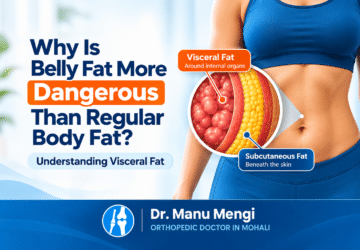
11. Does belly fat affect knee pain more than overall body weight?
Yes. Excess abdominal fat contributes to chronic inflammation by releasing inflammatory hormones and cytokines. This can worsen osteoarthritis symptoms beyond the extra mechanical load placed on the knees.
12. Can younger people with knee pain also benefit from weight loss?
Absolutely. Even younger adults with obesity-related knee pain can experience reduced pain, improved mobility, and a lower risk of developing early osteoarthritis by achieving a healthier body weight.
13. Is walking safe if I already have knee osteoarthritis?
In most cases, yes. Walking at a comfortable pace is beneficial for joint health and weight management. However, severe pain, swelling, or instability should be evaluated by an orthopaedic specialist before starting an exercise program.
14. Besides weight loss, what else helps reduce knee pain?
A comprehensive treatment plan may include:
- Quadriceps and hip muscle strengthening
- Flexibility exercises
- Physical therapy
- Appropriate footwear
- Activity modification
- Adequate Vitamin D and nutrition
- Medical treatment when necessary
Combining these measures with weight loss often provides the best outcomes.
15. Should I consult a doctor before starting a weight-loss program for knee pain?
Yes. If you have persistent knee pain, swelling, severe arthritis, diabetes, heart disease, or other medical conditions, consult your doctor before beginning a weight-loss or exercise program. An individualized plan can maximize benefits while minimizing the risk of injury.
16. How does losing 5-10% of body weight affect knee pain?
Losing 5-10% of body weight significantly reduces knee pain by decreasing mechanical pressure on joints, lowering inflammation levels, and improving mobility. Research shows that 5% weight loss can reduce joint pain by up to 50%, while 10% weight loss may decrease pain by 50% over 18 months and slow cartilage degeneration.
17. What is the 4:1 pressure rule for knees and weight loss?
The 4:1 pressure rule means that for every pound of body weight you lose, you remove approximately four pounds of pressure from your knee joints with each step. For example, losing 10 pounds eliminates 40 pounds of force on your knees during walking, which adds up to more than 20 tons of reduced stress over a full day.
18. Can weight loss improve cholesterol levels along with knee health?
Yes, a 5-10% weight loss can increase HDL (good) cholesterol by about five points, which helps protect against heart disease. For men, HDL levels above 40 mg/dl and for women above 50 mg/dl are considered protective, making weight loss beneficial for both joint health and cardiovascular wellness.
19. How much weight loss is needed to reduce the risk of knee replacement surgery?
For every 1% of body weight lost, there’s a 2% reduced risk of needing knee replacement surgery. Research indicates that losing more than 7.5% of body weight is required to significantly reduce the risk of total knee replacement in adults with overweight or obesity.
20. Does weight loss help with arthritis pain beyond just knee joints?
Yes, weight loss reduces arthritis pain throughout the body by decreasing systemic inflammation, improving insulin resistance, and lowering inflammatory markers like C-reactive protein and IL-6. This occurs because fat tissue produces inflammatory chemicals, so reducing body fat correspondingly lowers overall inflammation levels affecting all joints.

Dr. Manu Mengi is a best orthopedic doctor in Mohali, specializing in joint pain, arthritis, and sports injuries. With qualifications in orthopedics and advanced training in joint replacement, he provides effective care for bone and joint conditions, helping patients improve mobility and manage pain with the right treatment approach.

 Want a personalised joint-friendly workout plan? Visit the
  Rated 5/5 on Google:
  +91 87250 11661 |
  SCO-41, Sector 80