Seronegative Arthritis: Can You Have Rheumatoid Arthritis Even If Blood Tests Are Normal? – Dr. Manu Mengi

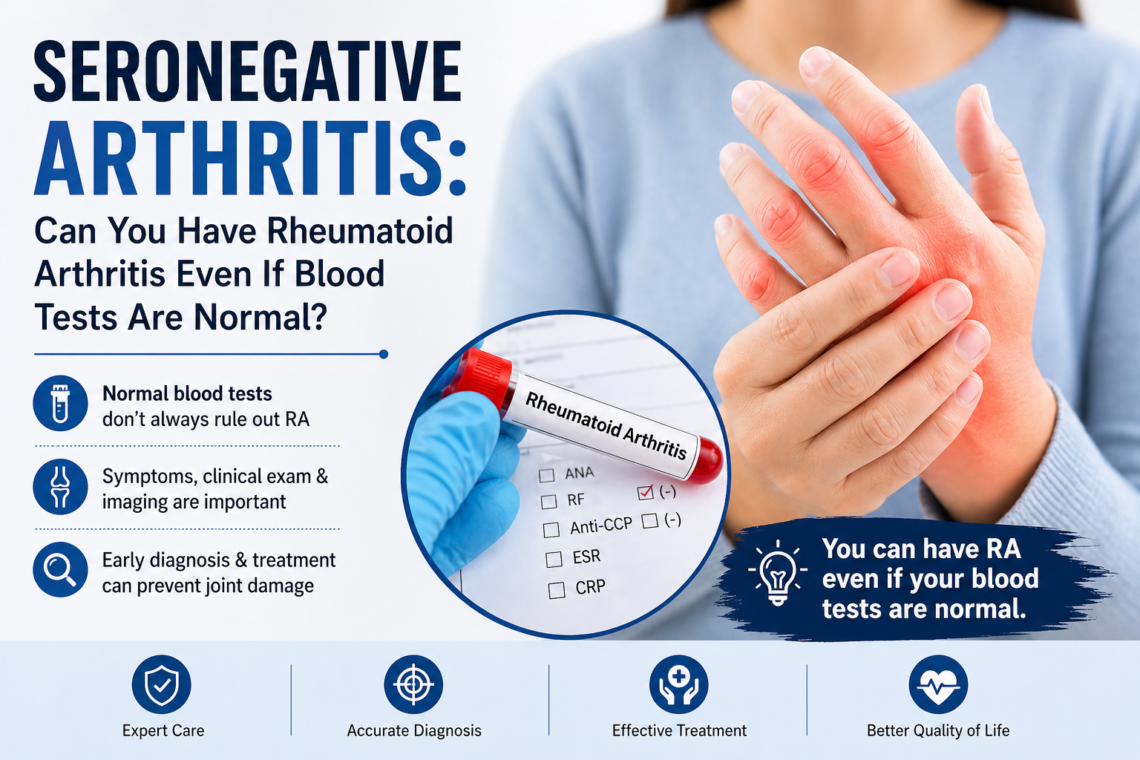
Can you have rheumatoid arthritis even if blood tests are normal? The answer might surprise you. In fact, about 15% to 20% of people with rheumatoid arthritis have negative rheumatoid factor (RF) test results. This condition is called seronegative rheumatoid arthritis, accounting for roughly 20% to 30% of all RA cases. Because standard blood tests don’t detect the usual antibodies in these patients, diagnosing seronegative RA requires a different approach. We’ll walk you through what seronegative rheumatoid arthritis is, how doctors diagnose it without positive blood tests, the key differences between seropositive and seronegative RA, and what treatment options are available for managing this form of inflammatory arthritis.

What Is Seronegative Rheumatoid Arthritis?

When you receive a diagnosis of rheumatoid arthritis but your blood work shows no signs of the typical antibodies, you have what doctors call seronegative rheumatoid arthritis. This form of RA presents the same joint pain and inflammation as the more common seropositive type, yet the standard markers simply don’t appear in blood tests.

Understanding rheumatoid factor and anti-CCP antibodies

Your immune system produces antibodies to protect you from infections and harmful invaders. Rheumatoid factor (RF) is a protein your immune system makes by mistake or when it becomes overactive. Unlike regular antibodies that fight germs, RF attacks healthy tissue in your body, particularly immunoglobulin G (IgG), one of your most common protective antibodies.

Anti-cyclic citrullinated peptide (anti-CCP) antibodies work similarly. These autoantibodies invade certain peptides in the lining of joints, triggering inflammation that leads to pain, swelling, and eventual joint damage. Around 60% to 80% of people diagnosed with RA test positive for anti-CCP. What makes anti-CCP particularly valuable for diagnosis is its specificity. Unlike RF, which appears in various conditions including hepatitis C, tuberculosis, and even in healthy older people[2], anti-CCP is very specific to rheumatoid arthritis.

Why blood tests come back negative

Several factors explain why your blood tests might not detect these antibodies. The levels of RF and anti-CCP vary considerably from person to person. If your levels are very low, standard blood tests simply won’t pick them up. In effect, you’re producing the antibodies, but in amounts too small for detection.

The timing of testing matters as well. Anti-CCP may be present in only 23% of people with early stage RA, increasing to 50% at diagnosis and 53% to 70% two years after diagnosis. This progression means early testing might miss antibodies that will appear later.

How common is seronegative RA

Seronegative RA accounts for approximately 20% to 30% of all rheumatoid arthritis cases. Between 60% and 80% of people diagnosed with RA test positive for rheumatoid factor, meaning the remaining 20% to 40% fall into the seronegative category.

While seronegative RA typically remains seronegative, changes can occur. Future blood tests sometimes reveal that rheumatoid factor has developed over time. However, it remains rare for someone who is seronegative to become seropositive.

How Is Seronegative Rheumatoid Arthritis Diagnosed?

Diagnosing seronegative rheumatoid arthritis requires more detective work than the seropositive form. Without positive antibody markers, doctors rely on clinical signs, inflammation markers, and imaging evidence to piece together an accurate diagnosis.

Symptoms doctors look for in seronegative RA

Your symptoms provide the first clues. Doctors assess whether you experience tenderness, swelling, and redness in your joints, particularly in the hands, knees, ankles, hips, and elbows. Morning stiffness lasting longer than 30 minutes signals inflammatory arthritis rather than ordinary joint wear.

The pattern matters just as much as the symptoms themselves. Persistent inflammation affecting joints on both sides of your body points toward RA rather than other conditions. Fatigue often accompanies these joint symptoms. Doctors also check for red or dry eyes, since RA can affect more than just your joints.

Physical examination findings

During your physical exam, doctors examine your joints for signs of synovitis, the hallmark of inflammatory arthritis. They look for swollen joints, particularly in your hands and feet, and assess how many joints show active inflammation. In reality, the number and pattern of affected joints heavily influence the diagnosis.

Blood tests that show inflammation

While RF and anti-CCP tests come back negative, other blood markers reveal inflammation. Erythrocyte sedimentation rate (ESR) and C-reactive protein (CRP) levels indicate active inflammation in your body. ESR values correlate with radiological damage in seronegative RA. Normal acute phase reactants are infrequent in untreated RA and should prompt consideration of alternative diagnoses.

Imaging tests: X-rays, ultrasound, and MRI

X-rays detect erosion and damage to bone and cartilage. Seronegative RA shows more carpal fusion on hand and feet radiographs compared to seropositive RA. Ultrasound proves particularly useful, revealing a higher proportion of tenosynovitis in seronegative patients. MRI confirms diagnosis when physical examination cannot determine the presence of synovitis.

Diagnostic criteria used by rheumatologists

Rheumatologists use the ACR/EULAR classification criteria, which score various factors including joint involvement, serology results, acute-phase reactants, and symptom duration. Seronegative RA remains a clinical diagnosis that may take longer to confirm. Doctors must rule out conditions like psoriatic arthritis, ankylosing spondylitis, and osteoarthritis that produce similar symptoms.

Seropositive vs. Seronegative RA: Key Differences

The distinction between seropositive and seronegative RA extends beyond blood work. These two forms differ in severity, complications, and how they respond to specific medications.

Blood test results

Seropositive RA shows the presence of rheumatoid factor, anti-CCP antibodies, or both in blood tests. Between 60% and 80% of people with RA fall into this category. Seronegative RA means you don’t have these antibodies in your blood at all, or you don’t have much of them. RA seronegativity is defined as the absence of both RF and anti-CCP, while seropositivity requires at least one of the two antibodies.

Disease severity and progression

Seronegative RA has been considered a less severe disease subset than seropositive RA, with less radiographic damage. However, seropositive patients face significantly higher all-cause mortality with an odds ratio of 1.24. Kaplan-Meier analysis showed lower survival probabilities in the seropositive group at 76.51% versus 81.68%.

People with seropositive RA experience more extra-articular complications. They commonly develop firm lumps on or near affected joints called rheumatoid nodules, while seronegative patients generally don’t get these nodules. Seropositive patients show higher rates of vasculitis, inflamed blood vessels, rheumatoid lung issues, and cardiovascular disease. In contrast, interstitial lung disease occurs with an odds ratio of 2.42 in seropositive patients.

Risk of joint damage

During follow-up periods, 37.1% of 116 patients with seronegative RA showed radiographic damage. Seropositive patients had a higher risk of RA-related joint damage with an odds ratio of 1.24.

Response to treatment

Most medications work the same whether you’re seropositive or seronegative. However, seronegative patients may not respond as well to rituximab as seropositive patients. DMARD use was more frequent in seropositive patients. Because seronegative RA takes longer to diagnose, treatment delays might reduce your chances of achieving remission.

Treatment and Long-Term Outlook for Seronegative RA

Treatment for seronegative RA mirrors the approach used for seropositive disease. Your rheumatologist will prescribe medications from the same categories regardless of your antibody status.

Medications used to treat seronegative arthritis

NSAIDs like ibuprofen or naproxen reduce inflammation and pain during flare-ups. Corticosteroids manage severe symptoms but aren’t suitable for long-term use on account of adverse effects. Methotrexate serves as the first-line DMARD for most patients. Your doctor may add biologic DMARDs if methotrexate alone doesn’t control your symptoms. However, evidence suggests seronegative patients may not respond as well to rituximab compared to seropositive patients.

Importance of early treatment

Seronegative RA requires intensive treatment similar to seropositive RA. Starting methotrexate within three months of diagnosis more than doubles your chances of achieving a good or moderate therapeutic response. Basically, early intervention prevents joint damage and improves long-term outcomes.

Can seronegative RA become seropositive over time

About 13% of individuals with seronegative RA experience a change in diagnosis within 10 years. In similar fashion, 25% achieve drug-free remission during this period. While blood tests sometimes show rheumatoid factor development over time, this remains uncommon.

When to consider getting a second opinion

Seek another rheumatologist’s perspective if your diagnosis remains unclear, your current treatment isn’t working, or you’re facing major treatment decisions. Second opinions are common in rheumatology and provide peace of mind.

Conclusion

Seronegative rheumatoid arthritis proves you don’t need positive blood tests to have RA. While diagnosing this condition requires more detective work from your rheumatologist, the treatment approach remains equally effective. Undoubtedly, early intervention with DMARDs gives you the best chance at managing symptoms and preventing joint damage. If you’re experiencing persistent joint pain and swelling despite negative antibody tests, don’t dismiss the possibility of seronegative RA. Work closely with your rheumatologist to get the right diagnosis and treatment plan.

Key Takeaways

Understanding seronegative rheumatoid arthritis can help you recognize that normal blood tests don’t rule out RA, and proper diagnosis and treatment remain crucial for joint health.

• You can have RA with normal blood tests – 20-30% of RA cases are seronegative, meaning standard antibody tests (RF and anti-CCP) come back negative despite active disease.

• Diagnosis relies on clinical evidence – Doctors use joint swelling patterns, inflammation markers (ESR/CRP), imaging tests, and physical symptoms rather than antibody results.

• Seronegative RA is generally less severe – Patients typically experience fewer complications, less joint damage, and better survival rates compared to seropositive cases.

• Early treatment is critical for both types – Starting methotrexate within three months doubles your chances of good therapeutic response, regardless of antibody status.

• Most treatments work equally well – Standard RA medications like methotrexate and biologics are effective for seronegative patients, though rituximab may be less responsive.

The key message: Don’t let negative blood tests delay proper evaluation if you have persistent joint symptoms. Seronegative RA requires the same aggressive treatment approach as seropositive disease for optimal outcomes.

FAQs

Q1. Can I have rheumatoid arthritis even if my blood tests come back normal?

Yes, you can have rheumatoid arthritis with normal blood test results. This is called seronegative RA, and it accounts for about 20-30% of all rheumatoid arthritis cases. While standard antibody tests (RF and anti-CCP) may be negative, you can still have active disease with joint inflammation and pain.

Q2. What does “seronegative” actually mean?

“Seronegative” simply means that commonly used blood markers like RF and anti-CCP are not detected in the blood, even though the disease process may still be present.

Q3. What are the early symptoms of seronegative rheumatoid arthritis?

Early signs often include:

  • Morning stiffness
  • Pain and swelling in small joints (hands, wrists, feet)
  • Fatigue

Difficulty making a fist or gripping objects

Q4. How is rheumatoid arthritis diagnosed without positive blood tests ?

Diagnosis is clinical. It is based on:

  • Persistent joint pain and swelling
  • Morning stiffness (typically >30–60 minutes)
  • Symmetrical joint involvement

Imaging (X-ray, ultrasound, MRI)
Blood tests support the diagnosis, but they are not mandatory.

Q5. How do doctors diagnose seronegative rheumatoid arthritis without positive antibody tests?

Doctors diagnose seronegative RA by examining your symptoms, conducting physical examinations of your joints, checking for inflammation markers like ESR and CRP, and using imaging tests such as ultrasound, X-rays, or MRI. They look for patterns of joint swelling, morning stiffness lasting over 30 minutes, and inflammation affecting both sides of your body.

Q6. Is seronegative RA less severe than seropositive RA?

Generally, seronegative RA is considered less severe than seropositive RA. People with seronegative disease typically experience less joint damage, fewer extra-articular complications like rheumatoid nodules, and better survival rates. However, both types require early and aggressive treatment to prevent progression.

Q7. Will the same medications work for seronegative rheumatoid arthritis?

Most RA medications work equally well for both seronegative and seropositive patients. Methotrexate is typically the first-line treatment, and biologic DMARDs can be added if needed. The main exception is rituximab, which may not be as effective for seronegative patients compared to those who are seropositive.

Q8. Can seronegative RA change to seropositive over time?

While it’s possible for seronegative RA to become seropositive, this is uncommon. About 13% of people with seronegative RA may experience a change in diagnosis within 10 years, and blood tests may occasionally show rheumatoid factor development later. However, most people who are seronegative remain seronegative throughout their disease course.

Q9. Can my blood tests become positive later ?

Yes. Some patients initially test negative but may become seropositive over time as the disease evolves.

Q10. Which tests help when blood reports are normal?

Imaging plays a key role:

  • Ultrasound can detect early synovitis

MRI can show inflammation before X-rays
These help confirm inflammation when blood tests are inconclusive.

Q11. What conditions can mimic seronegative rheumatoid arthritis?

Several conditions can look similar, including:

  • Osteoarthritis
  • Psoriatic arthritis
  • Ankylosing spondylitis
  • Viral arthritis
  • Lupus

Proper evaluation is essential to avoid misdiagnosis.

Q12. Should I delay treatment if my reports are normal?

No. If clinical suspicion is high, early treatment is crucial. Waiting for blood tests to turn positive can delay care and increase the risk of joint damage.

Q13. Is treatment different for seronegative rheumatoid arthritis?

The treatment principles are the same as seropositive RA:

Lifestyle modifications

DMARDs (like methotrexate)

Physiotherapy

The goal remains early control of inflammation and prevention of joint damage.

When Shoulder Ages – The Complete Guide to Shoulder Arthritis

Shoulder arthritis affects up to 32.8% of adults over the age of sixty, making it one of the most common causes of shoulder pain and disability in older adults. When your shoulder joint’s smooth cartilage wears down, the resulting condition can severely limit your comfort and function. Most often occurring in people over age 50, shoulder arthritis can also develop in younger individuals following an injury or trauma, such as a shoulder fracture or dislocation.

Pain is the most common symptom you’ll experience with shoulder arthritis, often accompanied by stiffness, weakness, and a noticeable grinding sensation during shoulder movement. However, you don’t need to simply accept these limitations as inevitable. From non-surgical approaches like gentle stretching and anti-inflammatory medications to surgical options for severe cases, effective treatments are available. Throughout this guide, we’ll explore everything you need to know about shoulder arthritis, including its various types, how it differs from other shoulder conditions, and the best strategies for managing your symptoms and maintaining your quality of life.

Understanding Shoulder Arthritis

The degradation of cartilage within your shoulder joint defines shoulder arthritis. Your shoulder contains two primary joints, but shoulder arthritis typically refers to the larger ball-and-socket glenohumeral joint that connects your upper arm bone (humerus) to your shoulder blade (scapula). This protective cartilage covers both the ball (humeral head) and socket (glenoid), allowing smooth movement.

What is shoulder arthritis?

Shoulder arthritis occurs when the smooth cartilage lining your joint surfaces begins to break down, eventually leading to bone-on-bone contact. This cartilage breakdown creates a rough, uneven surface that causes pain, stiffness, and reduced function. As the condition progresses, bone spurs may form, further limiting motion. Patients often report that shoulder arthritis impacts their quality of life comparably to serious conditions like congestive heart failure or diabetes.

Types: Osteoarthritis, Rheumatoid, Post-traumatic

Several distinct types of shoulder arthritis exist, each with different origins:

  • Osteoarthritis – The most common form, primarily affecting people over 50, this “wear and tear” arthritis gradually degrades cartilage through normal ageing processes. It affects up to 32.8% of patients over sixty and appears more common in women than men.
  • Rheumatoid Arthritis – An autoimmune condition where your body attacks the synovial lining of joints, causing inflammation that damages cartilage. Unlike osteoarthritis, rheumatoid arthritis often affects both shoulders simultaneously.
  • Post-Traumatic Arthritis – Develops after shoulder injuries like fractures or dislocations, which damage the cartilage surface.

Additional types include rotator cuff tear arthropathy (occurring after large rotator cuff tears) and avascular necrosis (when blood supply to the humeral head is disrupted).

Shoulder arthritis vs frozen shoulder

Despite being commonly confused, shoulder arthritis and frozen shoulder (adhesive capsulitis) are entirely different conditions. The primary distinction lies in their underlying mechanisms:

Frozen shoulder specifically involves joint stiffness and chronic pain due to thickening and tightening of the joint capsule. In contrast, shoulder arthritis stems from cartilage deterioration. Furthermore, while arthritis causes pain but still allows some joint movement, frozen shoulder severely restricts mobility regardless of pain levels.

Understanding these differences is crucial since their treatments differ significantly, despite some overlapping symptoms.

Is your shoulder stiffness more than just ageing? Don't guess about your joint health. Get a precise diagnosis from an experienced Orthopedic Doctor in Mohali. Book Your Consultation Today or call us at +91 87250 11661.

Recognising the Signs and Symptoms

Recognising symptoms early helps manage shoulder arthritis effectively. Symptoms vary between individuals, with severity not always matching the degree of cartilage damage.

Early signs of shoulder arthritis

Initially, you might notice a dull ache in your shoulder that worsens after activities like lifting or reaching. Pain typically begins intermittently, appearing only during certain movements before becoming more constant as the condition progresses. Another early indicator is mild stiffness, particularly after periods of inactivity such as sleeping. Some individuals report occasional clicking sounds when moving their arms, even without pain.

Common symptoms: pain, stiffness, grinding

Pain remains the most common symptom of shoulder arthritis. As your condition advances, discomfort may occur at rest or during the night, making sleep difficult. The pain typically feels deep within the joint and can radiate down your arm toward your elbow or wrist.

Stiffness and reduced range of motion gradually increase, making everyday tasks like bathing or dressing challenging. Many patients experience crepitus—grinding, clicking, or popping sensations—when moving their shoulders. This occurs because cartilage loss creates uneven joint surfaces where bones rub together.

Shoulder arthritis vs rotator cuff tear

Although these conditions can coexist, they affect different structures. Shoulder arthritis primarily involves cartilage deterioration, whereas rotator cuff tears damage the tendons that position and power your joint. With rotator cuff tears, you’ll typically experience more pronounced weakness, especially during overhead activities. Moreover, rotator cuff tear arthropathy represents an advanced condition combining both problems, causing severe weakness, pain, and grinding.

Shoulder arthritis vs bursitis and tendinitis

Distinguishing between these conditions requires careful assessment. Bursitis involves inflammation of fluid-filled sacs (bursae) that cushion your joints. Comparatively, tendinitis affects the tendons connecting muscles to bones. Both can cause pain similar to arthritis, but differ in several ways:

  • Location: Bursitis pain typically occurs at the top and outside of your shoulder, whereas arthritis pain originates within the joint itself.
  • Duration: Bursitis generally resolves within weeks with proper care, while arthritis progressively worsens over time.
  • Onset: Tendinitis often develops suddenly after repetitive activities, unlike the gradual onset of arthritis.
Pain and grinding in your shoulder shouldn't be ignored. Early intervention is key to preserving your mobility. Schedule an appointment with a Best Ortho Doctor in Mohali to discuss your symptoms and create a personalised management plan. Contact Our Ortho Clinic in Mohali Now.

Diagnosis and Imaging Techniques

Accurate diagnosis forms the cornerstone of effective shoulder arthritis treatment. Your doctor will employ a series of progressive diagnostic steps to pinpoint the exact nature and extent of your condition.

Physical examination and history

The diagnostic journey typically begins with a detailed conversation about your symptoms and medical history. Subsequently, your physician will conduct a thorough physical examination, checking for muscle weakness, tenderness to touch, and limited range of motion. They’ll assess both passive (assisted) and active (self-directed) shoulder movements. Notably, the doctor will listen for crepitus—a grinding sensation inside the joint during movement—which often indicates cartilage damage. The examination may include specific manoeuvres to evaluate your shoulder from multiple angles, including having you place your hands behind your head and back to assess rotation.

X-ray findings in shoulder arthritis

X-rays remain the first-line imaging technique for diagnosing shoulder arthritis. Key findings visible on X-rays include:

  • Joint space narrowing (indicating cartilage loss)
  • Bone spurs (osteophytes) along joint margins
  • Subchondral sclerosis (increased bone density)
  • Bone cysts beneath the joint surface

The axillary view provides the best angle to evaluate joint space narrowing, accordingly helping rule out dislocations. Your doctor may use the Kellgren-Lawrence score or Samilson and Prieto classification to grade the severity of your condition.

Shoulder arthritis MRI findings

Although not always necessary, MRI offers an exceptionally detailed evaluation of both soft tissues and bone. Typical MRI findings include cartilage thinning, bone marrow oedema, synovial thickening, and joint effusion. Furthermore, MRI excels at detecting rotator cuff tears that often accompany shoulder arthritis. This comprehensive assessment proves invaluable for surgical planning and detecting underlying causes of your condition.

When to consider lab tests

Laboratory tests become essential primarily when inflammatory arthritis is suspected. In certain cases, your doctor may analyse blood, urine, or joint fluid samples. Joint fluid analysis involves numbing the area before inserting a needle to withdraw fluid. These tests help differentiate between various forms of arthritis, particularly identifying inflammatory conditions like rheumatoid arthritis or ruling out infection.

Ready for a clear path to relief? Our clinic is equipped with advanced imaging technology to accurately diagnose your shoulder pain. Let the Best Orthopedician in Mohali guide your treatment. Visit our Google My Business Page to see reviews and call us to get started.

Treatment Options and Management

Treatment approaches for shoulder arthritis range from conservative options to surgical interventions, depending on pain severity and functional limitations. A comprehensive management plan typically begins with the least invasive methods first.

Non-surgical management of shoulder arthritis

First and foremost, optimising your overall health can improve the quality of life with shoulder arthritis. Regular aerobic exercise, maintaining a healthy weight, and avoiding activities that worsen pain form the foundation of management. Gentle stretching exercises help maintain range of motion, thus preventing further stiffness. Applying ice reduces inflammation, while heat can loosen stiff joints. Physical therapy often plays a crucial role in preserving mobility without aggravating symptoms.

Shoulder arthritis injection – Steroid, PRP, Hyaluronic Acid

Corticosteroid injections can provide significant short-term relief by reducing inflammation. Nevertheless, most doctors limit these to three injections yearly to prevent cartilage damage. Hyaluronic acid injections mimic your joint’s natural lubricant, potentially offering pain relief lasting up to six months. Meanwhile, platelet-rich plasma (PRP) therapy uses your own blood components to potentially promote healing, though research shows mixed results.

Pain relief for shoulder arthritis

Over-the-counter medications like acetaminophen offer basic pain control with fewer side effects than other options. Nonsteroidal anti-inflammatory drugs (NSAIDs) such as ibuprofen reduce both pain and inflammation. Certainly, medication should complement rather than replace other treatment approaches. For nighttime pain, icing the shoulder before bed may improve sleep quality.

Shoulder arthritis supplements

Certain supplements show promise for arthritis management. Glucosamine and chondroitin have produced mixed research results. In fact, turmeric/curcumin demonstrates anti-inflammatory properties, with one study showing effectiveness comparable to ibuprofen. Additionally, fish oil contains omega-3 fatty acids that help block inflammatory compounds. Remember to discuss any supplements with your physician, as they may interact with medications.

Shoulder arthritis surgical options

When conservative measures fail, surgical options include arthroscopic debridement for early arthritis, which removes loose tissue fragments. Total shoulder replacement replaces both the ball and socket with artificial components, effectively eliminating arthritis pain. For patients with combined rotator cuff tears and arthritis, reverse total shoulder replacement may provide better outcomes.

Shoulder arthritis recovery time and prognosis

Recovery from shoulder replacement typically requires wearing a sling for 4-6 weeks. Most people resume light activities after 2-3 weeks. Physical therapy continues for approximately 12 weeks, focusing initially on flexibility, then progressing to strength. Fortunately, 95% of patients experience pain-free function one year after surgery. Many prosthetic shoulders last at least 15 years, often for the remainder of a patient’s life.

From non-surgical therapies to advanced joint replacement, explore all your options for Orthopedic Treatment in Mohali. Don't let pain dictate your life. Take the first step towards a pain-free shoulder. Click here to consult with the Best Orthopedic Doctor in Mohali.

Conclusion

Living with shoulder arthritis certainly presents challenges, but knowledge empowers you to take control of your condition. Throughout this guide, we’ve explored how shoulder arthritis develops when protective cartilage deteriorates, leading to pain, stiffness, and reduced mobility. Remember that several types exist—osteoarthritis, rheumatoid arthritis, and post-traumatic arthritis—each requiring specific approaches.

Early recognition of symptoms allows for prompt intervention. Pain, stiffness, and grinding sensations warrant medical attention, especially when they persist or worsen. Your doctor will likely use physical examinations, X-rays, and sometimes MRIs to accurately diagnose your condition.

Treatment options span a wide spectrum based on your specific needs. Conservative approaches like gentle stretching, heat and ice application, and physical therapy often provide significant relief. Medications and injections serve as effective tools for managing pain and inflammation. When these methods prove insufficient, surgical interventions such as debridement or joint replacement can dramatically improve your quality of life.

Many patients worry about their future with shoulder arthritis. However, modern treatment approaches yield excellent outcomes. After surgery, most people return to normal activities within weeks, and the long-term prognosis remains positive with proper care. Whether you’re newly diagnosed or have battled shoulder pain for years, effective management strategies exist.

Shoulder arthritis doesn’t need to define your life. Armed with proper information and working alongside healthcare providers, you can minimise pain, maintain mobility, and continue enjoying meaningful activities despite this condition. Your journey with shoulder arthritis may require adjustments, but it need not end the activities that bring you joy.

Key Takeaways

Understanding shoulder arthritis empowers you to recognise symptoms early and pursue effective treatment options that can significantly improve your quality of life.

• Early recognition matters: Watch for persistent shoulder pain, stiffness after inactivity, and grinding sensations during movement—these often signal developing arthritis.

• Multiple treatment paths exist: From gentle stretching and anti-inflammatory medications to injections and surgery, effective options are available for every severity level.

• Conservative care works first: Physical therapy, ice/heat application, and maintaining a healthy weight can provide significant relief without invasive procedures.

• Surgery offers excellent outcomes: 95% of patients experience pain-free function one year after shoulder replacement, with most prosthetics lasting 15+ years.

• Don’t accept limitations: With proper diagnosis and treatment, shoulder arthritis doesn’t have to prevent you from enjoying meaningful activities and maintaining an active lifestyle.

The key is working with healthcare providers to develop a personalised management plan that matches your specific type of arthritis and lifestyle needs. Whether through conservative care or surgical intervention, effective relief is achievable.

FAQs

Q1. At what age does shoulder arthritis typically develop?

A1. Shoulder arthritis most commonly affects individuals over 50 years old. However, it can also occur in younger people, particularly following shoulder injuries or trauma. The condition tends to progress gradually over time.

Q2. What are the early warning signs of shoulder arthritis?

A2. Early signs include a dull ache in the shoulder that worsens with activity, mild stiffness (especially after periods of inactivity), and occasional clicking sounds during arm movement. As the condition progresses, pain may become more constant and affect sleep.

Q3. How is shoulder arthritis diagnosed?

A3. Diagnosis typically involves a physical examination, review of medical history, and imaging tests. X-rays are the primary diagnostic tool, showing joint space narrowing and bone spurs. In some cases, MRI scans may be used for a more detailed evaluation of soft tissues and bone.

Q4. What non-surgical treatments are available for shoulder arthritis?

A4. Non-surgical options include gentle stretching exercises, physical therapy, ice/heat application, and pain relief medications. Corticosteroid injections can provide short-term relief. Some patients find benefit from supplements like glucosamine or turmeric, though results vary.

Q5. What is the recovery process like after shoulder replacement surgery?

A5. After shoulder replacement, patients typically wear a sling for 4-6 weeks. Light activities can often resume after 2-3 weeks. Physical therapy continues for about 12 weeks, focusing first on flexibility, then strength. Most patients experience pain-free function within a year, with prosthetic shoulders often lasting 15 years or more.

Your journey to a pain-free life starts with a single step. Trust your care to a specialist dedicated to restoring your mobility. For expert Orthopedic Treatment in Mohali, reach out to us.
📞 Call Now: +91 87250 11661 | ⭐ See Patient Reviews: Our Google My Business Profile


Why Dr. Manu Mengi is the Best Orthopedic Doctor in Mohali for Rheumatoid Arthritis

Simple daily tasks can feel overwhelming when you live with joint pain and morning stiffness. Many people in Mohali and Chandigarh who struggle with Rheumatoid Arthritis (RA) need the right medical care to maintain their quality of life.

Dr. Manu Mengi, the Best Orthopedic Doctor in Mohali, offers hope to patients like you. His specialised expertise in RA management and auto-immune diseases has helped countless patients reduce joint pain and regain their mobility through individual-specific treatment plans.

As I wrote in this piece, Dr. Mengi’s reputation as a leading Arthritis Specialist in Mohali speaks for itself. His patient success stories, innovative treatment methods, and integrated approach to managing Rheumatoid Arthritis set him apart from others.

Patient Success Stories

Seema Sood’s life story is proof of Dr. Mengi’s expertise in treating Rheumatoid Arthritis. She needed a walking stick at just 28 years old, and her health declined until she became bedridden.

Her life changed when she received proper medical care. She regained her ability to walk and found that there was a new passion for painting that helped her cope with pain. “I could almost feel its scent. My friends saw it and encouraged me to do some more works,” Seema recalls about her first painting of a red rose.

This patient’s recovery isn’t unique. Research shows that this is a big deal as it means that remission rates can exceed 80% in RA patients who receive early and aggressive treatment. Dr. Mengi’s approach to RA management has showed excellent results consistently. His patients report major improvements in their daily lives.

Patient satisfaction rates reflect how well the treatment works. Dr. Mengi’s patients have shared inspiring stories: “He gets deep into the problem and treats with utmost care and responsibility”. Another patient adds, “Experience with the doctor has been incredible…. His medicines have really proved as blessings”.

These stories highlight a vital point – Rheumatoid Arthritis creates major challenges, but proper diagnosis and treatment can lead to substantial improvement in patients’ lives. Dr. Mengi’s expertise and focus on patient care have helped many people return to an active lifestyle.

Innovative Treatment Methods

Dr. Manu Mengi, the Best Ortho Doctor in Mohali, leads our facility with advanced treatment methods. He combines traditional and innovative approaches that work against Rheumatoid Arthritis. Our complete treatment arsenal has disease-modifying antirheumatic drugs (DMARDs). These drugs have shown great success to prevent and relieve disease activity in RA patients.

Our treatment approach has:

  • Conventional Synthetic DMARDs: Including methotrexate, hydroxychloroquine, and sulfasalazine.
  • Biological DMARDs: Advanced treatments like adalimumab and tocilizumab.

Our combination therapy makes us unique. Research shows that patients who receive methotrexate with glucocorticoid often find relief within six months – about 25% of cases show improvement. This approach works well and goes together with physical therapy and rehabilitation programs.

Dr. Mengi’s expertise goes beyond managing medications. RA treatment needs an all-encompassing approach, so we use advanced medical technologies with customized treatment plans. Many patients have achieved remission through early diagnosis and consistent treatment, thanks to our focus on innovative therapeutic options.

Holistic Patient Care Approach

Our clinic believes that Rheumatoid Arthritis treatment needs more than just medication. Dr. Manu Mengi leads with a detailed care approach that addresses every aspect of patient well-being. We create tailored care plans that evolve with our patients’ needs.

Our all-encompassing approach has:

  • Detailed Diagnosis: Using advanced diagnostic tools to accurately assess RA progression
  • Regular Monitoring: Tracking treatment response and making timely adjustments
  • Lifestyle Integration: Incorporating diet, exercise, and stress management
  • Physiotherapy
  • Patient Education: Giving patients the ability to understand their condition

Recovery paths differ for each person. We keep close track of progress and adjust treatment plans. Our patient-centric approach has earned many positive testimonials. A patient shared, “He gets deep into the problem and treats with utmost care and responsibility”.

Early intervention and consistent support make us different. Research indicates that patients can achieve remission with early diagnosis and consistent treatment. Medical treatments work better when combined with non-pharmacologic therapies like physiotherapy and lifestyle modifications.

Dr. Manu Mengi brings his expertise in pain management and rheumatology to our practice. His certification from John Hopkins University helps us provide detailed care for immediate symptoms and long-term management. We help patients maintain their quality of life through medical intervention and lifestyle adjustments.

Conclusion

Dr. Manu Mengi has become the most trusted name for Rheumatoid Arthritis Treatment in Mohali. His patient’s success stories speak volumes. Take Seema Sood, who went from being bedridden to walking again – that’s how proper RA care can change lives.

Dr. Mengi’s certification from John Hopkins University backs our individual-specific care plans. Each patient gets treatment that matches their needs perfectly.

Patients see remarkable improvements through our all-encompassing approach. We blend medical expertise with lifestyle changes and ongoing support. The numbers back our methods – early diagnosis and the right treatment can lead to remission rates that go beyond 80%.

We help our patients take back control of their active lives and manage RA better. Our complete care and regular monitoring have helped countless people reduce pain and live better lives.

FAQs

Q1. How can Dr. Manu Mengi help patients with Rheumatoid Arthritis?

A1. Dr. Mengi offers personalised treatment plans combining innovative therapies, medication management, and lifestyle modifications to help patients reduce pain, improve mobility, and potentially achieve remission.

Q2. What makes Dr. Manu Mengi stand out as an orthopedic specialist?

A2. Dr. Mengi’s expertise in RA management, certification from John Hopkins University, and holistic approach to patient care, including advanced treatments and personalised support, set him apart in the field.

Q3. What types of treatments does Dr. Mengi offer for Rheumatoid Arthritis?

A3. Dr. Mengi provides a range of treatments including conventional and biological DMARDs and combines these with physical therapy and rehabilitation programs.

Q4. Can Rheumatoid Arthritis be effectively managed with proper treatment?

A4. Yes, with early diagnosis and consistent treatment under specialists like Dr. Mengi, many patients can achieve significant improvement in symptoms and quality of life, with remission rates potentially exceeding 60%.

Q5. How does Dr. Mengi’s clinic approach patient care for Rheumatoid Arthritis?

A5. The clinic takes a holistic approach, offering comprehensive diagnosis, regular monitoring, lifestyle integration, and patient education, along with personalised care plans that evolve with patients’ needs.

Navigating daily life with Rheumatoid Arthritis

Rheumatoid Arthritis (RA) is unpredictable; even if you feel better today, you never know what may happen tomorrow. Common concerns include discomfort and the condition’s physical impact daily. Furthermore, some people with RA are concerned about the long-term consequences, such as illness problems that could reduce life expectancy, such as heart disease and dangerous infections. People with rheumatoid arthritis want normalcy just like everyone else. However, it can be disruptive. No matter how much you try to withstand the changes RA brings along with it, the disease will progress.

As RA worsens, it weakens and destroys cartilage and bone. It gradually weakens the supporting tendons, ligaments, and muscles, resulting in a reduced range of motion or trouble moving the joints appropriately. Joints may eventually become deformed, causing pain, particularly when wearing closed-toe shoes.

Rheumatoid Arthritis also increases the risk of developing osteoporosis, a condition that weakens bones and increases the likelihood of fractures. Chronic inflammation in the wrists can cause carpal tunnel syndrome, which makes it difficult to use your wrists and hands. Chronic discomfort can result from weakened or injured bones in the neck or cervical spine. RA in the cervical spine also increases the risk of spinal cord compression, which can cause discomfort and paralysis in the arms or legs.

Fortunately, rheumatoid arthritis is treatable. Although it might put some limitations, it does not have to dominate your life. Even as the disease progresses, it becomes easier to recognize changes, adapt to limitations, and enjoy life both with and despite RA.

Innovative therapeutic options have dramatically altered the course of rheumatoid arthritis. Many patients can attain remission if the disease is diagnosed early and treated consistently. Rapid diagnosis along with close monitoring and control can boost the likelihood of remission in rheumatoid arthritis patients. Rheumatoid arthritis treatment is hampered by delayed diagnosis, restricted access to specialists, and difficulties in applying treat-to-target principles.

Pharmacologic Treatments

The treatment for rheumatoid arthritis (RA) focuses on symptom management, inflammation reduction, joint and organ damage prevention, and improved physical function and quality of life. Primary treatments include disease-modifying antirheumatic medications (DMARDs).

Non-pharmacological Treatments

Non-pharmacologic therapies, such as physical and occupational therapy, as well as lifestyle changes like regular exercise and smoking cessation, are critical in the overall care of RA. Additionally, patient education and support groups can help people cope with the sickness.

Overall, the primary goals of treating rheumatoid arthritis are to control symptoms, reduce inflammation, avoid joint and organ damage, improve physical function and general well-being, and limit long-term consequences. Typically, achieving these goals requires a mix of medicine, lifestyle adjustments, and, on occasion, surgery.

If you seek a Rheumatoid Arthritis Specialist in Mohali, go no further than Dr. Manu Mengi. He is committed to delivering excellent care to individuals suffering from this ailment, drawing on his significant experience and kind demeanour. He provides tailored treatment regimens and comprehensive assistance on your path to better health.

For Arthritis Treatment in Mohali, choose no one other than Dr. Manu Mengi. Renowned for his expertise and commitment to patient care, he offers personalised treatment plans and comprehensive support. Trust Dr. Manu Mengi to provide the highest quality care and help you manage arthritis effectively, improving your overall well-being.