Joint Cracking Sounds: What’s Normal and When You Should Actually Worry – Dr. Manu Mengi

If you’ve ever heard your knees pop during a squat or felt your knuckles crack, you’ve probably wondered: why do my joints crack or make sounds, and is it dangerous? You’re not alone. Up to 54% of people crack their knuckles, and many don’t understand why joints pop and crack in the first place. The good news is that studies show joint noise alone does not lead to injury or damage. However, understanding what causes these sounds and when they signal a problem can help you distinguish between harmless popping and something that needs medical attention.

What causes joint cracking sounds

Your joints contain a lubricating fluid called synovial fluid that keeps bones moving smoothly against each other. When you stretch or move a joint, you create a change in pressure within the joint capsule. This pressure change causes dissolved gasses in the synovial fluid (primarily carbon dioxide at about 80%, along with oxygen and nitrogen) to rapidly come out of solution and form a bubble. The sound you hear is either from the bubble forming or collapsing back into the fluid.

Gas bubbles in synovial fluid

The bubble formation process, known as cavitation, happens when joint surfaces separate and the volume inside the joint capsule increases. The existing synovial fluid can’t fill this expanding space, creating negative pressure[18]. Gasses dissolved in the fluid quickly liberate and fill the empty space, producing that familiar cracking or popping sound.

Research using real-time MRI in 2015 showed that bubbles actually remain in the fluid after a joint cracks, suggesting the sound occurs when the bubble forms rather than when it collapses. This explains why you can’t immediately crack the same joint again. The refractory period lasts about 20 minutes while gasses slowly reabsorb back into the synovial fluid.

Tendons and ligaments moving over bones

Joints are held together by ligaments, while tendons connect muscles to bones. These tissues sit close to bony structures and sometimes shift position during movement. When a tendon or ligament slides over a bone prominence and then snaps back into place, it creates a clicking or snapping sound.

You might notice this sensation in your ankle when rotating it or in your knee while climbing stairs. The snapping occurs more frequently if joints are tight or after periods of inactivity. While this movement is typically harmless, it can sometimes indicate tightness or misalignment.

Cartilage changes with movement

Cartilage cushions the ends of bones where they meet in a joint. When cartilage wears down or becomes damaged, bones can rub together with increased friction. This contact produces a grinding or crunching sensation called crepitus, which feels different from a clean pop.

Crepitus often appears as a rough, repeated noise every time you move the joint. The sound can signal cartilage breakdown, particularly in conditions like osteoarthritis where bone spurs develop and rub against each other during movement. Reduced synovial fluid also contributes to these grinding sounds by allowing more friction between cartilage surfaces.

Age-related joint changes

Joints naturally make more noise as you age. Cartilage wears away as part of normal aging, making joint surfaces rougher. These rougher surfaces create more noise when they rub against each other, even in otherwise healthy joints[13].

The changes don’t necessarily indicate a problem. Your body simply experiences natural wear over time, particularly if you’re over 30. As long as the sounds aren’t accompanied by pain, they’re usually part of normal joint aging.

Is joint cracking normal or harmful

Most joint cracking is completely normal and harmless. Millions of people experience popping, clicking, and cracking in their joints every day without any negative health consequences. The real question isn’t whether joints should make noise, but rather when that noise signals an actual problem.

Joint popping without pain is harmless

In general, crepitus alone is not a cause for concern. Joints naturally make some noise during movement, and this becomes more common as you age. A joint crack can reach volumes as loud as 83 decibels, about the same as a running garbage disposal. Despite the alarming sound, the noise itself is safe and can even help restore range of motion and decrease pain.

Research shows that knee crepitus alone has no negative effect on function or physical activity level. The important distinction is pain. As long as joint noises occur without pain, they’re OK. Your body is simply going through normal mechanical processes. Studies confirm that in the absence of pain, swelling, or other joint symptoms, these sounds are probably nothing to be concerned about.

One interesting finding shows that many people develop negative thoughts about their joints making noise and self-limit their activity as a result. Patients with crepitus self-report more pain and lower function, however no differences were found in walking or knee strength for those with or without crepitus. This suggests the psychological impact of joint sounds often exceeds the physical reality.

Does cracking knuckles cause arthritis

The belief that cracking your joints is bad for them is wrong. Contrary to popular belief, studies have shown no direct link between joint cracking and arthritis. Arthritis is more commonly caused by genetics, aging, or injury. Several studies that compared rates of hand arthritis among habitual knuckle-crackers and people who didn’t crack their knuckles reached the same conclusion: cracking your knuckles doesn’t raise your risk for arthritis.

The most convincing evidence comes from a California physician who conducted an experiment on himself over his lifetime. He regularly cracked the knuckles of only one hand, and after decades of this behavior, x-rays showed no difference in arthritis between his hands. This experiment lasted over 50 years. The researcher found no difference between his left hand and the uncracked knuckles of his right hand.

A larger study published in 1990 examined 74 people who regularly cracked their knuckles compared to 226 people who didn’t. The incidence of arthritis was the same in both groups. However, habitual knuckle crackers were more likely to have hand swelling and lower grip strength. Chronic knuckle-cracking may lead to reduced grip strength, and there are at least two published reports of injuries suffered while people were trying to crack their knuckles.

Joint noises in athletes and active people

You can work out even if you have crepitus. Especially if you have no pain with the movements, you can continue to do your workouts. The noise you hear does not always mean anything is getting worse or injured. Studies have shown that crepitus is more common in those with other diagnoses associated with knee pain, but knee crepitus alone doesn’t prevent physical activity.

Many people get fearful when they hear noise in their joints and worry about hurting themselves or causing damage. Therefore, they stop doing activities. This fear-based response is unnecessary when the joint noise is painless. Recent findings indicate that knee crepitus is not linked to the need for knee replacement down the line.

Different types of joint sounds and what they mean

Not all joint sounds are created equal. The type of noise your body makes can tell you whether you’re experiencing normal joint function or something that warrants attention.

Popping sounds

A sharp pop typically indicates air moving within the joint space. When you hear a distinct popping noise, air is seeping into the soft tissues around the joint, like your kneecap. The bubbles burst when you bend the joint, creating that characteristic sound. You might notice these pops when you bend your knee or elbow.

Popping can affect any joint in your body, and the sound may be muffled or easily heard. Knees are the most common location where people experience this type of noise, but it happens in hands, feet, lower back, hips, and shoulders as well. The key indicator of a harmless pop is its painless nature.

Clicking or snapping sounds

Clicking differs from popping in both quality and cause. When you hear a click or snap, tendons or ligaments are moving over the bony surfaces of your joint. This snapping occurs due to irregularities and intermittent contact between these structures.

On the other hand, clicking can sometimes involve discomfort. Tension or misalignment in tendons or ligaments produces audible sounds during stretching, twisting, or other motions that strain these tissues. In your ankle, for example, tendons on the side will pop as they move back and forth, though these usually don’t hurt much. Your kneecap and meniscus can shift slightly during movement, creating clicks as fluid shifts and pressure differentials change.

Grinding or crunching sounds (crepitus)

Grinding sounds signal a different situation altogether. When you hear a grinding, rubbing, crunching, or crackling sound from your knee, damaged or deteriorated cartilage is likely present. This type of crepitus feels rough and repeated every time you move the joint.

The grinding occurs because your bones are rubbing against each other, usually caused by arthritis. Crunching sounds in your knee when you climb stairs or kneel, or crackling and grinding sensations when you move your shoulder, typically indicate cartilage breakdown. Unlike harmless pops, crepitus may be a symptom of osteoarthritis, tendonitis, meniscal tears, or other forms of joint damage.

Cracking sounds during exercise

During workouts or repetitive movements, you might hear joints cracking more frequently. These sounds happen because the muscles you’re using are tight. Muscle tightness creates friction on the bone, leading to noise generation.

When stretching produces a loud pop followed by relief in the area, the stretching has done its job. This particular scenario signals that tension has released, though it implies you should incorporate more stretching into your routine to prevent muscle tightness and potential injuries.

When joint cracking becomes a concern

While most joint sounds are benign, certain symptoms transform harmless popping into a medical concern. Pain changes everything. If cracking is coupled with consistent pain or swelling, that signals something is wrong. According to medical guidelines, there are only two scenarios where popping requires a healthcare visit: experiencing chronic pain in the joint or pain specifically after it cracks.

Joint cracking with pain or swelling

Pain can indicate a torn ligament or tendon, damaged cartilage, or even a pinched nerve. When crepitus comes with pain, you should consult a doctor to evaluate the cause. Swelling around the joint, whether occasional or continual, compounds the concern. These symptoms together suggest underlying damage that won’t resolve on its own.

Several conditions produce painful crepitus. Osteoarthritis causes cartilage to rub away, leaving bones unprotected and creating inflammation. When bones rub and grind, it causes pain and stiffness that usually gets worse with activity. Patellofemoral pain syndrome creates crepitus along with pain behind the kneecap, often from suddenly increasing activity levels through running, squatting, or jumping. Torn cartilage from sports injuries, falls, or accidents represents another possible cause of painful crepitus.

Sudden changes in joint sounds after injury

Joint cracking can occur due to sports injuries or accidents. Cartilage damage causes bones to rub together and make noise, producing sound along with pain, soreness, and swelling. In the event that you notice new or different sounds following an injury, seek medical evaluation without delay.

Joints that lock or feel unstable

Joint instability happens when tissues such as muscles, ligaments, and bones weaken and can no longer keep bones properly aligned. Symptoms include repeated dislocation, tenderness, and a feeling that the joint gives out. Chronic instabilities present with mechanical symptoms such as locking, catching, clicking, or giving way, particularly with twisting movements.

Locked knee occurs when you cannot bend or straighten your knee. True locked knee happens when something physically prevents the knee from straightening, while pseudo locked knee results from severe pain triggering muscle spasms.

Persistent grinding with stiffness

Persistent grinding combined with stiffness indicates wear and tear. Your doctor will move the joint to test the strength and looseness of surrounding tissues. If conservative treatments don’t help, surgery may repair ligaments so the joint regains stability.

How to reduce or prevent joint cracking

You can reduce how often your joints crack by keeping them active and healthy. The principle is simple: “motion is lotion”. The more you move, the more your body lubricates itself. When you sit or lie around for extended periods, fluid in your joints doesn’t circulate. Regular activity stimulates synovial fluid production, which reduces friction and minimizes the popping sounds.

Regular stretching and movement

Moving every 20 to 30 minutes helps reduce stiffness and preserve joint motion. Low-impact exercises work particularly well for managing joint sounds. Swimming, cycling, and yoga improve flexibility without stressing your joints. These activities increase bone density, promote circulation that delivers nutrients to cartilage, and release joint lubricant that reduces wear and tear.

Warming up before exercise prepares your body and prevents injury. Similarly, cooling down afterward reduces joint stiffness and soreness. Aim for at least 30 minutes of exercise daily, three days a week.

Strengthening muscles around joints

Strength training builds muscle mass around joints, which improves range of motion and reduces inflammation. Progressive resistance training two to three times weekly supports joint health and slows age-related decline. Exercises like resistance band work, squats, lunges, and shoulder presses strengthen the muscles that stabilize your joints. Stronger muscles reduce the load on joints themselves, helping prevent degeneration.

Staying hydrated for joint lubrication

Your cartilage consists of 65% to 80% water. Water stimulates production of synovial fluid that cushions your joints and acts like a shock absorber. When you’re dehydrated, your body can’t create sufficient synovial fluid, leading to more friction and pain. Dehydration also increases chronic inflammation in joints. Drink at least eight glasses of water daily.

When you should see a doctor

See a healthcare provider if you experience chronic pain in a joint or pain specifically after it cracks. You should also get help if you feel so much pressure in a joint that you have to pop it to feel comfortable.

Conclusion

Joint cracking might sound alarming, but overall, it’s just your body doing what bodies do. As long as your joints pop and crack without pain or swelling, you have nothing to worry about. The myth about knuckle cracking causing arthritis has been thoroughly debunked, so you can put that concern to rest.

Pay attention to what your body tells you. Pain changes everything. Equally important are signs like swelling, locking, or instability that accompany the sounds. These symptoms warrant a doctor’s visit.

Keep your joints healthy through regular movement, strength training, and proper hydration. Motion truly is lotion for your joints, and staying active will help you maintain mobility for years to come.

Key Takeaways

Understanding joint sounds can help you distinguish between normal body mechanics and potential health concerns that need attention.

• Joint cracking without pain is completely harmless – it’s caused by gas bubbles forming in synovial fluid during movement • Knuckle cracking does not cause arthritis – decades of research have debunked this common myth entirely • Pain changes everything – seek medical attention if joint sounds come with pain, swelling, or instability • Grinding sounds (crepitus) may indicate cartilage wear, especially when accompanied by stiffness or discomfort • Regular movement and hydration reduce joint cracking by keeping synovial fluid circulating and joints lubricated

The key distinction is simple: painless popping is your body’s normal function, while painful joint sounds signal the need for professional evaluation. Stay active, stay hydrated, and listen to your body’s signals.

FAQs

Q1. When should joint cracking be a cause for concern?

Joint cracking becomes concerning when it’s accompanied by pain, swelling, or joint instability. If you experience chronic pain in a joint or pain specifically after it cracks, you should consult a healthcare provider. Additionally, seek medical attention if your joint locks, feels unstable, or if you notice sudden changes in joint sounds following an injury.

Q2. Can vitamin deficiencies cause joints to crack?

While vitamin C deficiency can affect joint health by impairing collagen synthesis and tissue repair, most joint cracking sounds are caused by gas bubbles in synovial fluid, tendons moving over bones, or cartilage changes. Maintaining proper nutrition supports overall joint health, but painless joint cracking is typically a normal mechanical process rather than a sign of vitamin deficiency.

Q3. How can I reduce or prevent my joints from cracking?

Regular movement and exercise are the most effective ways to reduce joint cracking. Staying active stimulates synovial fluid production, which lubricates joints and reduces friction. Low-impact exercises like swimming, cycling, and yoga improve flexibility, while strength training builds supportive muscle around joints. Drinking at least eight glasses of water daily also helps maintain proper joint lubrication.

Q4. Is it true that cracking your knuckles causes arthritis?

No, this is a myth that has been thoroughly debunked by research. Multiple studies, including one where a physician cracked only one hand’s knuckles for over 50 years, found no difference in arthritis rates between knuckle-crackers and non-crackers. While habitual knuckle cracking may lead to reduced grip strength, it does not increase your risk of developing arthritis.

Q5. What causes the different sounds joints make during movement?

Different joint sounds indicate different mechanisms: popping occurs when gas bubbles form in synovial fluid; clicking or snapping happens when tendons or ligaments move over bones; and grinding or crunching (crepitus) suggests cartilage wear or bones rubbing together. During exercise, cracking sounds often result from tight muscles creating friction on bones. The type of sound, combined with whether pain is present, helps determine if it’s normal or requires medical attention.

Q6. Why do my joints crack or make sounds?

Joint sounds usually occur due to gas bubbles bursting within the joint fluid, movement of tendons or ligaments over bones, or minor joint surface irregularities. Most of the time, this is completely normal.

Q7. Is joint cracking dangerous?

In the absence of pain, swelling, or stiffness, joint cracking is generally harmless and does not indicate damage.

Q8. Does cracking knuckles cause arthritis?

No. Studies have not shown a direct link between knuckle cracking and arthritis. It may irritate surrounding tissues if done excessively, but it does not cause joint damage.

Q9. What is crepitus in joints?

Crepitus refers to grinding, clicking, or crackling sounds in a joint. It can be normal or may be associated with cartilage wear in some cases.

Q10. Why do my knees crack when I squat or climb stairs?

This can be due to patellofemoral joint movement, tight muscles, or minor cartilage changes. It is usually not concerning unless associated with pain.

Q11 Why does my shoulder make popping sounds?

Shoulder popping often occurs when tendons or ligaments move over bony structures. It is common in people with tight or imbalanced shoulder muscles.

Q12. Why do joints crack more as I get older?

With age, joint cartilage can wear down and joint fluid changes, leading to more noticeable sounds during movement.

Q13. Is it okay if my joints crack without pain?

Yes. Painless joint cracking is usually normal and does not require treatment.

Q14. When should I worry about joint cracking?

You should seek medical advice if joint sounds are accompanied by pain, swelling, stiffness, locking, or reduced movement.

Q15. Can joint cracking be prevented?

You may not completely stop it, but maintaining good joint health with regular exercise, stretching, and strengthening can reduce excessive joint noises.

consult with Dr. Manu Mengi for all types of jointpain and bones surgery Best orthopedic doctor in Mohali
Why Does Heel Pain Disappear After Walking? Understanding This Common Symptom – Dr. Manu Mengi

Understanding why heel pain disappears after walking helps you manage this common condition that affects 1 in 10 people at some point in their lives.

• Morning heel pain occurs because your plantar fascia tightens and cools during rest, then stretches suddenly when you stand

• Walking increases blood flow and warms the tissue, making it more flexible and reducing pain within minutes

• First-step pain that improves with movement is the hallmark symptom of plantar fasciitis, the most common cause of heel pain

• Simple morning stretches in bed, supportive footwear, and night splints can significantly reduce morning heel pain

• Pain that persists throughout the day or includes burning/tingling may indicate other conditions requiring different treatment

The key to managing heel pain lies in breaking the cycle of overnight tightening through proper stretching, supportive footwear, and maintaining tissue flexibility. Most cases improve with conservative treatments, making invasive procedures unnecessary for the majority of sufferers.

Have you ever wondered why your heel pain disappears after walking for a few minutes, even though those first steps in the morning feel unbearable? You’re not alone. Around 1 in 10 people will develop plantar fasciitis at some point throughout their life, and more than 2 million people in the U.S. are treated for it each year. This condition is the most common cause of heel pain, characterized by sharp discomfort when you first stand up. In fact, this distinctive pattern is known as first-step pain, and understanding why it happens can help you manage plantar fasciitis symptoms more effectively. We’ll explore what causes heel pain after rest and why movement brings relief.

The Morning Heel Pain Phenomenon: What You’re Experiencing

Heel pain first step in morning explained

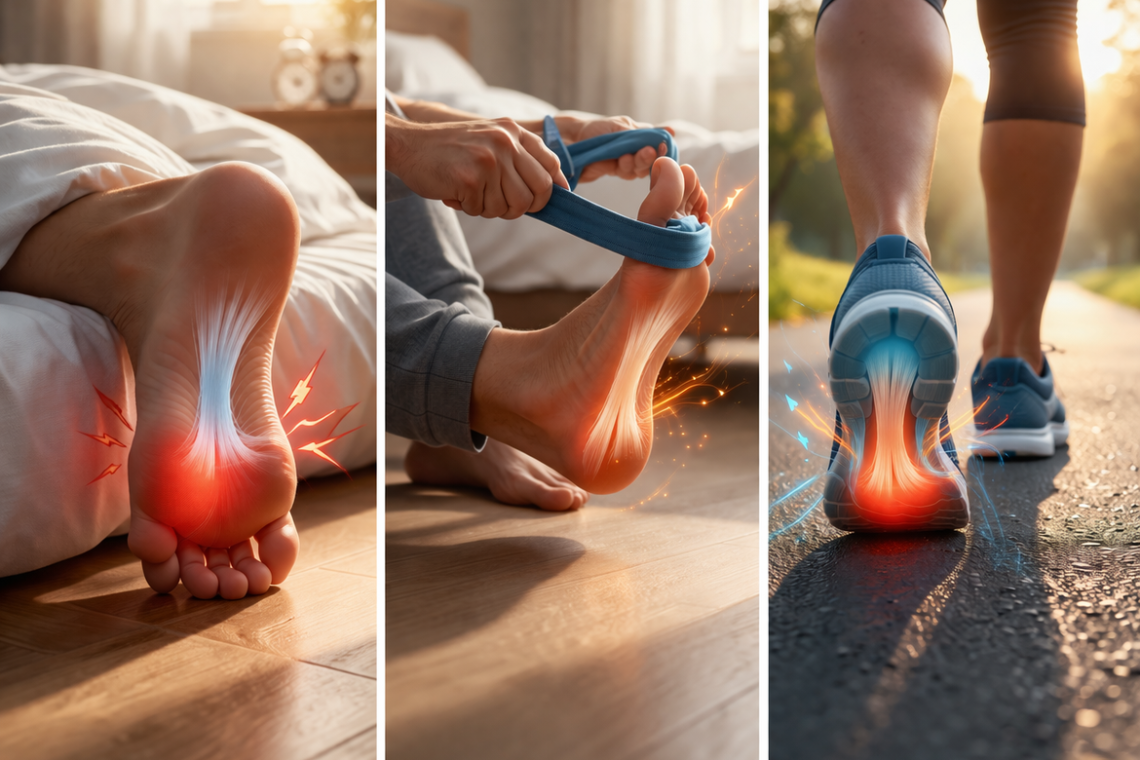
That first step out of bed can feel like stepping on glass. The sharp, jolting sensation under your heel isn’t just typical stiffness. You might notice the pain while you’re still lying in bed, or it might strike the moment your foot touches the floor. The discomfort concentrates under the inner part of your heel, near where your arch attaches.

This sharp morning heel pain stands out from general foot aches in several distinct ways. The tenderness stays localized under the heel rather than spreading across your entire foot. Furthermore, the intensity peaks specifically during those first few steps after waking or after you’ve been sitting for extended periods. Many people describe the sensation as stabbing pain that catches them off guard each morning.

Why the pain feels worst after rest

Poor blood supply to your heel and foot area during rest explains why symptoms intensify in the morning. While you sleep, circulation to these areas becomes limited, which sets the stage for that brutal wake-up pain. The plantar fascia, that thick band of tissue running along your foot’s sole, shortens and tightens throughout the night. When you suddenly stand and stretch this tightened tissue, it responds with sharp discomfort.

Achilles tendinitis can produce similar morning symptoms. The band of tissue connecting your calf muscle to your heel bone can become inflamed, resulting in stiffness and pain in the heel area. In the light of restricted circulation during rest, these symptoms worsen overnight.

Other conditions mimic this pattern too. Stress fractures cause pain that develops gradually over days or weeks, often accompanied by swelling. Whereas plantar fasciitis pain eases after a few minutes of walking, stress fracture pain persists throughout the day. Hypothyroidism can also trigger morning heel pain through disrupted chemicals and hormones that lead to inflammation and swelling in your feet, ankles, and heels.

The pattern of pain throughout the day

The pain typically follows a predictable cycle. Those first few steps hurt the most. After walking around for several minutes, the discomfort subsides. Most people find relief within just a few minutes of activity.

The pain may return, though. After prolonged standing or extended activity, that familiar ache can creep back. Climbing stairs or working out might trigger increased pain afterward, even if you didn’t feel discomfort during the actual activity. This creates a frustrating pattern where rest brings stiffness, movement provides relief, but too much activity reignites the problem.

Stiffness in your foot or heel can make walking a challenge, particularly after waking up or sitting for long stretches. The tissue needs those initial minutes of movement to warm up and regain flexibility. Once warmed up, your heel might feel relatively normal until your next period of inactivity.

Why Heel Pain Disappears After Walking

The relief you feel after those first painful steps isn’t just in your head. Several biological processes kick in the moment you start moving, and they work together to ease your discomfort.

The plantar fascia tightens during rest

Your plantar fascia doesn’t maintain the same length throughout the day. While you sleep or sit for extended periods, this thick band of tissue becomes still and cool. The ligament shortens and contracts during these inactive hours, similar to how a rubber band left in cold temperatures loses its stretch.

The discomfort you feel stems from tiny tears in the plantar fascia that develop when tension or stress on the soft tissue becomes too great. When you suddenly stand after hours of rest, you’re forcing this tightened, cool tissue to stretch instantly. In effect, you’re pulling on tissue that hasn’t prepared for the load, which triggers that sharp, stabbing sensation.

Blood flow increases with movement

Movement changes everything about how blood reaches your feet. Walking gets blood flowing to your tendons, ligaments, and muscles. This increased circulation delivers oxygen and nutrients to the affected tissue, which helps reduce inflammation and supports the healing process.

The contrast between rest and activity makes a noticeable difference. During sleep, circulation to your heel area becomes limited. Once you start walking, your heart pumps blood more vigorously to your lower extremities. This surge in blood flow brings warmth and essential nutrients to the plantar fascia.

The tissue warms up and becomes more flexible

As you begin to walk around, you’ll notice that your heel pain decreases because the ligament has had a chance to warm up. Think of your plantar fascia like cold taffy. When it’s cool, it’s stiff and prone to tearing. Warmth makes it pliable and able to stretch without damage.

The warming process happens gradually with each step. Your muscles generate heat through contraction, and increased blood flow delivers additional warmth to the tissue. This combination makes the plantar fascia more flexible and better able to handle the stress of supporting your body weight. Hence, the pain subsides as the tissue reaches a more optimal temperature for function.

How long does the relief typically last

The pain usually goes away after walking for a few minutes. For most people, this relief comes quickly. As you get up and move, the pain normally decreases within just a few minutes of activity.

The relief isn’t permanent, though. You’ll find that the pain improves once you’ve walked around for a short time. However, the discomfort can return after you’ve walked for an extended amount of time. This creates a challenging balance where too little movement causes stiffness, but too much activity can reignite inflammation and pain.

Similarly, sitting down for another long stretch will restart the cycle. Your plantar fascia cools and tightens again during the next period of inactivity, which means you’ll likely experience that same sharp pain when you stand up. The pattern repeats throughout the day, with each period of rest followed by temporary relief through movement.

Is This First-Step Pain a Sign of Plantar Fasciitis?

Understanding plantar fasciitis symptoms

Plantar fasciitis stands as the most common cause of heel pain, affecting 10% of the general population at some point in their lives. The hallmark symptom is throbbing pain on the medial plantar heel that worsens with your first steps after rest. This pain typically decreases after further walking, though it can return with continued weight bearing.

Your doctor can identify plantar fasciitis through physical examination. Palpation of the medial calcaneal tuberosity, the bony prominence on the inner part of your heel, typically causes sharp, stabbing pain. Passive dorsiflexion, where your toes are gently pulled upward toward your shin, often elicits pain as well.

Heel spurs appear in approximately 50% of patients with plantar fasciitis, but they don’t correlate well with symptoms. These bony growths can also be found in people without plantar fasciitis. The spurs form as your bone’s response to traction forces from the plantar fascia and other foot muscles. Most people don’t feel pain from heel spurs, so their presence doesn’t necessarily explain your discomfort.

Other conditions that cause similar pain

Achilles tendinitis produces heel pain that shares similarities with plantar fasciitis but follows a different pattern. While both conditions worsen after rest due to limited circulation, Achilles tendinitis causes pain or discomfort throughout the day. In contrast, plantar fasciitis pain typically subsides after a few minutes of walking.

Stress fractures of the calcaneus develop from repetitive overload to your heel. Pain usually begins after increasing weight-bearing activities or switching to a harder walking surface. The discomfort initially occurs only during activity but can later appear at rest. You may notice swelling, and your doctor can perform a calcaneal squeeze test, which produces pain when the sides of your heel bone are compressed.

Nerve compression presents with burning, tingling, or numbness alongside heel pain. Tarsal tunnel syndrome results from compression of the posterior tibial nerve as it courses toward your heel. Patients with this condition describe pain with tingling sensations around the plantar and medial aspect of the heel. Lumbar radiculopathy at the L4-S2 levels can also cause heel pain, even without associated low back pain.

Heel pad syndrome produces a deep, bruise-like pain in the middle of your heel that can be reproduced with firm palpation. Pain intensifies when walking barefoot, on harder surfaces, or for prolonged periods.

Key differences to watch for

The anatomic location of your pain provides diagnostic clues. Plantar fasciitis pain concentrates at the medial calcaneal tubercle on the bottom inner part of your heel. Whereas tarsal tunnel syndrome typically feels most intense when standing and walking after long periods of rest, plantar fasciitis pain improves with activity.

Stress fracture pain persists throughout the day rather than improving with movement. You’ll experience point tenderness at the fracture site and pain when your heel is squeezed from side to side. Nerve-related heel pain brings additional symptoms like burning or tingling that plantar fasciitis doesn’t cause.

What Triggers Heel Pain After Sitting or Sleeping

Several specific factors trigger that sharp heel pain after sitting or sleeping. Understanding these triggers helps you identify patterns in your own discomfort and make adjustments to reduce morning stiffness.

Foot position during inactivity

The way you rest your feet in bed causes the plantar fascia ligament to tighten during sleep. Your foot naturally settles into a pointed position while you lie down, similar to how your foot would look when pressing a gas pedal. This shortened position allows the plantar fascia to contract and cool over several hours.

The muscles in your feet might feel tight while lying in bed. This isn’t just stiffness from being still. The tissue has literally shortened during your hours of rest. When you suddenly stand and force your foot into a flexed position, you’re stretching tissue that has spent the night in a relaxed, contracted state.

The role of the Achilles tendon

Tightness in the calf muscle increases pull on the tendon and the heel, which can irritate both the tendon and the fascia. Your Achilles tendon connects your calf muscle to your heel bone, handling about 93% of the plantar flexion force. Tight or weak calf muscles put you at higher risk for both Achilles tendinitis and heel pain.

Achilles tendinitis causes stiffness or tenderness in your tendon, along with leg weakness and swelling around the affected area. You may notice more discomfort after you’re active or the day after exercising, as you climb stairs or go uphill, and in the morning with improvement throughout the day.

Impact of footwear choices

Your shoe choices directly affect heel stress. Flat shoes with no support, ballet flats, flip-flops, and sandals provide little to no arch support or heel cushioning. Footwear without support causes the plantar fascia to stretch excessively with each step, increasing strain on the heel.

Worn-out shoes lose their supportive structure over time as cushioning thins and the heel counter weakens. High heels shift body weight forward, placing excessive pressure on the forefoot while tightening the Achilles tendon. When you switch back to flat shoes again, tension increases at the heel, triggering pain.

Weight and activity level factors

Patients with heel pain had a higher BMI (30.4) than those without heel pain (28.2). Excess body weight puts more pressure on your heels. Being on your feet all day for work, playing sports, or exercising on hard surfaces like warehouse floors or sidewalks can irritate your plantar fascia. Standing for long periods, especially on concrete floors, increases your likelihood of developing heel pain.

Managing Morning Heel Pain and Start-Up Pain

Most heel pain gets better over time with nonsurgical treatments that focus on easing discomfort, improving flexibility, and reducing stress on your heel.

Stretching exercises before getting out of bed

Before your feet hit the floor, spend a few minutes stretching while still in bed. Start with a point and flex warmup by sitting upright with legs extended, pointing your toes down, then flexing them back up 10 times. This warms up the soft tissues in your feet and prepares them for deeper stretches.

Next, wrap a belt or towel around the ball of one foot. Sit straight and pull the foot into a flexed position using your arm strength, holding for 20-30 seconds. Repeat 5-10 times per foot. Finish by massaging the bottom of your foot, working your thumbs from the inner arch to the outer edge for about five minutes.

Using night splints

Night splints keep your foot at a 90-degree angle overnight, preventing the plantar fascia and Achilles tendon from tightening. By maintaining this stretched position during sleep, night splints significantly reduce morning pain severity. Research shows consistent use over several weeks leads to noticeable improvements in mobility and pain relief.

Choosing proper footwear

Buy shoes with good arch support, thick soles, and extra cushioning. Avoid flats and replace worn athletic shoes before they stop supporting your feet. Over-the-counter or custom orthotics can take pressure off your heel. Proper footwear prevents excessive plantar fascia stretching with each step.

Ice and rest strategies

Apply ice twice daily for 15-20 minutes to reduce inflammation. Skip icing first thing in the morning; your feet need to warm up. Try rolling a frozen water bottle under your foot. Rest from high-impact activities like running and switch to low-impact options like swimming or cycling.

When over-the-counter treatments help

Nonsteroidal anti-inflammatory drugs like ibuprofen combined with ice packs ease pain and swelling. Don’t take NSAIDs for more than 10 days without consulting your doctor.

Conclusion

That sharp pain when you first step out of bed follows a predictable pattern. Your plantar fascia tightens during rest, circulation decreases, and the tissue cools. Once you start walking, blood flow increases, the ligament warms up, and flexibility returns. This explains why those first steps hurt so much while movement brings relief.

Above all, understanding this cycle helps you manage symptoms more effectively. Start with simple morning stretches before getting out of bed, invest in supportive footwear, and consider night splints to prevent overnight tightening. Most cases improve with these conservative treatments, so you won’t need invasive procedures. Pay attention to your body’s signals and adjust your routine accordingly for lasting relief.

FAQs

Q1. Why does heel pain feel better after walking for a few minutes?

When you start walking, blood flow increases to your heel area, delivering oxygen and nutrients that reduce inflammation. The plantar fascia tissue also warms up and becomes more flexible with movement, which is why the sharp pain you feel during those first steps gradually subsides after a few minutes of activity.

Q2. What causes the sharp heel pain when taking the first steps in the morning?

During sleep, the plantar fascia—the thick band of tissue along your foot’s sole—tightens and shortens while circulation to your heel decreases. When you suddenly stand and put weight on your foot, this cool, contracted tissue is forced to stretch quickly, causing that stabbing sensation under your heel.

Q3. Is heel pain that improves with walking always plantar fasciitis?

Not necessarily. While plantar fasciitis is the most common cause of heel pain that improves with movement, other conditions like Achilles tendinitis can produce similar symptoms. However, stress fractures cause pain that persists throughout the day rather than improving with activity, and nerve compression typically includes burning or tingling sensations alongside heel pain.

Q4. Can walking long distances make heel pain worse even if it initially feels better?

Yes. While a few minutes of walking provides temporary relief by warming up the tissue and increasing blood flow, prolonged walking or standing can reignite inflammation and pain. This creates a cycle where too little movement causes stiffness, but excessive activity can worsen symptoms and bring the discomfort back.

Q5. What can I do to reduce morning heel pain before getting out of bed?

Try stretching while still in bed by pointing and flexing your toes 10 times to warm up the tissue. Then use a belt or towel around the ball of your foot to gently pull it into a flexed position, holding for 20-30 seconds and repeating 5-10 times per foot. This prepares your plantar fascia for weight-bearing and can significantly reduce that first-step pain.

Consult with Dr. Manu Mengi for all type of Orthopedic problems he is the best Orthopedic doctor in Mohali visit for all kind of joint problems.

Why Your Fingers Become Stiff in the Morning and What It Means for Your Health – Dr. Manu Mengi

Understanding morning finger stiffness helps you distinguish between normal aging and serious health conditions that require medical attention.

• Morning stiffness lasting under 30 minutes is normal; beyond that signals potential arthritis or autoimmune conditions • Heat therapy, gentle exercises, and proper sleep positioning effectively reduce mild morning finger stiffness • Synovial fluid thickens during sleep causing natural stiffness that improves with movement and warmth • Rheumatoid arthritis stiffness lasts over an hour, while osteoarthritis typically resolves within 30 minutes • Seek medical attention if stiffness persists despite self-care or interferes with daily activities

Early recognition and appropriate treatment of morning finger stiffness can prevent long-term joint damage and preserve hand function throughout your life.

Waking up with fingers that feel tight, swollen, or difficult to bend is more common than you might think. While many dismiss morning finger stiffness as a minor inconvenience, it’s not always caused by fatigue alone. In fact, stiff fingers in the morning often happen because your joints stay still for hours during sleep. However, when morning stiffness lasts longer than thirty minutes or comes with reduced grip strength, it may signal underlying conditions such as osteoarthritis, rheumatoid arthritis, or trigger finger. Understanding why your fingers become stiff in the morning can help you recognize early warning signs and take appropriate action for your health.

Why are my fingers stiff in the morning?

Your body’s natural response to rest sets off a chain of events that leaves your fingers feeling tight and difficult to move each morning. Three primary mechanisms work together to create this sensation, and understanding each one helps explain why movement gradually restores flexibility.

Your joints rest during sleep

Joints need lubrication to operate smoothly. Your body provides this through synovial fluid, a viscous substance that fills the space between bones. This slippery fluid allows smooth movement within your knuckles, wrists, and other finger joints. The more you move around, the more this fluid circulates to keep everything gliding.

During sleep, however, your hands remain mostly still for several hours. Without movement, this fluid thickens and doesn’t circulate as efficiently. The phenomenon is sometimes called “morning gel” in reference to how synovial fluid stiffens like gelatin when allowed to rest. Circulation slows as well, and surrounding tissues cool down slightly. When you wake up and start moving again, your fingers feel tight until movement restores warmth and flexibility.

This stiffening process is natural at any age. As you get older, the feeling may become more common and linger a little longer due to decreases in your synovial fluid. Still, that creakiness should disappear relatively quickly after you start moving around.

Inflammation reduces joint mobility

While you sleep, fluid accumulates in and around your joints, causing swelling and inflammation. This buildup creates tightness in the muscles and tissues surrounding your joints, resulting in stiffness and pain when you wake.

At night, some of your cells release cytokines, small proteins that help activate your immune system. While these proteins help make you sleepy, they also generate inflammation that increases joint pain. The reduced movement overnight causes inflammatory proteins to accumulate in joint spaces. Similarly, inflammatory substances build up around the joints during sleep, especially in people living with arthritis, increasing swelling and tightness.

Blood flow shifts when you lie down, and fluid can collect around sore joints. Lower evening levels of natural anti-inflammatory hormones like cortisol may also make pain more noticeable. Cooler nighttime temperatures increase synovial fluid viscosity and reduce blood flow to extremities. Overnight inflammation can cause the surrounding muscles and soft tissues to tighten, adding to that “locked up” feeling.

Sleep position affects finger flexibility

The way you position your hands during sleep plays a significant role in morning stiffness. Bending your wrists or curling your hands for hours may compress nerves and limit blood flow, leading to stiffness upon waking. Sleep position can put pressure on joints, making existing discomfort worse.

If you sleep with your wrists bent, you can worsen wrist pain and finger stiffness. Hand positions during sleep, combined with decreased blood flow to extremities, intensify the stiffness that typically improves within 30 to 60 minutes of waking. When your body slows down overnight, muscles that stabilize your joints aren’t as active, meaning more stress is placed on sensitive areas.

Even mild swelling inside the joints can restrict smooth motion after long periods of inactivity. This inflammation doesn’t always signal something serious, but it can be linked to repetitive hand use, minor injuries, or underlying conditions that gradually affect joint comfort.

Common conditions causing morning finger stiffness

Several medical conditions produce morning finger stiffness with distinct patterns that help identify the underlying cause. Recognizing these differences can guide you toward appropriate treatment.

Osteoarthritis in the hands

Cartilage degeneration between finger joints leads to direct bone-on-bone friction in osteoarthritis. The condition commonly affects the joints closest to your fingertips (distal interphalangeal joints), the middle finger joints (proximal interphalangeal joints), and the base joint of the thumb (carpometacarpal joint).

Bony enlargements known as Heberden’s nodes and Bouchard’s nodes form around affected joints. Morning stiffness typically lasts less than 30 minutes and often worsens with changes in humidity. Movement of your fingers may produce a grinding or crackling sensation called crepitus. Joint stiffness can recur after periods of inactivity throughout the day.

Rheumatoid arthritis

This autoimmune disease attacks the synovial lining of your joints, producing inflammation that typically lasts more than one hour every morning. Unlike osteoarthritis, rheumatoid arthritis often affects the knuckle joints (metacarpophalangeal joints) and middle finger joints symmetrically, meaning both hands are involved in a similar pattern.

Morning finger stiffness is usually accompanied by warmth, pain, and visible swelling. The disease follows a pattern of flares and remission. During flare-ups, morning stiffness may persist throughout the day, and grip strength can decrease significantly. Without proper treatment, long-term progression may lead to ulnar deviation, where your fingers gradually shift toward the little finger.

Trigger finger

Thickening of the flexor tendon sheath prevents the tendon from gliding smoothly in this condition. Your finger often locks in a bent position upon waking, requiring manual straightening and producing a characteristic clicking sensation. The narrowing typically occurs at the A1 pulley near the base joint of your finger.

The ring finger and thumb are most commonly affected, though multiple fingers can be involved simultaneously[32]. You may feel a small palpable lump at the base of your finger. Stiffness and locking tend to worsen after periods of inactivity, particularly when you wake up in the morning.

Dupuytren’s contracture

Thickening of the palmar fascia forms cord-like structures that pull your fingers toward the palm. The condition most commonly affects the ring finger and little finger, which gradually become increasingly bent.

Unlike other causes, the stiffness doesn’t improve with movement. The condition progresses through several stages, starting from nodules, followed by cord formation, and eventually leading to permanent finger contractures. Inability to place your palm flat on a surface (table-top test) signals that the condition has advanced.

Carpal tunnel syndrome

Pressure on the median nerve inside your wrist causes this condition. You may experience frequent numbness or tingling in your thumb, index finger, middle finger, and ring finger.

Symptoms usually develop slowly and often first appear at night, with pain or tingling that may wake you from sleep. Many people shake out their hands to try to relieve symptoms. Over time, weakness in your hand can make it difficult to grip objects or perform precise movements like buttoning clothes.

How to tell if morning stiffness is serious

Distinguishing between harmless morning stiffness and symptoms that warrant medical attention requires careful observation of specific patterns and characteristics.

Normal stiffness vs. arthritis stiffness

Some joint discomfort in the morning is natural at any age. Experiencing joint stiffness after inactivity happens to most people occasionally. Normal stiffness typically disappears relatively quickly after you start moving around.

In contrast, arthritis stiffness has distinct features that set it apart. Osteoarthritis stiffness lasts longer than 20 to 30 minutes in the morning and comes with joint swelling or tenderness. You may notice a reduced range of motion and gradual worsening over time rather than staying the same. The pattern repeats daily and slowly progresses.

Morning stiffness often appears as the first noticeable symptom of osteoarthritis in the hands, long before visible nodules or joint deformities develop. As the condition advances, you may experience dull or burning joint pain that appears hours or a day after increased use of your hands.

Duration of morning stiffness matters

The length of time your fingers stay stiff provides critical diagnostic clues. Osteoarthritis stiffness resolves within 30 minutes, with some sources noting it may wear off even sooner. This brief duration differs sharply from inflammatory conditions.

When joint stiffness lasts for an hour or more, healthcare providers often suspect an autoimmune disorder. Rheumatoid arthritis-related joint stiffness often lasts an hour or more in the morning. Morning stiffness persisting more than one hour is especially characteristic of rheumatoid arthritis, and its duration serves as a useful gage of inflammatory activity.

If morning stiffness persists beyond two hours despite movement, medical evaluation becomes necessary. This extended duration signals active inflammation that requires specialized treatment.

Accompanying symptoms to watch for

Several red flag symptoms indicate progression beyond normal age-related changes. Pain and stiffness affecting more than one joint simultaneously, coupled with tenderness and swelling in multiple joints, suggests systemic involvement.

Watch for visible deformity or fingers drifting from normal alignment. You may notice fingers drifting away from the thumb, along with specific deformities like Boutonniere or swan neck deformity. Small bony nodules forming on the middle joint of your fingers (Bouchard’s nodes) or at the top joints (Heberden’s nodes) indicate advanced osteoarthritis.

Numbness or tingling accompanying morning stiffness points toward nerve compression issues. Frequent numbness or tingling in the thumb, index finger, and middle finger specifically suggests carpal tunnel syndrome. Decreased grip strength that affects daily activities represents functional decline requiring attention.

Your fingers may not fully open and close as arthritis progresses. You might feel grating, grinding, cracking, or clicking (crepitus) when bending your fingers.

When swelling and pain appear together

Swelling patterns help differentiate conditions. Boggy, symmetrical swelling indicates inflammatory arthritis, while bony, hard swelling suggests osteoarthritis. Joint-specific patterns matter as well.

Pain timing provides additional diagnostic value. Arthritis-related discomfort may persist throughout the day or flare after activity rather than fading quickly with movement. Pain may wake you up at night and cause you to change the way you use your hands. Tissue surrounding affected joints may become red and tender to the touch.

How to treat stiff fingers in the morning

Multiple treatment approaches can reduce morning finger stiffness and improve hand mobility. Combining these methods often produces better results than relying on a single strategy.

Gentle hand exercises and stretches

Movement activates blood flow and helps restore flexibility. Start gentle range-of-motion exercises while still in bed, moving affected joints back and forth five to 10 times. This loosens joints and reduces pain before you begin your day.

A physical therapist can tailor exercises to your specific needs. Basic movements include making a fist, finger stretches, claw stretches, and thumb extensions. For knuckle arthritis, try a finger walk by resting your hand flat and moving each finger toward your thumb, then back. Knuckle bends involve holding your hand up with your palm out, then closing your hand by bending the middle joints into a claw position.

Gently massaging your hands improves blood circulation and reduces pain. Use your thumb to massage the palm of your opposite hand with short strokes for a few minutes, then switch hands. Massage each finger from base to tip using your thumb.

Heat therapy for morning relief

Soaking in warm water or applying heated compresses loosens stiff joints and relieves achy muscles. Heat enlarges blood vessels, allowing more blood, oxygen, and nutrients to reach injured tissues.

Start your day with a long, warm shower to reduce morning stiffness and increase range of motion. Keep water temperature between 92 and 100 degrees. Alternatively, soak hands in a bowl of warm water, or use a paraffin warm bath. An oil and glove routine offers similar benefits: apply mineral oil on your hands, slip on oversized rubber dish gloves, soak hands in hot water, then perform gentle exercises.

Heat pads, warming blankets, or cloth bags filled with rice warmed in the microwave also work. Apply warm compresses for 20 minutes.

Anti-inflammatory medications

Over-the-counter pain relievers like ibuprofen and naproxen reduce pain and inflammation. Ibuprofen is recommended for mild to moderate pain. Naproxen offers similar benefits. Acetaminophen can also help[71]. Topical NSAIDs such as ketoprofen provide localized relief.

Splints and braces for overnight support

Finger splints may reduce inflammation temporarily. If you bend your wrists or clench hands during sleep, an occupational therapist can fit you with a splint that keeps joints in a neutral position. Splints provide support and stability while reducing pain. Avoid prolonged use, as focus should remain on movement rather than immobilization.

Lifestyle changes that help

Proper sleep support prevents awkward positions that contribute to stiffness. Choose a firm mattress and appropriate pillow for your sleeping position. Take medications as directed, and discuss timing with your doctor so they’re most effective in the morning. Better sleep quality reduces pain perception.

When to see a doctor for morning finger stiffness

Knowing when self-care transitions to medical necessity protects your long-term hand function. Specific patterns signal the need for professional evaluation.

Stiffness lasting more than 30 minutes

Morning stiffness that persists at least 30 minutes or longer requires medical attention. If you wake up feeling seriously stiff and sore for more than 3 days in a row, make an appointment with your doctor. Stiffness extending beyond an hour particularly suggests autoimmune disorders. In the event that morning stiffness lasts longer than 30 to 60 minutes, improves slowly with movement, or comes with joint swelling, warmth, or redness, you should see a doctor.

Progressive loss of hand function

Gradual onset of symptoms deserves attention even without severe pain. You may notice difficulty with activities you once enjoyed due to reduced gripping ability or fine dexterity. If stiffness interferes with daily activities or worsens despite self-care, consultation becomes necessary. Trigger finger won’t heal without treatment, and a provider needs to examine your hand even if you only need rest or nonsurgical treatments.

Signs that require immediate medical attention

Go to the emergency room if you suddenly can’t move or use one of your fingers. What is more, symptoms appearing with fatigue, fever, or unexplained weight loss demand prompt evaluation. Your doctor may check your joints, run bloodwork, or test joint fluid to check for inflammation.

Conclusion

Morning finger stiffness affects nearly everyone at some point, but the duration and severity tell you what really matters. While occasional stiffness that fades quickly is normal, symptoms lasting beyond 30 minutes deserve your attention.

Start with simple solutions like gentle exercises, heat therapy, and proper sleep positioning. These methods work well for mild cases and improve mobility without medication. Indeed, many people find relief within days of making these adjustments.

However, if stiffness persists despite your efforts or comes with swelling, pain, and reduced grip strength, schedule an appointment with your doctor. Early intervention protects your hand function and prevents long-term complications.

FAQs

Q1. Is morning finger stiffness a sign of something serious?

Morning finger stiffness isn’t always serious. Occasional stiffness that disappears within a few minutes is normal. However, if stiffness lasts more than 30 minutes, comes with swelling and pain, or interferes with daily activities, it may indicate conditions like osteoarthritis, rheumatoid arthritis, or carpal tunnel syndrome that require medical attention.

Q2. What medical conditions cause fingers to feel stiff in the morning?

Several conditions can cause morning finger stiffness, including osteoarthritis (cartilage breakdown between joints), rheumatoid arthritis (autoimmune inflammation), trigger finger (tendon thickening), carpal tunnel syndrome (nerve compression), and Dupuytren’s contracture (palmar tissue thickening). Each condition has distinct patterns that help identify the underlying cause.

Q3. What are effective ways to relieve stiff fingers when you wake up?

You can relieve morning finger stiffness through gentle hand exercises and stretches while still in bed, soaking hands in warm water or taking a hot shower, applying heat therapy for 20 minutes, using over-the-counter anti-inflammatory medications like ibuprofen, and massaging your hands to improve circulation. Combining these methods often works better than using just one approach.

Q4. How can I prevent my hands from getting stiff overnight?

To prevent overnight stiffness, avoid sleeping with bent wrists or clenched hands, use a firm mattress and appropriate pillow, consider wearing a splint to keep joints in a neutral position if recommended by a therapist, and perform gentle range-of-motion exercises before bed. Proper sleep positioning helps reduce nerve compression and maintains better blood flow to your hands.

Q5. When should I see a doctor about morning finger stiffness?

See a doctor if stiffness lasts longer than 30-60 minutes, persists for more than 3 consecutive days, progressively worsens over time, interferes with daily activities, or comes with swelling, warmth, redness, or reduced grip strength. Seek immediate medical attention if you suddenly cannot move a finger or experience symptoms alongside fever, fatigue, or unexplained weight loss.

Consult with Dr. Manu Mengi for morning finger stiffness

Why Does My Neck Hurt After Using the Phone? The Real Cause and How to Fix It – Dr. Manu Mengi

Why does my neck hurt after using the phone? Tanswer might surprise you. People spend an average of three hours and 15 minutes on their phones daily, checking them 58 times each day. What many don’t realize is that looking down at your phone puts up to 60 pounds of force on your neck. This condition, known as text neck or tech neck, occurs when poor posture while using smartphones strains your cervical spine. Neck pain is now the fourth leading cause of disability, with an annual prevalence rate exceeding 30%. In this guide, I’ll explain what causes phone-related neck pain and how you can prevent and treat it.

What Is Text Neck Syndrome?

Text neck syndrome refers to a repetitive stress injury caused by holding your head in a forward position for extended periods. Also called tech neck, this condition manifests as chronic neck or shoulder pain, soreness, or stiffness resulting from poor posture while using technology.

The weight and pressure problem

Your head weighs approximately 5 kilograms. When you hold your head in a neutral position, your neck supports this natural weight without issue. The problem starts when you tilt your head forward to look at your phone.

The load on your neck increases exponentially based on the angle of inclination. At 15 degrees of forward tilt, the force on your neck surges to 12 kilograms. Bend further to 30 degrees, and the pressure rises to 18 kilograms. At 45 degrees, your neck muscles must support 22 kilograms. When you tilt your head 60 degrees forward, which many people do while texting, the load reaches an alarming 27 kilograms[6].

Think about it this way: holding a gallon of milk next to your body feels manageable. A gallon weighs roughly eight pounds, while your head weighs about 10 to 12 pounds. But if you extend your arm to hold that gallon out to your side, you create 72 pounds of pressure at your elbow and 96 pounds at your shoulder. Your neck and upper back muscles feel the same pressure from your head’s weight when you spend extended time looking down at electronic devices.

How your neck supports your head

The cervical spine forms the bony structure of your neck. Its primary function centers on supporting the skull while still allowing movement. The neck remains resilient enough to sustain a five-kilogram weight constantly, yet mobile enough to move your head in several directions.

Your cervical spine supports and cushions loads to the head and neck while allowing rotation and protecting the spinal cord extending from the brain. Large vertebral bodies aren’t necessary at this level considering the relatively small weight-bearing load. Increased range of motion takes priority over vertebral size and rigidity.

Why smartphones create this condition

Smartphones create text neck syndrome through several mechanisms. Looking down at electronic devices causes your neck muscles to strain and your shoulders to slump forward. Your body prioritizes visual comfort over postural comfort. For this reason, you tend to change your posture to accommodate vision with your screen, which leads to musculoskeletal fatigue.

People looking at their phones often stay in a static position for extremely long periods. This actually requires more work and effort from your body than dynamic movement. Staying in this position increases the force and effort on your shoulders, neck, and upper back muscles while putting uneven pressure on your spine.

The sustained head-forward tilt posture may deteriorate the mechanism of muscle reaction efficiency or reduce the stiffness of connective tissues of your cervical spine. Prolonged phone use increases pressure on the disks and ligaments between the cervical vertebrae. Neck flexion, the most common posture during phone use, serves as a risk factor for pain.

Musculoskeletal fatigue and pressure on the nerve supply in your neck can cause pain that also refers to your arms and hands. Weak neck muscles impair your ability to maintain postural stability, leading to abnormal forces on the cervical vertebrae.

Why Looking Down at Your Phone Causes Neck Pain

When you work on a computer or look down at your phone, the muscles in the back of your neck contract to hold your head up. The angle of your head dictates how hard these muscles must work.

The angle effect on your neck muscles

The more you look down, the harder your muscles work to keep your head up. These muscles get overly tired and sore from looking down at smartphones, computers, or tablets all day. When you look down just 45 degrees, your neck muscles do the work of lifting an almost 50-pound bag of potatoes. This puts considerable strain on your neck joints and disks, contributing to them wearing out.

Research shows that neck muscle activity differs at various neck flexion angles. The Cervical Erector Spinae muscle activity increases while the Upper Trapezius muscle activity decreases at increased neck flexion angles. At neck flexion angles of 0 to 15 degrees, the activity of both muscles remains acceptably low. Smartphone users should consider adopting neck flexion angles between 0 and 15 degrees during smartphone use, as there is an association between this neck flexion angle range and reduced muscle activity.

The muscles initially strain to hold your head up. But the muscles tighten and, as they do, they put more pressure on the disks. This makes the disks wear out faster, and as the disks wear out, they can bulge or even rupture.

Forward head posture explained

Bending your head forward at a 45-degree angle to look at a cellphone or tablet can dramatically increase your chances of developing forward head posture. This condition occurs when the neck and upper back muscles are strained due to the altered forward position of the head relative to the shoulder. During smartphone use, the maintenance of head-forward posture decreases cervical lordosis of the lower cervical vertebrae and creates a posterior curve in the upper thoracic vertebrae to maintain balance. This is known as forward head posture or turtle neck posture, which may cause musculoskeletal disorders such as upper crossed syndrome.

Forward head posture contributes to the onset and perpetuation of neck and back pain syndromes, with further loss of cervical spine extension. Near maximal head angles exceeding approximately 40 degrees may trigger the cervical flexion-relaxation phenomenon, potentially aggravating neck issues by shifting load from active musculature to passive structures.

Static positions vs. dynamic movement

People looking at their phones often stay in a static or same position for extremely long periods. This actually requires more work and effort from your body than dynamic movement. Prolonged postural maintenance can cause shoulder and neck disorders. Muscle fatigue occurs mainly from functional decline due to metabolite accumulation or weakened neural signaling under repetitive or prolonged loading.

Visual comfort over postural comfort

While using a cellphone, you bring it closer to your body to maintain visual comfort and see the screen more clearly. Your body wants visual comfort over postural comfort. For this reason, you tend to change your posture to accommodate vision with your screen, which can cause musculoskeletal fatigue. Over time, staying in this position increases the force and effort on your shoulders, neck, and upper back muscles and puts uneven pressure on your spine.

Tech Neck Symptoms You Shouldn’t Ignore

Recognizing tech neck symptoms early can prevent long-term damage. Research shows that 58.3% of university students experienced neck pain within a one-year period, with neck pain affecting between 10% to 20% of adults.

Pain in the neck and upper back

You might experience pain in one specific spot, with intensity increasing when touched. This resembles a jab that makes you wince and instinctively move your neck. Some people describe the sensation as a persistent ache, while others report stabbing or burning pain. The discomfort often spreads from one side of your neck to your shoulders and back, creating a dull throbbing sensation.

The pain typically worsens when your neck moves forward while speaking on the phone. You may also notice increased discomfort when looking down continuously to text or play games. This pain can be either axial, felt mostly in your neck, or radicular, shooting into your shoulders or arms.

Stiffness and reduced mobility

The muscles in your neck, back, and shoulders may tighten and become rigid, causing pain with every movement. This restricts your mobility and makes simple head movements uncomfortable. Some people report having a hard time looking up after looking down for extended periods.

Headaches and muscle spasms

Spending excessive time looking at your smartphone can cause your neck muscles to spasm suddenly. This painful condition sends neck pain upward, triggering headaches at the base of your skull. Studies confirm that smartphone use increases headache duration and frequency. Mobile phone use causes headaches through factors like eye strain and poor posture. The number of hours you spend on your phone directly links to your headache frequency.

Numbness or tingling in arms

In more severe cases, you might develop numbness, tingling, or weakness extending down into your arms. These symptoms suggest nerve involvement and may indicate cervical radiculopathy, also known as a pinched nerve. This condition typically affects only one side of your body. People with cervical radiculopathy describe the pain as sharp or burning, with symptoms including a pins and needles feeling in fingers or hands.

When to see a doctor

Contact a healthcare provider if neck pain interferes with work or daily activities. Seek urgent medical attention if pain develops after an accident, involves loss of bowel or bladder control, or occurs with fever, headache, and neck stiffness. Additionally, pain traveling down one arm, especially with weakness, numbness, or tingling, requires prompt evaluation. If non-operative measures don’t work or you experience constant numbness or weakness in the arms, consider consulting a specialist.

How to Prevent Tech Neck

Prevention starts with changing how you interact with your devices. Simple adjustments to your phone habits can reduce neck strain significantly and protect your cervical spine from long-term damage.

Hold your phone at eye level

Keeping your phone at eye level helps maintain your cervical spine in a neutral position. When standing and texting, roll your shoulders back and down, then place your left hand on your right rib cage. Your right elbow rests on top of your left hand to support your right arm while you view your phone and swipe with your thumb. Switch sides often to prevent overuse and fatigue.

At your desk, sit tall in your chair and place your elbows on the desk surface. Hold your phone at eye level, push down with your elbows into the desk, and engage your back muscles while bringing your shoulders down and away from your ears. When sitting without a desk, move to the front of your chair and lean forward with a flat back, placing your elbows on top of your knees.

Keep your wrists in a neutral position without excessive bending. Holding your phone at waist or chest level with elbows slightly bent helps maintain this position.

Take regular breaks from your device

Aim for a 5-minute break every 20 to 30 minutes to stretch and move around. Studies show that frequent breaks along with correct posture while using smartphones serve as key entities to prevent text neck syndrome. Taking breaks every 30 to 60 minutes allows you to stand up, stretch your neck and shoulders, or take a short walk to reset your posture.

Maintain proper posture while sitting

Sitting with your back completely straight puts force on the disks in your lower back and requires neck muscles to contract constantly to hold your head up. In other words, a better approach involves reclining your chair 25 to 30 degrees with good lumbar support to prevent slouching.

Ensure your back maintains a neutral spine with your shoulders relaxed but not slouched. Keep your chin slightly tucked and your ears aligned with your shoulders. Your feet should rest flat on the floor with your knees at 90-degree angles.

Use ergonomic computer setup

Place your monitor at or slightly below eye level, roughly an arm’s length away. Lean the screen back 10 to 20 degrees to minimize neck flexion. Position your keyboard and mouse at elbow level so your wrists stay straight. Rest your elbows on a desk or armrests to take the weight off your shoulders and neck.

Change positions frequently

Alternating between sitting and standing throughout the day reduces strain on your neck and back. A standing desk allows better posture control by keeping your screen at eye level. If a standing desk isn’t available, take standing breaks every 30 to 60 minutes to reset your posture and reduce stiffness.

Exercises and Treatments for Phone-Related Neck Pain

Addressing existing neck pain requires a combination of stretching, strengthening, and therapeutic interventions. Neck stretches can improve range of motion and mobility while easing tension.

Neck stretches and range of motion exercises

Chin tucks strengthen your neck muscles and improve spinal awareness. Sit tall with your chin parallel to the floor, then gently draw your head back like you’re making a double chin. Hold for three deep breaths. The trap stretch releases tension in upper trapezius muscles spanning your neck and shoulders. Place one hand on your waist, tilt your head to the opposite side, and gently pull until you feel a comfortable stretch for 20-30 seconds.

Strengthening exercises for neck muscles

Prone retraction builds neck strength. Lie face down with arms at your sides, keep your neck straight, and lift your chin, arms, and knees slightly off the floor. Hold for 2-3 seconds and repeat 10 times for three sets.

Hot and cold therapy

Ice works best for acute injuries, sudden pain, or swelling. Heat relieves chronic stiffness and tension once swelling subsides. Apply either for 20 minutes several times daily.

Physical therapy options

Physical therapy provides significant benefits including pain reduction and posture correction. Therapists guide proper exercise form and develop personalized treatment plans.

Pain relief medications

NSAIDs like ibuprofen reduce inflammation and pain. Muscle relaxants eliminate spasms, while corticosteroids reduce severe inflammation for 7-10 days.

Conclusion

Text neck might seem like a minor inconvenience, but the damage adds up quickly when you ignore it. Your neck wasn’t designed to support 60 pounds of pressure from hours of phone use daily. Now that you understand how phone angles affect your cervical spine, you can take action to protect yourself.

Start by holding your phone at eye level and taking regular breaks every 20 to 30 minutes. Combine these habits with the stretches and strengthening exercises I’ve outlined above. If you experience persistent pain, numbness, or tingling, don’t wait to consult a healthcare provider. Prevention is always easier than treatment.

Key Takeaways

Understanding the mechanics of phone-related neck pain empowers you to take preventive action and protect your cervical spine from long-term damage.

• Looking down at your phone creates up to 60 pounds of pressure on your neck – tilting your head just 60 degrees forward forces your neck muscles to support 27 kilograms instead of the normal 5 kilograms.

• Hold your phone at eye level and take breaks every 20-30 minutes – maintaining neutral spine position and frequent movement breaks are the most effective prevention strategies.

• Text neck symptoms progress from stiffness to nerve damage – early signs include neck pain and headaches, but severe cases can cause numbness and tingling in your arms.

• Simple exercises and posture corrections provide immediate relief – chin tucks, trap stretches, and ergonomic adjustments can reverse existing damage and prevent future problems.

• Seek medical attention for persistent or severe symptoms – pain that interferes with daily activities, numbness in arms, or weakness requires professional evaluation to prevent permanent damage.

The key is consistency in applying these preventive measures rather than waiting for pain to develop. Small daily adjustments to your phone habits can save you from chronic neck problems and expensive treatments down the road.

FAQs

Q1. How can I get rid of neck pain caused by phone use?

To relieve neck pain from phone use, keep your screen at eye level to maintain a neutral spine position. Take breaks every 20 to 30 minutes to stretch and move around. Practice chin tucks and neck stretches regularly, and strengthen your neck and upper back muscles through targeted exercises. Using proper posture while sitting and ensuring your workspace is ergonomically set up can also provide significant relief.

Q2. Can tech neck be reversed or does it cause permanent damage?

Tech neck can be reversed with consistent effort and proper care. Performing regular range of motion exercises—turning your head up, down, left, and right—helps stretch the neck muscles. Combining these movements with posture corrections, strengthening exercises, and ergonomic adjustments can eliminate symptoms. However, if left untreated, prolonged poor posture may lead to more serious conditions requiring medical intervention.

Q3. What are the common symptoms of tech neck?

Tech neck typically presents as chronic neck or shoulder pain, soreness, and stiffness. You may experience a dull ache or sharp, stabbing pain that spreads from your neck to your shoulders and upper back. Other symptoms include reduced mobility, muscle tightness, headaches at the base of the skull, and in severe cases, numbness or tingling that extends down into your arms.

Q4. Why does tilting my head down to look at my phone cause so much strain?

When you tilt your head forward, the weight your neck must support increases dramatically. While your head weighs about 5 kilograms in a neutral position, tilting it 60 degrees forward creates up to 27 kilograms of pressure on your neck muscles and spine. This excessive force strains muscles, puts pressure on disks and ligaments, and can lead to chronic pain and structural damage over time.

Q5. How often should I take breaks from my phone to prevent neck pain?

You should take a 5-minute break every 20 to 30 minutes when using your phone or other devices. During these breaks, stand up, stretch your neck and shoulders, and move around to reset your posture. Alternating between sitting and standing positions throughout the day also helps reduce strain on your neck and prevents the muscle fatigue that comes from maintaining static positions for extended periods.

Consult Dr. Manu Mengi for orthopedic care and treatment of joint, bone, and muscle problems.

Why Your Knees Hurt After Sitting: The Theater Sign Explained – Dr. Manu Mengi

Key Takeaways

Understanding why your knees hurt after sitting can help you prevent and manage this common condition effectively.

• Theater Sign occurs when prolonged sitting creates pressure buildup in your kneecap joint, causing pain when you stand up

• Patellofemoral Pain Syndrome (PFPS) is the main culprit, affecting one-third of people with knee pain complaints

• Take movement breaks every 20-30 minutes and perform strengthening exercises 4-5 times weekly to prevent stiffness

• Position knees at or below hip level while sitting and avoid staying seated for more than 6-8 hours daily

• Seek medical attention if pain persists beyond a few weeks or significantly impacts your daily activities

The key to managing theater sign lies in understanding that movement is medicine for your knees. Regular breaks, proper positioning, and targeted exercises can transform your sitting experience from painful to comfortable. Why knee pain starts after sitting for a long time puzzles many of us, but there’s actually a name for this phenomenon. The “Movie Theater Sign” describes that familiar discomfort when you stand up after sitting through a film or long meeting. This pain in the front of your knee is one of the most common causes of anterior knee pain, and it occurs about 2.5 times more often in females than males. In this article, I’ll explain what causes this specific type of knee pain after prolonged sitting and what you can do about it.

What is the Theater Sign?

The movie theater sign explained

The Theater Sign describes anterior knee pain that worsens after prolonged sitting, especially with the knees bent. Specifically, this pain appears in the front of your knee when you stand after sitting for an extended period with your knees in a flexed position. The name comes from the classic scenario: you settle into a movie theater seat, watch a two-hour film, and then struggle with knee pain when standing up to leave.

This type of discomfort shows up because your patella (kneecap) stays compressed against your thigh bone when your knee remains bent. The longer you sit, the more pressure builds up in this joint space. When you finally stand, that accumulated pressure and stiffness creates the characteristic pain behind the kneecap.

How the theater sign differs from other knee pain

Theater sign pain has distinct characteristics that set it apart from other knee conditions. The pain concentrates in the front of your knee, right behind or around the kneecap, rather than on the sides or back of the joint. More importantly, the timing matters. This pain specifically appears after periods of rest with bent knees, not during activity.

Other knee pain typically worsens with movement or impact. Arthritis pain, for instance, tends to worsen throughout the day with use. Ligament injuries hurt during specific movements or weight-bearing. Theater sign pain does the opposite. It hits you after inactivity and often improves once you start moving around. The first few steps after standing hurt the most, but the discomfort usually decreases as you walk.

Common situations that trigger theater sign

Movie theaters aren’t the only place this pain strikes. You’ll notice it after long flights or car rides when your knees stay bent in cramped spaces. Office workers experience it after hours at a desk. Even activities you enjoy can trigger it: sitting through a concert, attending a long church service, or playing video games for extended sessions.

The pattern remains consistent across all these scenarios. Your knee stays flexed for 30 minutes or longer, and pain greets you when you try to stand. Some people notice it after kneeling for gardening or home repairs. Others feel it after sitting cross-legged on the floor. The common thread is always the same: prolonged sitting with bent knees followed by that uncomfortable moment when you straighten your leg and put weight on it.

Understanding this pattern helps you identify whether your knee pain fits the theater sign profile. If your knee hurts primarily when standing after sitting, rather than during walking or running, you’re dealing with a different mechanism than standard activity-related knee pain. This distinction becomes important when figuring out the right approach to address the problem.

Why does your knee hurt after sitting?

Several biological mechanisms work together to create that uncomfortable sensation when you stand up after sitting. Understanding these processes helps explain why your knees protest after inactivity.

Pressure buildup in the patellofemoral joint

Sitting keeps your knees in a bent position for extended periods, and this puts continuous pressure on your kneecap and surrounding tissues. When your knee stays flexed, your patella presses against the groove in your thigh bone with constant force. This sustained compression increases pressure within the patellofemoral joint space.

The longer you sit, the more this pressure accumulates. According to a 2016 study, about 50 percent of people with patellofemoral pain have problems with prolonged sitting when their knees remain bent. This pressure doesn’t just cause immediate discomfort. It restricts the normal gliding motion of your kneecap, and when you finally stand, your patella needs to readjust its position. That adjustment process triggers the pain you feel during those first few steps.

Reduced blood flow during prolonged sitting

Blood circulation around your knee joint slows down significantly when you sit for extended periods without movement. This reduced circulation leads to stiffness and discomfort when you attempt to stand or walk. Sitting for long hours causes blood flow throughout your body to decrease, particularly affecting your lower extremities.

Research supports the premise that excessive sitting and the consequent repeated exposure to reduced leg vascular shear stress perturbs the endothelium. When blood flow decreases, your muscles and joints receive less oxygen and fewer nutrients. This sluggish circulation contributes to that heavy, stiff feeling in your knees. The reduced blood flow also affects how quickly your body can remove metabolic waste products from the joint area, compounding the stiffness problem.

Cartilage compression and irritation

Prolonged sitting without movement reduces the flow of synovial fluid, which lubricates your joint. This fluid normally cushions and nourishes the cartilage in your knee. When you remain stationary, the cartilage under your kneecap becomes irritated due to continuous compression without adequate lubrication. The cartilage acts as a shock absorber, but extended pressure without movement prevents it from receiving fresh synovial fluid.

Repeated stress combined with inactivity can contribute to early cartilage degeneration, particularly in people above 35, overweight individuals, or those with previous knee injuries. The compression creates a cycle: less movement means less lubrication, which increases friction, which causes more irritation. Gentle movement keeps your joint lubricated and prevents stiffness.

Muscle stiffness and tightness

Your quadriceps at the front of your thigh and hamstrings at the back are key muscle groups involved in knee movement and stability. During sitting, these muscles stay in a relaxed or shortened state. Prolonged sitting leads to tightness in these areas, indirectly affecting your knee’s range of motion and overall stability.

When you sit for extended periods without movement, your muscles and tendons stiffen. During sitting, tendons generally relax, but prolonged inactivity causes tightness or stiffness in adjacent muscles. Sedentary habits weaken your quadriceps and hip muscles, and these muscles play a role in supporting your knee joint. Weak muscle support increases strain on your knee when you change posture, hence the sharp discomfort when standing after long periods of inactivity.

Patellofemoral pain syndrome: The main culprit

What is patellofemoral pain syndrome?

Patellofemoral pain syndrome (PFPS) stands as one of the most common causes of anterior knee pain. Medical professionals also call it runner’s knee or jumper’s knee, though you don’t need to be an athlete to develop this condition. In truth, experts estimate that around one-third of people who visit healthcare providers with knee pain have PFPS.

PFPS describes pain in the front of the knee and around the patella, or kneecap. The condition occurs when nerves sense pain in the soft tissues and bone around the kneecap, including the tendons, the fat pad beneath the patella, and the synovial tissue that lines the knee joint. Your patella normally fits into a groove in your femur and slides smoothly along that space when you move your knee. With PFPS, something affects how your patella moves and makes it painful.

How PFPS causes pain after sitting

The connection between PFPS and theater sign comes down to abnormal tracking of the kneecap. Excessive overload and abnormal tracking of the patella are among the main mechanisms behind PFP symptoms. When your patella has abnormal alignment, it may track laterally within the trochlear groove of the femur, causing increased stress and pressure on specific areas of the patellofemoral articular cartilage.

In some cases, a condition called chondromalacia patella is present, which involves the softening and breakdown of the articular cartilage on the underside of the kneecap. While there are no nerves in articular cartilage itself, damage to the cartilage can lead to inflammation of the synovium and pain in the underlying bone. This explains why sitting with bent knees for extended periods creates that dull ache behind your kneecap.

Other symptoms of runner’s knee

Pain on the front of the knee after sitting for a long period of time with your knees bent represents just one symptom of PFPS. The condition typically produces a dull, aching pain in the front of the knee that usually begins gradually and is frequently activity-related.

You might experience pain during exercise and activities that repeatedly bend the knee, such as climbing stairs, running, jumping, or squatting. Pain related to a change in activity level or intensity, playing surface, or equipment also signals PFPS. Popping or crackling sounds in your knee when climbing stairs or when standing up after prolonged sitting are common. The pain and stiffness can make it difficult to climb stairs, kneel down, and perform other everyday activities.

Risk factors for developing PFPS

The latest research suggests patellofemoral pain pathophysiology is a combination of biomechanical, behavioral, and psychological factors. Overusing your knees through repeated stress, such as jogging, squatting, and climbing stairs, can cause PFPS. Weak or tight muscles around your knee, especially your quad muscles, might not be able to support your knee properly.

Problems with the alignment of the legs between the hips and ankles may result in a kneecap that shifts too far toward the outside or inside of the leg. Muscular imbalances or weaknesses, particularly in the quadriceps muscles at the front of the thigh and the muscles that externally rotate and move the hip away from your body, contribute to poor tracking.

Certain demographics face higher risk. Athletes or physically active people who run, jump or squat frequently develop PFPS more often, as do people who do physical work. Women, teenagers, and adults age 20 to 40 also show increased susceptibility.

Other causes of knee pain after sitting

While PFPS accounts for most theater sign cases, several other conditions can cause knee pain after prolonged sitting. Recognizing these alternatives helps you understand when your symptoms might signal something different.

Early signs of knee arthritis

Osteoarthritis is the most common type of arthritis affecting the knee, and it gets worse with age. Early knee arthritis symptoms usually include pain and swelling, though other symptoms may develop later in the course of the disease. Pain that comes and goes for six months can be a symptom of knee arthritis. Feeling pain in your knees after certain activities such as long car rides, walking for extended periods, or sitting cross-legged is another sign of arthritis.

Knee stiffness after waking up is another common sign of knee arthritis. You may experience limited range of motion in the knees for several minutes after waking as the joints warm up. Many people notice sounds coming from one or both knees while they move or fully extend the joint. The pain tends to be worse when you move your joint or at the end of the day. Your joints may feel slightly stiff after rest, but this usually wears off quickly as you get moving.

Patellar tendinitis and bursitis

Patellar tendinitis causes irritation and inflammation of the patellar tendon, which runs from the kneecap to the shinbone. Pain is the first symptom of patellar tendinitis, most often between the kneecap and where the tendon joins the shinbone. Patellar tendinitis usually feels like a dull ache at the front of your knee, just below your kneecap.

Knee bursitis happens when one or more small fluid-filled sacs near the knee joint become inflamed. The affected portion of your knee might feel warm, tender and swollen. A direct blow to the knee can cause symptoms to come on fast, but knee bursitis often stems from friction and irritation of the bursae, occurring with jobs that require kneeling on hard surfaces.

Meniscus tears and cartilage damage

A meniscus tear usually happens when you twist your knee while playing sport, but it can also happen from more minor injuries such as twisting when standing up. Symptoms include knee pain or tenderness, stiffness or swelling around your knee, difficulty bending, straightening or moving your knee, and a crunching or clicking feeling when you move your knee.

When stiffness signals a bigger problem

Swelling that doesn’t go down after two days could mean internal damage like a torn ligament or fluid accumulation inside the joint. Pain that makes it hard to stand or walk may indicate a fracture or severe soft tissue injury. Pain with fever or warmth could signal an infection inside the joint that needs urgent care.

What to do about knee pain after prolonged sitting

Addressing knee discomfort after inactivity requires a multi-pronged approach combining immediate relief, preventive exercises, and habit modifications.

Immediate relief strategies

Rest, ice, compression, and elevation (RICE) helps with knee pain caused by minor injury or arthritis flare. Apply ice wrapped in a towel for 15 to 20 minutes three or four times a day. Stand up and walk for 2 to 3 minutes every 30 to 45 minutes. Gentle movement keeps your joint lubricated and prevents stiffness.

Stretches and exercises to prevent theater sign

Stretching addresses muscular imbalances by improving strength and flexibility. Sit back in your chair with a straight back, then straighten and raise one leg, holding for a slow count to 10. Repeat 10 times with each leg. Try calf raises and ankle rotations to enhance flexibility around your knees. Performing stretching and strengthening exercises four to five times a week helps ease pain and improve range of motion.

Changes to your sitting habits

Position your knees at or slightly below hip level to promote better circulation. Set your chair height so your feet rest flat on the floor with thighs parallel to the ground. Stand up and stretch every 20 to 30 minutes. Avoid sitting for more than 6 to 8 hours daily.

When to see a doctor for knee pain

Consult an orthopedic specialist if pain lasts more than a few weeks or affects daily life. Seek medical attention for severe or persistent pain, significant swelling or bruising, inability to bear weight, or knee deformity.

Conclusion

Knee pain after sitting doesn’t have to disrupt your daily life. Given these points about theater sign and patellofemoral pain syndrome, you now understand why your knees protest after movie marathons or long flights. The good news? Simple changes make a real difference.

Take frequent breaks during extended sitting, especially if your job keeps you at a desk. Perform the stretches and exercises I’ve outlined four to five times weekly. These habits address the root causes rather than just masking symptoms.

If your pain persists beyond a few weeks or worsens despite these measures, consult an orthopedic specialist. After all, early intervention prevents minor knee issues from becoming chronic problems.

FAQs

Q1. What causes knee pain when standing up after sitting for a long time?

When you sit with bent knees for extended periods, your kneecap presses continuously against your thigh bone, building up pressure in the joint. This compression, combined with reduced blood flow, muscle stiffness, and decreased joint lubrication, creates pain when you finally stand up and straighten your legs.

Q2. What are the early warning signs of knee arthritis?

Early knee arthritis typically presents as pain and swelling that comes and goes over several months. You may notice stiffness after waking up that improves with movement, discomfort after activities like long car rides or extended walking, limited range of motion, and clicking or popping sounds when moving your knee.

Q3. How can I relieve knee pain caused by prolonged sitting?

Stand up and walk for 2-3 minutes every 30-45 minutes to keep your joints lubricated. Apply ice wrapped in a towel for 15-20 minutes several times daily if needed. Adjust your chair height so your knees are at or slightly below hip level with feet flat on the floor, and perform regular stretching exercises to maintain flexibility.

Q4. Why is it difficult to walk immediately after sitting down for a while?

Muscle tightness, reduced circulation, joint stiffness, and weakened supporting muscles all contribute to difficulty walking after sitting. Your quadriceps and hamstrings remain in a shortened state during prolonged sitting, and reduced blood flow means less oxygen reaches your muscles and joints, making those first steps particularly challenging.

Q5. When should I see a doctor for knee pain after sitting?

Consult an orthopedic specialist if your knee pain persists for more than a few weeks, significantly affects your daily activities, or is accompanied by severe swelling, inability to bear weight, knee deformity, fever, or warmth around the joint. These symptoms may indicate a more serious underlying condition requiring medical attention.

Consult with Dr manu for Best orthopedic doctor in Mohali