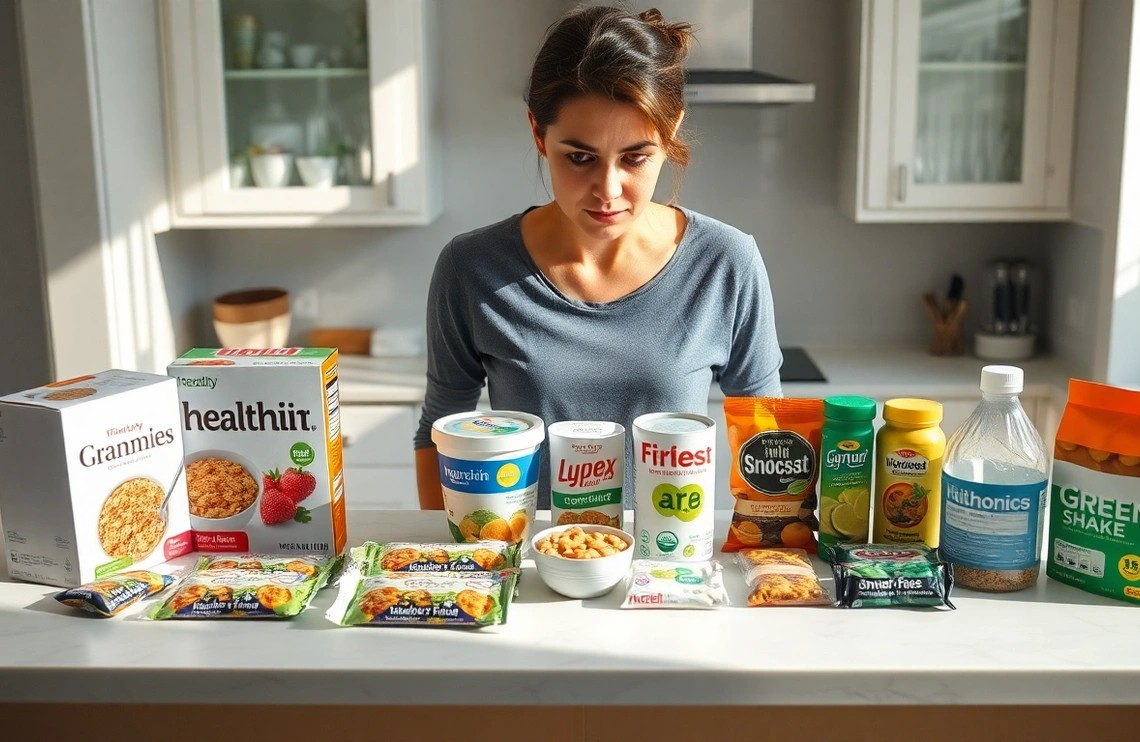
Are healthy packaged foods actually making you gain weight? More than 70% of foods sold in US grocery stores are ultra-processed, and these products contribute about 90% of total calories from added sugars. Even foods marketed as healthy options can be loaded with hidden sugars, seed oils, and refined ingredients that trigger weight gain. In this article, we’ll uncover what are processed foods, how to identify what are highly processed foods on your shelf, and why those “diet-friendly” snacks might be sabotaging your metabolism and waistline.
What Are ‘Healthy’ Packaged Foods and Why They’re Misleading
Walk down any grocery aisle and you’ll see packages screaming “natural,” “low-fat,” “multigrain,” and “sugar-free.” These labels seem helpful at first glance, but they’re often designed to mislead you into buying products that sabotage your weight loss goals.
The marketing of health claims on packaged foods
Food manufacturers know exactly what catches your eye. Front-of-package labels are strategically crafted to grab your attention with health-related claims that may not accurately reflect what’s actually inside. In fact, research from 2020 shows that these front labels create a “halo effect,” leading you to perceive even unhealthy products as healthier, which influences your purchasing choices regardless of the food’s actual nutritional quality.
The supermarket is packed with misleading marketing tactics. Cholesterol-free produce, gluten-free water, natural soda, and non-GMO carrots appear on shelves across the United States. These claims exploit gaps in your understanding. Cholesterol only exists in animal-based products, so produce should never contain it anyway. Water obviously doesn’t contain gluten, which is a protein found in wheat, barley, and rye. Companies use these meaningless claims to justify higher prices and create an illusion of superior health benefits.
How food labels can deceive consumers
Label claims fall into two categories: regulated and non-regulated by the FDA. Regulated claims must meet specific government criteria, but non-regulated claims get applied inconsistently to make you think one product beats another when it might not.
Here’s what those common claims actually mean:
- Low-fat: Fat gets reduced, but manufacturers add more sugar to compensate for lost flavor and texture[2]. Some snacks claim less fat than potato chips but pack more salt or additives.
- Light: Products are processed to reduce calories or fat, but check if sugar was added instead.
- Multigrain: Sounds healthy but simply means more than one grain type, likely refined grains unless marked as whole grain[2].
- Natural: No official FDA definition exists for this term[5]. Manufacturers can slap this label on soda, chips, and foods you should limit.
- No added sugar: Products like 100% fruit juice remain naturally high in sugar even without added sweeteners.
- Made with whole grains: The product may contain negligible amounts unless whole grains appear in the first three ingredients[2].
- Gluten-free: Doesn’t equal healthy. Many gluten-free foods are highly processed and loaded with unhealthy fats and sugar.
- Sugar-free: Means less than 0.5 grams of sugar per serving, but tells you nothing about overall nutritional quality.
Sugar hides under countless names on ingredient lists. Manufacturers add multiple types of sugar to list healthier ingredients first while burying sugar references further down.
Common misconceptions about processed foods
The definition of processed food varies widely. The USDA defines it as any raw agricultural commodity that underwent washing, cleaning, cutting, heating, pasteurizing, cooking, canning, freezing, or packaging. By this standard, virtually all supermarket foods are processed to some degree.
That’s why distinguishing between processing levels matters. The NOVA classification system separates foods into categories from minimally processed to ultra-processed. Even apples in the produce aisle undergo four or more processing steps before reaching you. Similarly, yogurt falls into different categories depending on added ingredients. Plain yogurt is minimally processed, but fruited yogurt with added sweeteners could be processed or ultra-processed.
Processing destroys or removes nutrients. Peeling fruits, vegetables, and whole grains strips away plant nutrients and fiber. Heating or drying foods eliminates certain vitamins and minerals. Food manufacturers add back some lost nutrients, but they can’t recreate the food’s original form.
Hidden Sugars in Healthy Foods: Where They’re Really Hiding
Sugar sneaks into foods you’d never suspect. Understanding where manufacturers hide it requires knowing the difference between sugars your body can handle and those that trigger weight gain.
Natural vs. added sugars in packaged foods
Natural sugars exist in whole foods like fruit, vegetables, and dairy products. These sugars come packaged with fiber, vitamins, minerals, and other nutrients that slow digestion and keep blood glucose stable. Sugar in milk, fruit, and vegetables doesn’t count as free sugars.
Added sugars tell a different story. These include any sugars or syrups added during food processing, packaged sweeteners like table sugar, and sugars from honey, syrups, and concentrated fruit juices. Your body doesn’t need added sugars to function properly. They contribute zero nutritional benefit but pack on calories that lead to weight gain.
The American Heart Association recommends women limit added sugar to 25 grams per day, while men should stay under 37.5 grams. One candy bar can blow past these limits with around 30 grams of added sugar.
Low-fat foods and their sugar content
Low-fat products seem like smart choices for weight loss. Research reveals the opposite. Studies show that low-fat and non-fat versions contain higher sugar amounts than regular versions of the same products. Manufacturers strip out fat, then compensate by adding sugar to improve taste.
Breakfast cereals and granola bars
Cereals marketed as healthy or whole grain pack 10-20 grams of sugar per serving. Some contain 12 grams, or 3 teaspoons of sugar, in just a small 34-gram serving. Choose cereals with less than 5 grams of sugar per serving instead.
Granola carries a health halo but delivers the opposite. Plain oats are balanced, but granola combines them with nuts and honey or other sweeteners. The result: 100 grams of granola contains 400-500 calories and nearly 5-7 teaspoons of sugar.
Yogurt and protein bars
Low-fat yogurt can contain over 45 grams of sugar in a single cup, exceeding the daily limit for both men and women in one serving. Flavored yogurt typically ranges from 15-30 grams of sugar, almost matching a soda.
Protein bars appear to be healthy snacks. Many contain around 20 grams of added sugar, putting their nutritional content on par with candy bars.
How to read labels for hidden sugars
Nutrition labels now separate total sugars from added sugars. The Daily Value for added sugars is 50 grams per day based on a 2,000 calorie diet. Look for products with 5% DV or less for added sugars (considered LOW), and avoid those with 20% DV or more (considered HIGH).
Check the ingredients list. Items appear in descending order by weight, so sugar near the top signals high content. Manufacturers use over 50 different names for sugar, including sucrose, dextrose, maltose, high-fructose corn syrup, barley malt, agave syrup, maple syrup, honey, fruit juice concentrate, molasses, and treacle[28]. Watch for multiple sugar types listed separately, as this disguises total sugar content.
Seed Oils and Inflammation: The Connection to Weight Gain
Seed oils represent another category of ingredients hiding in packaged foods that claim to be healthy. Understanding what these oils are and how they affect your body reveals why certain “nutritious” products might be contributing to weight gain.
What are seed oils and why they’re in everything
Seed oils are extracted from plant seeds through modern industrial processes using high pressure, high heat, and chemical solvents. This refining process bleaches, refines, and heats the seeds to make them usable, but consequently strips away natural antioxidants and nutrients. The most common seed oils include soybean oil, sunflower oil, corn oil, canola oil, cottonseed oil, safflower oil, grapeseed oil, and rice bran oil. Social media wellness influencers call these the “Hateful Eight”.
These oils appear everywhere because they’re affordable, easy to cook with, and mildly flavored. You’ll find them in packaged foods, frozen meals, whole-grain crackers, protein shakes, dressings, sauces, and even chocolate. About 20% of the average American’s calories now come from highly refined seed oils, particularly soybean, sunflower, corn, and canola oils.
How omega-6 fatty acids affect metabolism
Seed oils contain extremely high levels of omega-6 polyunsaturated fatty acids. While your body needs small amounts of omega-6s, the ratio matters. The ideal omega-6 to omega-3 ratio should be 2:1 or 1:1, but most people in the United States consume a ratio of 10:1 or even 20:1.
This shift has driven omega-6 linoleic acid intake from about 1-2% of calories (historically considered optimal) to 6-10% or more. Excess linoleic acid accumulates in tissues and cell membranes, where it becomes prone to oxidation. Research suggests this change in dietary fatty acid composition, independent of total caloric intake and total fat intake, may contribute to the obesity epidemic. Studies show omega-3 and omega-6 fats play different roles in adipogenesis, lipid homeostasis, and systemic inflammation, resulting in divergent effects on body fat growth.
Common seed oils to avoid
In reality, the bigger issue isn’t the oils themselves but where you’re consuming them. Most seed oils reach your mouth through deep-fried foods, fast food, and packaged snacks. These ultra-processed foods tend to be high in sodium, refined carbohydrates, and added sugars, providing little nutritional benefit.
The link between seed oils and belly fat
The connection between seed oils and belly fat remains debated in scientific research. The rise in seed oil consumption has paralleled increases in obesity and chronic disease, but this correlation could be caused by other factors. Evidence shows that harms from ultra-processed junk food have more to do with calories, added sugar, sodium, and saturated fat than with seed oils specifically. However, seed oils oxidize easily when exposed to heat, light, and air, generating harmful oxidation products during cooking or frying.
Ultra-Processed Foods and Their Impact on Your Body
Ultra-processed foods now account for nearly 60% of US adults’ calorie consumption, and among children that portion reaches close to 70%. These foods include packaged snacks, sodas, frozen pizzas, sweetened cereals, and instant soups. What separates them from other processed foods comes down to their ingredients and manufacturing methods.
What makes food ultra-processed
Ultra-processed foods contain one or more ingredients you wouldn’t find in a typical kitchen. These industrial formulations include chemical-based preservatives, emulsifiers, colorings, flavor enhancers, bulking agents, and gels. Food manufacturers assemble these substances through complex industrial processing, creating hyper-palatable products designed for immediate consumption. Beyond added ingredients, ultra-processed foods are lower in fiber, micronutrients, and phytochemicals. They contain macro- and micronutrients associated with poor metabolic health, including saturated fats, refined carbohydrates, and energy-dense components.
How ultra-processed foods trigger insulin spikes
Research shows higher ultra-processed food consumption increases fasting blood glucose, insulin, and the homeostatic model assessment for insulin resistance. In fact, consuming more ultra-processed foods closely links to higher blood sugar levels in people with Type 2 diabetes. For participants not on insulin therapy, a diet with 10% more ultra-processed food was associated with HbA1C levels that were 0.28 percentage points higher. Conversely, those with 10% more minimally processed food had HbA1C levels 0.30 percentage points lower.
Among young adults, a 10% increase in ultra-processed food consumption was associated with a 64% higher risk for prediabetes and a 56% higher risk for problems with glucose regulation.
Why you feel hungry after eating packaged snacks
Food companies formulate products to what’s known as the “bliss point,” the precise combination of sugar, salt, and fat to maximize palatability and encourage overconsumption. Regular intake of ultra-processed hyperpalatable snacks can increase your preference for these foods, leading to changes in eating behaviors and decreased intake of healthful foods. Research found that participants on an ultra-processed diet ate about 500 more calories per day and gained about 2 pounds more than those on an unprocessed diet over two weeks.
The gut microbiome connection
Regular consumption of ultra-processed foods negatively affects both gut microbiota and metabolic profiles, with significant reductions in advantageous species. Food additives commonly added to ultra-processed foods, including emulsifiers, sweeteners, colors, and microparticles, affect the gut microbiome, intestinal permeability, and intestinal inflammation. Without fiber for gut microbes to feed on, they starve or may start eating the organ’s mucus lining, increasing susceptibility to pathogens and inflammation.
Refined carbohydrates in seemingly healthy foods
White bread, pastries, sodas, and other highly processed foods contain easily digested carbohydrates that contribute to weight gain and promote diabetes. Men gained around 2.2 pounds of fat mass while on an ultra-processed diet compared to an unprocessed diet, regardless of whether they consumed extra calories. The processing aspect, not overeating, was to blame for the weight gain.
Which Healthy-Looking Packaged Foods Are Actually Making You Gain Weight
Products marketed as nutritious options often deliver the opposite results. Here’s what’s actually in those health-focused packages.
Protein bars and meal replacement shakes
Most commercial protein bars contain 15 to 25 grams of sugar per bar. Some deliver upwards of 350 calories and use high fructose corn syrup as a sweetener. Research suggests daily ingestion of protein bars increased overall energy intakes and may impact body mass over time. Meal replacement shakes can support weight loss when properly used, but many contain added sugars and hydrogenated oils.
Sugar-free and diet foods
Artificial sweeteners range from 200 to 13,000 times sweeter than real sugar. This tricks your brain into thinking you’re eating sugar, triggering cravings that make sticking to your eating plan harder.
Packaged breakfast foods
Granola, instant oatmeal, and breakfast cereals are frequently sweetened with sugar, honey, or added sugars.
Healthy frozen meals
Around 70% of sodium people consume comes from prepackaged, processed, and restaurant foods. Choose frozen meals with less than 600 milligrams of sodium per serving.
Low-fat snacks and crackers
Some crackers contain worryingly high amounts of salt. Check labels and choose options with 0.3 grams or less per 100 grams.
Flavored coffee drinks and smoothies
Many flavored coffee drinks tally up to 500 calories in one portion. With cream, syrup, and flavorings, they pack as many calories as a meal without providing much nutrition.
Conclusion
All things considered, those “healthy” packaged foods might be working against your weight loss goals. We’ve shown you how hidden sugars, seed oils, and ultra-processed ingredients sabotage your metabolism, trigger insulin spikes, and keep you hungry even after eating.
The good news? You now know how to spot these culprits. Read ingredient lists carefully, watch for multiple sugar names, and choose whole foods over packaged alternatives whenever possible. Your body will respond quickly once you cut out these misleading products.
Essentially, the healthiest foods don’t need clever marketing claims because their benefits speak for themselves.
Key Takeaways
Understanding what’s really in “healthy” packaged foods can transform your weight loss journey and help you make informed choices that support your metabolism.
• Over 70% of grocery store foods are ultra-processed, contributing 90% of added sugar calories that trigger weight gain and insulin spikes.
• “Healthy” labels like low-fat, natural, and sugar-free often mask hidden sugars, with manufacturers adding sweeteners to compensate for removed fats.
• Seed oils in packaged foods create inflammatory omega-6 to omega-3 ratios of 20:1 instead of the optimal 2:1, potentially contributing to belly fat accumulation.
• Ultra-processed foods are engineered to hit the “bliss point” of sugar, salt, and fat, making you eat 500 more calories daily and gain weight.
• Read ingredient lists for multiple sugar names and choose whole foods over packaged alternatives to avoid metabolism-sabotaging additives and preservatives.
The healthiest approach is simple: if a food needs extensive marketing claims to appear healthy, it probably isn’t. Focus on whole, minimally processed foods that don’t require clever packaging to prove their nutritional value.
FAQs
Q1. How do sugars hide in packaged foods under different names?
Sugar appears on ingredient labels under many different names beyond just “sugar.” Common aliases include dextrose, sucrose, high fructose corn syrup, maltose, fructose, barley malt, agave syrup, maple syrup, honey, fruit juice concentrate, molasses, and treacle. Manufacturers often use multiple types of sugar in a single product, listing them separately to make healthier ingredients appear first on the label while disguising the total sugar content.
Q2. Which breakfast foods marketed as healthy actually contain excessive sugar?
Many breakfast cereals labeled as healthy or whole grain contain 10-20 grams of sugar per serving, with some packing 12 grams (3 teaspoons) in just a small 34-gram portion. Granola, despite its health halo, delivers 400-500 calories and nearly 5-7 teaspoons of sugar per 100 grams. Flavored yogurt typically contains 15-30 grams of sugar, almost matching the sugar content of a soda.
Q3. What makes ultra-processed foods different from other processed foods?
Ultra-processed foods contain industrial ingredients you wouldn’t find in a typical kitchen, including chemical-based preservatives, emulsifiers, colorings, flavor enhancers, bulking agents, and gels. They’re manufactured through complex industrial processes and are lower in fiber, micronutrients, and phytochemicals. These foods are specifically engineered to hit the “bliss point” of sugar, salt, and fat to maximize palatability and encourage overconsumption.
Q4. Why do seed oils appear in so many packaged foods?
Seed oils like soybean, sunflower, corn, and canola oil are used extensively in packaged foods because they’re affordable, easy to cook with, and have a mild flavor. They’re found in frozen meals, whole-grain crackers, protein shakes, dressings, sauces, and even chocolate. About 20% of the average American’s calories now come from these highly refined seed oils.
Q5. How do low-fat foods contribute to weight gain despite having less fat?
Low-fat and non-fat products often contain higher amounts of sugar than their regular versions. When manufacturers remove fat from foods, they compensate by adding sugar to improve taste and texture. This means that choosing low-fat options can actually lead to consuming more added sugars, which contribute zero nutritional benefit but add calories that can lead to weight gain.
Q6. Are all packaged foods unhealthy?
No. Some packaged foods like plain oats, nuts, frozen vegetables, curd, and minimally processed foods can be healthy. The problem usually starts with ultra-processed foods containing hidden sugars, refined flour, seed oils, artificial additives, and preservatives.
Q7. What are ultra-processed foods?
Ultra-processed foods are industrially manufactured products made with refined ingredients, additives, flavor enhancers, and preservatives. Examples include chips, flavored cereals, packaged juices, instant noodles, protein bars, and many “diet” snacks.
Q8. Why do “healthy” packaged foods still cause weight gain?
Many healthy-looking foods contain hidden sugars, refined carbohydrates, unhealthy fats, and high calories. They are designed to be highly palatable, which can increase cravings and overeating.
Q9. How can I identify hidden sugars on food labels?
Sugar may appear under different names like corn syrup, maltose, fructose, dextrose, cane juice, sucrose, or rice syrup. Checking the ingredient list is often more useful than only looking at the “sugar” number.
Q10. Are seed oils harmful?
Seed oils themselves are not always harmful, but excessive consumption of highly processed omega-6-rich oils combined with poor diet quality may contribute to inflammation and metabolic imbalance in some individuals.
Q11. Are protein bars healthy for weight loss?
Not always. Many protein bars contain large amounts of sugar alcohols, syrups, artificial flavors, and calories. Some are closer to candy bars than real health foods.
Q12. Why do packaged foods make me hungry again quickly?
Ultra-processed foods are often low in fiber and protein but high in refined carbohydrates. This can cause rapid blood sugar spikes followed by crashes, leading to early hunger and cravings.
Q13. Is “low-fat” food good for losing weight?
Not necessarily. Many low-fat products compensate for reduced fat by adding sugar, starches, or artificial ingredients, which may increase calorie intake and hunger.
Q14. Can processed foods increase inflammation?
Frequent intake of ultra-processed foods may increase chronic low-grade inflammation due to excess sugar, unhealthy fats, additives, and poor nutrient quality. This may affect weight, joints, energy levels, and metabolic health.
Q15. What is the best way to reduce ultra-processed foods?
Focus more on whole foods like fruits, vegetables, pulses, eggs, nuts, yogurt, fish, and home-cooked meals. Reading ingredient labels and avoiding foods with long artificial ingredient lists can also help.

Dr. Manu Mengi is a best orthopedic doctor in Mohali, specializing in joint pain, arthritis, and sports injuries. With qualifications in orthopedics and advanced training in joint replacement, he provides effective care for bone and joint conditions, helping patients improve mobility and manage pain with the right treatment approach.