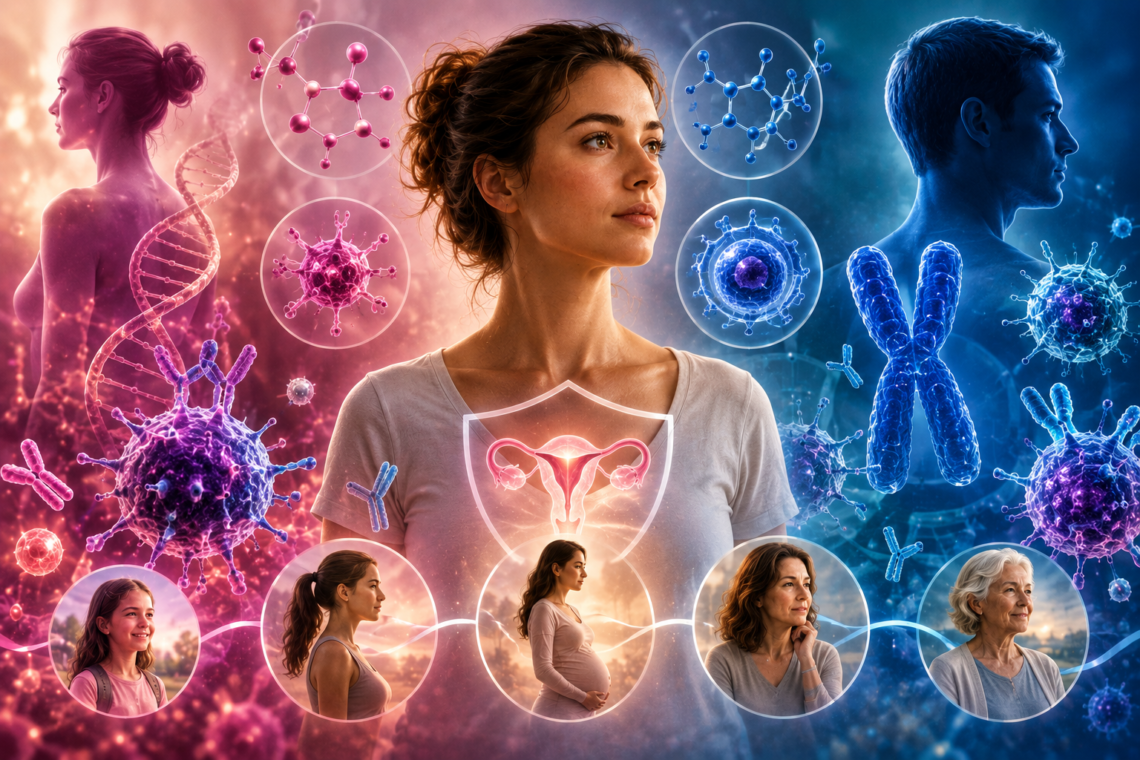
What Are Autoimmune Diseases
Why do autoimmune diseases affect women more than men? The answer lies in a complex interplay between hormones and immunity. About 75% of people with autoimmune illnesses are women, and over 80% of autoimmune disorder patients are female. Women face up to a fourfold increase in risk for autoimmune disease compared to men. This striking gender gap isn’t coincidental. Estrogen and immune system interactions create stronger immune responses in women, but this advantage comes with a steep price. In this article, I’ll explore the hormone immunity connection, examine how estrogen, progesterone, and testosterone influence autoimmune risk, and uncover why women’s biology creates unique vulnerabilities to conditions like lupus and rheumatoid arthritis.
Why Women Are More Affected by Autoimmune Disorders
Statistics on autoimmune diseases in women
The numbers paint a stark picture of gender disparity in autoimmune disorders. Up to 50 million people in the U.S. live with an autoimmune disease. Four of every five people diagnosed with an autoimmune disease are female. Autoimmune diseases present with a clear gender bias, occurring at a rate of 2 to 1 among women. Nearly 80% of autoimmune disease cases occur in women, particularly during their reproductive years.
The gap becomes even more pronounced when examining specific conditions. Women face up to a fourfold increase in risk for autoimmune disease compared to men. This disparity isn’t a statistical anomaly. It reflects fundamental biological differences between male and female immune systems that researchers are still working to fully understand.
Common Autoimmune Diseases in Women
Some autoimmune disorders show dramatically skewed female-to-male ratios:
- Sjögren’s syndrome: 9:1 or as high as 19:1
- Lupus: 9:1[11]
- Hashimoto’s disease: 9:1
- Rheumatoid arthritis: 3:1
- Multiple sclerosis: 2:1
Other conditions significantly more prevalent among women include autoimmune thyroid diseases like Graves’ disease, scleroderma, and celiac disease. Rheumatoid arthritis is not only more common in women but also more severe.
Understanding the immune system differences between men and women
Women have two X chromosomes, while men have one X and one Y. The X chromosome carries a high number of genes responsible for immune regulation. In women, gene duplication and sometimes gene overexpression from the second X chromosome may trigger autoimmune reactions.
Women are biologically designed to protect future generations, meaning their immune systems are naturally stronger and more reactive. This helps them better fight infections compared to men. However, an immune system that is too strong is more likely to malfunction and attack the body’s own tissues. Males and females differ in their immunological responses to foreign and self-antigens and show distinctions in innate and adaptive immune responses.
By the same token, women’s immune systems offer superior protection against pathogens but create a higher risk of misfiring against the body itself.
The Hormone Connection Explained
Estrogen and immune system activation
Estrogen acts on all cellular subsets of the immune system through receptor-dependent and independent mechanisms. The hormone enhances immune surveillance by modulating neutrophils, macrophages, dendritic cells, T cells, and B cells. Estrogen receptors are widely dispersed in many immunomodulatory cells and regulate immune cell function.
The hormone’s effect on T cells varies by subset. Estrogen modulates IFNγ-secreting Th1 cells by enhancing IFNγ expression. High estrogen levels, such as during pregnancy, skew the immune response from Th1 to Th2. This shift has protective effects in some autoimmune conditions like multiple sclerosis and rheumatoid arthritis, since estrogen promotes Treg expansion and activation.
For B cells, estrogen increases plasma cell and autoantibody-producing cell numbers. This enhancement of humoral immunity partly explains why women mount stronger antibody responses but also face higher autoimmune risk. The outcome varies depending on estrogen levels, cell type, activation state, and local environment.
Progesterone’s protective role
Progesterone acts in an immunosuppressive way, favoring a Th2-like cytokine profile. The hormone inhibits inflammatory innate immune responses by suppressing macrophage and dendritic cell activation. When bound to its receptor, progesterone interferes with the NF-κB pathway, a key driver of inflammation.
Progesterone decreases production of proinflammatory cytokines like TNF-α, IFN-γ, and IL-12 while increasing anti-inflammatory IL-10. The hormone skews naive T cells away from Th1 responses toward Th2 responses, with increased IL-4, IL-5, and IL-10 production. During pregnancy, high progesterone levels shift the immune response toward a CD4+ Treg phenotype.
Testosterone’s protective effect on immunity
Men with relatively high testosterone levels benefit less from influenza vaccination than men with lower testosterone and women. Women had a generally stronger antibody response to the vaccine than men, but men with low testosterone showed responses equivalent to women.
Testosterone interacts with a gene cluster called Module 52 in a way that dampens immune response. In high-testosterone men, elevated Module 52 gene activity correlated with reduced post-vaccination antibody levels. Several Module 52 genes accelerate differentiation of cells that suppress rather than foster immune response.
Cortisol and stress response in autoimmune conditions
Cortisol plays a central role in immune regulation through the HPA axis. In acute stress, cortisol enhances immune surveillance. However, chronic stress leads to sustained cortisol elevation, suppressing immune function by inhibiting T-cell activity, reducing cytokine production, and impairing antibody responses.
Prolonged cortisol exposure leads to glucocorticoid resistance, where immune cells become less responsive to cortisol’s anti-inflammatory effects[38]. This results in persistent inflammation despite cortisol presence. Chronic stress can also cause cortisol depletion over time, and these low levels fail to control inflammation in autoimmune diseases, exacerbating symptoms.
Hormonal Fluctuations Throughout a Woman’s Life
Puberty and autoimmune disease onset
Puberty marks a critical turning point where disease susceptibility changes dramatically. Before puberty, multiple sclerosis affects males and females equally. After puberty, MS becomes two to three times more common in females. Allergic asthma shows the opposite pattern: prevalence decreases in males while increasing in females after puberty.
Girls with premature puberty face additional risks. A quarter of individuals with premature puberty also presented with autoimmune thyroiditis. Puberty may accelerate onset of Type 1 diabetes in genetically susceptible females, mediated by estrogen’s effect on the Interleukin-6 promoter.
Pregnancy and autoimmune diseases: improvement or flare?
Pregnancy’s impact on autoimmune conditions varies widely. Rheumatoid arthritis and multiple sclerosis may temporarily improve during pregnancy, while lupus often worsens. Women with lupus and antiphospholipid syndrome are five times more likely to experience preeclampsia, preterm birth, and stillbirth.
Postpartum flares represent the most common time for disease activation. Approximately one of five babies born to women with myasthenia gravis is born with the disorder, though muscle weakness in the baby is usually temporary.
Early Warning Signs You Should Not Ignore
Estrogen decline during menopause can trigger new autoimmune diseases or worsen existing ones. Early menopause may induce rheumatoid arthritis onset and worsen RA symptoms, possibly due to the loss of estrogen’s immunomodulatory effects. Women with multiple sclerosis notice increased fatigue and potential acceleration of disease progression as estrogen declines.
Why autoimmune symptoms flare during the menstrual cycle
Women with rheumatoid arthritis and systemic lupus erythematosus experience disease flares that correlate with their menstrual cycles, occurring just prior to or at the start of menses. During the follicular phase, increasing estrogen levels cause an immune response with increasing antibodies and inflammation. The late luteal phase through menstruation brings a worsening of autoimmune symptoms with increased inflammatory responses.
Beyond Hormones: The X Chromosome Factor
What role does the X chromosome play in autoimmune disorders
Women carry two X chromosomes while men have one X and one Y. Each female cell must shut down one X chromosome to prevent lethal protein overproduction through a process called X-chromosome inactivation. A molecule called Xist achieves this shutdown by coating sections of one X chromosome.
In reality, this protective mechanism creates vulnerability. Xist consists of long noncoding RNA that binds with proteins and DNA fragments, forming complexes that resemble autoimmune targets. These RNA-protein-DNA complexes can trigger strong immune responses. Research in male mice engineered to produce Xist showed elevated autoantibody levels and extensive tissue damage.
Genetic factors in female autoimmune risk
Several immune-related genes on the X chromosome escape inactivation, contributing to heightened immune reactivity in females. The VGLL3 gene on the X chromosome links directly to inflammation. When X-chromosome inactivation maintenance is disrupted, genes like TLR7 become expressed at higher levels from the inactive X chromosome.
Furthermore, blood samples from autoimmune patients revealed autoantibodies targeting many Xist-associated complexes. Some autoantibodies were specific to particular disorders, indicating potential for early disease identification.
How biology creates double the vulnerability
Susceptibility stems from the gene dosage effect of having two X chromosomes. Turner’s syndrome patients with X chromosome monosomy show high prevalence of juvenile arthritis, thyroiditis, inflammatory bowel diseases, and diabetes.
Conclusion
Women’s biology creates a double-edged sword. Stronger immune systems protect against infections but increase autoimmune vulnerability. Hormonal fluctuations throughout life, combined with the X chromosome factor, explain why women account for nearly 80% of autoimmune cases. This knowledge empowers you to recognize patterns in your own health. Without a doubt, understanding how estrogen, progesterone, and your menstrual cycle affect immunity helps you anticipate flares and work with your healthcare provider to manage symptoms more effectively.
Key Takeaways
Understanding why autoimmune diseases disproportionately affect women reveals crucial insights about biology, hormones, and health management that every woman should know.
• Women account for nearly 80% of autoimmune disease cases, with some conditions like lupus and Sjögren’s syndrome showing 9:1 female-to-male ratios due to biological differences.
• Estrogen enhances immune responses, making women better at fighting infections but more prone to autoimmune attacks on their own tissues.
• Hormonal fluctuations during menstrual cycles, pregnancy, and menopause directly trigger autoimmune symptom flares and disease progression changes.
• The X chromosome carries immune-regulating genes, and having two X chromosomes creates genetic vulnerability through overactive immune responses.
• Recognizing these hormonal patterns empowers women to anticipate symptom changes and collaborate more effectively with healthcare providers for better disease management.
This biological understanding transforms how women can approach their health, moving from reactive symptom management to proactive awareness of their body’s unique immune patterns throughout different life stages.
FAQs
Q1. Why are women more likely to develop autoimmune diseases than men?
Women face up to a fourfold increase in autoimmune disease risk due to several biological factors. Their stronger immune systems, influenced by estrogen and the presence of two X chromosomes, make them better at fighting infections but also more prone to immune system misfiring. Hormonal fluctuations throughout life, combined with immune-regulating genes on the X chromosome, create unique vulnerabilities that explain why nearly 80% of autoimmune cases occur in women.
Q2. How do hormones contribute to autoimmune disease development in women?
Estrogen enhances immune responses by activating various immune cells, which helps fight infections but increases the risk of the immune system attacking the body’s own tissues. Progesterone acts as an immunosuppressant and provides some protective effects, while testosterone in men offers protective benefits against autoimmune conditions. These hormonal differences, particularly the immune-activating effects of estrogen during reproductive years, significantly contribute to women’s higher autoimmune disease rates.
Q3. Do autoimmune symptoms change during different stages of a woman’s life?
Yes, hormonal fluctuations throughout a woman’s life significantly impact autoimmune symptoms. Many autoimmune diseases emerge after puberty when estrogen levels rise. During pregnancy, some conditions like rheumatoid arthritis may improve while others like lupus often worsen. Menopause can trigger new autoimmune diseases or worsen existing ones due to declining estrogen levels. Even monthly menstrual cycles can cause symptom flares, typically occurring just before or at the start of menstruation.
Q4. What role does the X chromosome play in autoimmune disease risk?
Women have two X chromosomes compared to men’s one, and the X chromosome carries numerous immune-regulating genes. During X-chromosome inactivation, a molecule called Xist creates complexes that can trigger autoimmune responses. Additionally, some immune-related genes on the X chromosome escape inactivation, leading to heightened immune reactivity in women. This genetic double dose creates increased vulnerability to autoimmune conditions.
Q5. Which autoimmune diseases show the highest female predominance?
Sjögren’s syndrome shows the most dramatic gender disparity with a 9:1 to 19:1 female-to-male ratio. Lupus and Hashimoto’s disease both affect women at a 9:1 ratio, while rheumatoid arthritis occurs three times more often in women than men. Multiple sclerosis affects women at a 2:1 ratio. These conditions not only occur more frequently in women but often present with more severe symptoms as well.
Q6. Why do autoimmune diseases affect women more than men?
Women have a more active immune system due to hormonal influences (especially estrogen) and genetic factors like two X chromosomes. While this stronger immunity helps fight infections, it also increases the risk of the immune system mistakenly attacking the body’s own tissues.
Q7. How does estrogen influence the immune system?
Estrogen enhances immune activity by stimulating immune cells and antibody production. This heightened response can sometimes overshoot, increasing susceptibility to autoimmune diseases such as lupus and rheumatoid arthritis.
Q8.Does testosterone protect against autoimmune diseases?
Yes, testosterone generally has an immunosuppressive effect. It dampens immune responses, which may explain why men have a lower risk of developing many autoimmune conditions compared to women.
Q9. Why is lupus more common in women?
Lupus is strongly influenced by estrogen, which amplifies immune responses and antibody formation. Additionally, genetic factors linked to the X chromosome contribute to the higher prevalence of lupus in women.
Q10. Can pregnancy affect autoimmune diseases?
Pregnancy can either improve or worsen autoimmune conditions. Some diseases like rheumatoid arthritis may improve due to immune suppression, while others like lupus may flare due to hormonal and immune changes.
Q11. Do autoimmune diseases worsen during menstruation?
Yes, some women experience symptom flares around menstruation due to hormonal fluctuations, particularly changes in estrogen and progesterone levels that influence immune activity.
Q12. Does menopause impact autoimmune diseases?
Menopause leads to a drop in estrogen levels, which can alter immune function. Some autoimmune diseases may improve, while others may worsen or newly appear after menopause.
Q13. What role does the X chromosome play in autoimmunity?
The X chromosome contains many immune-related genes. Women have two X chromosomes, and incomplete inactivation of one X may lead to overexpression of these genes, increasing autoimmune risk.
Q14. Are autoimmune diseases hereditary in women?
Autoimmune diseases are not strictly hereditary but have a genetic predisposition. Women with a family history are at higher risk, especially when combined with hormonal and environmental triggers.
Q15. Can lifestyle factors influence autoimmune diseases in women?
Yes, factors like stress, diet, infections, smoking, and poor sleep can trigger or worsen autoimmune conditions by affecting immune regulation and inflammation levels.
Consult Dr. Manu Mengi, the best orthopedic doctor in Mohali, for all your orthopedic problems.

Dr. Manu Mengi is a best orthopedic doctor in Mohali, specializing in joint pain, arthritis, and sports injuries. With qualifications in orthopedics and advanced training in joint replacement, he provides effective care for bone and joint conditions, helping patients improve mobility and manage pain with the right treatment approach.