Belly fat is not simply a cosmetic concern. Where fat is stored in the body can also matter for health.
Belly fat can include both subcutaneous fat, which sits beneath the skin, and visceral fat, which is stored deeper inside the abdomen around internal organs. Although some body fat is essential for normal health, excess visceral fat has been associated with a range of metabolic and cardiovascular health risks.
In this guide, Dr. Manu Mengi explains the difference between visceral and subcutaneous fat, why abdominal fat distribution matters, how waist measurements can provide useful information, and which sustainable lifestyle habits may help support healthier body composition.
Written by: Dr. Manu Mengi
Specialty: Orthopedic Doctor
Medical Review: Clinical review by Dr. Manu Mengi.
Quick Facts About Visceral Fat
- Belly fat can include both visceral fat and subcutaneous fat.
- Visceral fat is stored deeper inside the abdomen around internal organs. Subcutaneous fat is located beneath the skin.
- Excess visceral fat has been associated with metabolic and cardiovascular health risks.
- Waist measurements can provide useful information about abdominal fat distribution.
- Sustainable physical activity, nutrition, sleep and other lifestyle habits can support healthier body composition.
- You cannot specifically target only belly fat through exercise or diet; overall changes in body fat are influenced by broader lifestyle and health factors.
Table of Contents
- What Is Belly Fat?
- Visceral Fat vs. Subcutaneous Fat
- Why Is Visceral Fat Different?
- Health Problems Associated With Excess Visceral Fat
- Can You Have Visceral Fat at a Normal Weight?
- How Can You Assess Abdominal Fat?
- How to Reduce Excess Visceral Fat
- Exercise and Visceral Fat
- Diet and Visceral Fat
- Sleep, Stress and Belly Fat
- Can You Specifically Burn Belly Fat?
- When Should You Speak With a Doctor?
- Key Takeaways
- Frequently Asked Questions
What Is Belly Fat?
Belly fat refers to fat stored around the abdomen. It includes both visceral fat, which is located deeper inside the abdominal cavity around internal organs, and subcutaneous fat, which lies beneath the skin. Understanding the difference between these two types of fat is important because their location and biological activity are not the same.
Visceral Fat: The Hidden Fat Around Your Organs
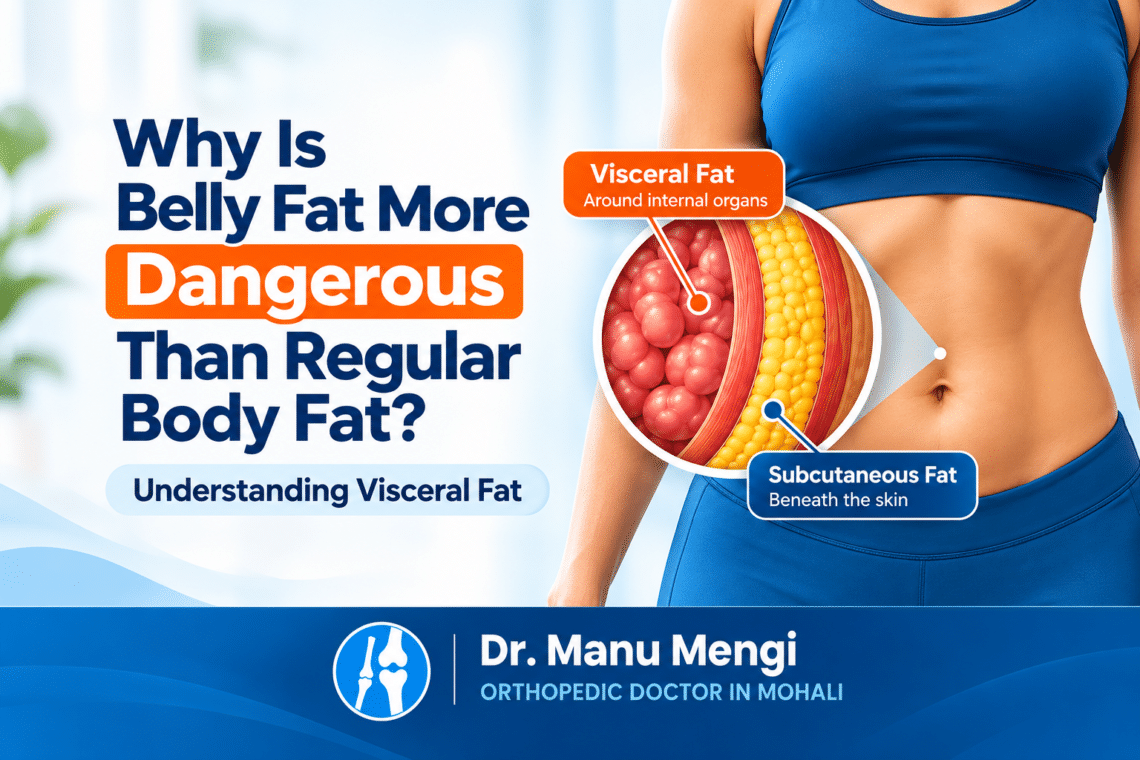
Visceral fat is stored deep inside the abdominal cavity, where it surrounds internal organs such as the liver, kidneys, intestines and stomach. Unlike the fat that can be seen or pinched beneath the skin, visceral fat is located beneath the abdominal muscles and is not directly visible from the outside.
Some amount of visceral fat is normal and helps cushion and protect internal organs. However, excess visceral fat is metabolically active and can influence how the body stores and processes fat. This is one reason why the location of body fat can matter in addition to the total amount of body fat.
Subcutaneous Fat: The Fat Beneath Your Skin
Subcutaneous fat sits just beneath the skin and is the soft, pinchable fat that can be felt on areas such as the abdomen, arms, legs and hips. Unlike visceral fat, it is located outside the abdominal cavity rather than around the internal organs.
Subcutaneous fat has important functions in the body. It provides energy storage, helps cushion the body against physical impact and contributes to insulation and temperature regulation. Having some body fat is therefore normal and necessary for health; the concern is when excess body fat accumulates and contributes to health risks.
Visceral Fat vs. Subcutaneous Fat: What Is the Difference?
Although both types of fat are part of normal body composition, their location and biological characteristics are different. Visceral fat is stored deeper inside the abdomen around internal organs, while subcutaneous fat lies beneath the skin. Understanding this distinction helps explain why excess visceral fat is associated with different health concerns.
| Feature | Visceral Fat | Subcutaneous Fat |
|---|---|---|
| Location | Deep inside the abdomen around internal organs | Beneath the skin |
| Visibility | Not directly visible from outside | Usually visible or pinchable |
| Main role | Provides cushioning around internal organs and is metabolically active | Energy storage, cushioning and insulation |
| Biological activity | More metabolically active and can release hormones and inflammatory substances | Has important normal functions and is generally less metabolically active |
| Health relevance | Excess amounts are associated with metabolic and cardiovascular health risks | Excess body fat can also contribute to health risks |
Why Is Visceral Fat Different?
Visceral fat differs from subcutaneous fat not only because of where it is stored, but also because of how it behaves biologically. It is metabolically active and can release hormones and inflammatory substances that influence processes throughout the body.
Visceral Fat Is Metabolically Active
Visceral fat is metabolically active tissue. Fat cells in this area can release hormones and other signalling molecules that influence how the body handles energy, fat storage and other metabolic processes. This activity helps explain why excess visceral fat is associated with conditions such as insulin resistance and metabolic syndrome.
Visceral fat can also release free fatty acids and other bioactive substances into the circulation. These effects may influence lipid metabolism and other processes involved in cardiovascular and metabolic health.
Visceral Fat and Inflammation
Visceral fat can contribute to a state of chronic, low-grade inflammation by producing inflammatory signalling molecules. Persistent inflammation is one of the mechanisms researchers associate with the health risks linked to excess visceral fat.
Because visceral fat is located close to internal organs and has connections with metabolic processes, its effects can extend beyond the abdomen. Excess visceral fat has therefore been associated with a range of metabolic and cardiovascular health concerns.
Health Problems Associated With Excess Visceral Fat
Excess visceral fat has been associated with several health conditions because of its metabolic and inflammatory activity. The potential concerns extend beyond body shape and may involve cardiovascular, metabolic and other aspects of health.
Heart Disease and Stroke
Excess visceral fat has been associated with cardiovascular health problems. The source material describes links between excess visceral fat, changes in cholesterol and triglyceride metabolism, inflammation and processes that may contribute to cardiovascular disease.
The article also discusses an association between excess visceral fat and stroke risk. These relationships are complex and involve multiple metabolic and inflammatory factors, so visceral fat should be considered one part of overall cardiovascular risk rather than a standalone cause.
Insulin Resistance and Type 2 Diabetes
Excess visceral fat has been associated with insulin resistance, a condition in which the body’s cells respond less effectively to insulin. As insulin resistance develops, the body may need to produce more insulin to help regulate blood glucose levels.
Over time, persistent insulin resistance can contribute to impaired glucose regulation and increase the risk of developing type 2 diabetes. The relationship is influenced by several factors, including overall body composition, diet, physical activity and individual health characteristics.
Metabolic Syndrome
Excess visceral fat is also associated with metabolic syndrome, a combination of health factors that can occur together and increase the risk of cardiovascular and metabolic problems. These factors may include abdominal obesity, elevated blood pressure, abnormal blood lipid levels and impaired glucose regulation.
Because visceral fat can influence inflammation, insulin sensitivity and lipid metabolism, excess abdominal fat may be one part of the broader metabolic picture. However, metabolic health is influenced by multiple factors, so abdominal fat should be considered alongside other clinical measurements and individual risk factors.
Other Potential Health Associations
Excess visceral fat has also been associated with other health conditions in research, including certain cancers and changes in cognitive health. These associations are complex and may involve inflammation, insulin resistance, metabolic changes and other biological pathways.
These findings do not mean that visceral fat directly causes every condition with which it has been associated. Individual health risks depend on multiple factors, including age, genetics, lifestyle, existing medical conditions and overall metabolic health.
Can You Have Visceral Fat at a Normal Weight?
Yes. A person can have visceral fat even when their overall body weight or BMI falls within a normal range. Body weight does not show where fat is distributed, and two people with a similar weight can have very different amounts of abdominal and visceral fat.
This is why looking only at body weight may not provide a complete picture of metabolic health. Factors such as waist circumference, waist-to-hip ratio, body composition and overall lifestyle can provide additional information about abdominal fat distribution and health risk.
How Can You Assess Abdominal Fat?
Waist Circumference
Waist circumference is a simple measurement that can provide useful information about abdominal fat distribution. Because visceral fat is stored deeper inside the abdomen, a larger waist circumference can be a useful indicator of increased abdominal fat and may help identify people who could benefit from further assessment of metabolic health.
Waist circumference should not be interpreted in isolation. Age, sex, ethnicity, body composition and other health factors can influence how the measurement relates to individual health risk. A healthcare professional can interpret the measurement alongside other clinical information.
Waist-to-Hip Ratio
Waist-to-hip ratio compares the circumference of the waist with the circumference of the hips. It provides another way to describe how body fat is distributed and can offer information about whether more fat is concentrated around the abdomen.
Like waist circumference, waist-to-hip ratio is only one part of an overall health assessment. It should be considered alongside factors such as body composition, physical activity, medical history and other clinical measurements rather than being used on its own to determine an individual’s health risk.
Waist-to-Height Ratio
Waist-to-height ratio compares waist circumference with a person’s height. It is another measure that can help describe abdominal fat distribution and may provide useful information about metabolic health.
Like other body measurements, waist-to-height ratio should be interpreted as part of the bigger picture rather than used as a standalone diagnosis. A healthcare professional can consider this measurement alongside waist circumference, body composition, medical history and other relevant health factors.
What These Measurements Can and Cannot Tell You
Waist circumference, waist-to-hip ratio and waist-to-height ratio can provide useful information about body-fat distribution, but they do not directly measure the amount of visceral fat around internal organs. Results should be interpreted in the context of a person’s overall health, body composition and other clinical factors.
If you are concerned about abdominal fat or your metabolic health, a healthcare professional can help determine whether additional assessment is appropriate. These measurements are useful indicators, but they are not a substitute for a complete medical evaluation.
How to Reduce Excess Visceral Fat
Reducing excess visceral fat generally involves improving overall body composition and metabolic health rather than trying to target abdominal fat alone. Sustainable changes in physical activity, nutrition, sleep, stress management and other lifestyle habits can support healthier body-fat distribution over time.
Exercise and Visceral Fat
Regular physical activity can support healthier body composition and may help reduce excess visceral fat over time. Both aerobic activity and resistance training can be useful components of an overall exercise routine. The most appropriate type and amount of exercise can vary depending on a person’s age, fitness level, existing health conditions and physical limitations.
The goal should be consistent, sustainable movement rather than trying to rapidly lose abdominal fat. Activities such as walking, cycling, swimming or other forms of aerobic exercise can be combined with strength-based exercise when appropriate. If joint or musculoskeletal pain makes exercise difficult, an individualized approach may be helpful.
Diet and Visceral Fat
Dietary patterns can influence overall body composition and metabolic health, which may also affect visceral fat. A balanced eating pattern that includes vegetables, fruits, whole grains, legumes, adequate protein and minimally processed foods can support healthier long-term eating habits.
Rather than relying on restrictive diets or trying to eliminate one particular food, the focus should be on sustainable dietary choices and appropriate portion sizes. Limiting excessive intake of highly processed foods, added sugars and excess calories may support healthier body composition over time. Individual nutritional needs can vary, particularly for people with existing medical conditions or specific dietary requirements.
Sleep, Stress and Belly Fat
Sleep and stress can also influence eating patterns, physical activity, body composition and metabolic health. Consistently getting adequate sleep and managing ongoing stress may therefore support healthier lifestyle habits and overall metabolic health.
Poor sleep or prolonged stress should not be viewed as the sole cause of abdominal or visceral fat. Body-fat distribution is influenced by multiple factors, including diet, physical activity, genetics, age and overall health. Focusing on sustainable sleep, stress-management and lifestyle habits is generally more appropriate than looking for a single cause or quick solution.
Can You Specifically Burn Belly Fat?
It is not possible to reliably target fat loss from only one specific area of the body through exercise. Exercises that focus on the abdominal muscles can strengthen those muscles, but they do not necessarily cause fat to be lost specifically from the abdomen.
Reducing overall excess body fat through sustainable changes in physical activity, nutrition, sleep and other lifestyle habits may help reduce abdominal and visceral fat over time. The rate and pattern of fat loss can vary between individuals, and genetics, age, sex and overall health can influence where the body stores and loses fat.
When Should You Speak With a Doctor?
If you are concerned about increasing abdominal fat, changes in body composition or related health risks, it may be appropriate to discuss your concerns with a healthcare professional. An assessment can consider factors such as waist measurements, body composition, medical history, lifestyle and other relevant health information.
You should also seek professional advice if you have persistent or unexplained symptoms, difficulty becoming physically active because of pain, or existing health conditions that may affect your ability to exercise or change your diet safely. Individual circumstances matter, and a healthcare professional can help determine what assessment or guidance may be appropriate.
Key Takeaways
- Visceral fat is stored deep inside the abdomen around internal organs, while subcutaneous fat is located beneath the skin.
- Excess visceral fat is associated with metabolic and cardiovascular health risks, although individual risk depends on multiple factors.
- A person can have visceral fat even when their overall body weight or BMI is within a normal range. Waist circumference and other body measurements can provide useful information about body-fat distribution but do not directly measure visceral fat.
- Sustainable physical activity, balanced nutrition, adequate sleep and healthy lifestyle habits may support healthier body composition over time.
- Spot reduction is not a reliable way to specifically remove belly fat; overall changes in body composition influence abdominal fat loss.
Frequently Asked Questions About Visceral Fat
Can you have visceral fat at a normal weight?
Yes. A person can have visceral fat even when their overall body weight or BMI falls within a normal range. Body weight does not show where fat is distributed, and two people with a similar weight can have different amounts of abdominal and visceral fat.
This is why looking only at body weight may not provide a complete picture of metabolic health. Waist circumference, body composition and other health factors can provide additional information about abdominal fat distribution and related health risk.
What is belly fat?
Belly fat refers to the fat stored around your abdomen. It includes two types: subcutaneous fat, which lies just beneath the skin, and visceral fat, which surrounds internal organs. Visceral fat is the more dangerous type because it is linked to several chronic diseases.
What is the difference between visceral fat and subcutaneous fat?
Subcutaneous fat is the fat you can pinch under your skin. Visceral fat is hidden deep inside the abdomen and wraps around organs such as the liver, intestines, and pancreas. Visceral fat is metabolically active and produces inflammatory substances that increase disease risk.
Why is belly fat considered more dangerous than fat elsewhere in the body?
Unlike fat on the hips or thighs, visceral fat releases hormones and inflammatory chemicals that can lead to insulin resistance, high blood pressure, fatty liver disease, type 2 diabetes, and cardiovascular disease.
How can I tell if I have too much visceral fat?
You cannot determine visceral fat by appearance alone. A large waist circumference is a useful indicator. More accurate measurements include body composition scans such as DEXA, CT, or MRI. Waist-to-height ratio is also a simple and effective screening tool.
What causes excess belly fat?
Several factors contribute to belly fat, including overeating, physical inactivity, insulin resistance, chronic stress, poor sleep, hormonal changes, excessive alcohol intake, aging, and genetics.
Can someone be thin but still have dangerous belly fat?
Yes. This is known as TOFI (Thin Outside, Fat Inside). People with a normal body weight can still accumulate excess visceral fat and have an increased risk of metabolic diseases despite appearing lean.
Does belly fat increase the risk of diabetes?
Yes. Visceral fat is strongly associated with insulin resistance, which is often the first step toward prediabetes and type 2 diabetes. Reducing visceral fat improves insulin sensitivity and lowers diabetes risk.
Is belly fat linked to fatty liver disease?
Yes. Excess visceral fat promotes fat accumulation in the liver, increasing the risk of non-alcoholic fatty liver disease (NAFLD), now commonly referred to as metabolic dysfunction-associated steatotic liver disease (MASLD).
Does stress cause belly fat?
Chronic stress increases cortisol, a hormone that can encourage fat storage around the abdomen. Stress may also lead to emotional eating, poor sleep, and reduced physical activity, all of which contribute to belly fat.
What is the fastest way to reduce visceral fat?
The most effective strategy combines a calorie-controlled, high-protein diet, regular strength training, aerobic exercise, adequate sleep, stress management, and consistency. Crash diets are generally ineffective for long-term fat loss.
Can exercise specifically burn belly fat?
No. Spot reduction is a myth. The body loses fat from multiple areas based on genetics and metabolism. However, regular exercise effectively reduces overall body fat, including visceral fat.
Which foods help reduce belly fat?
Whole foods rich in protein, fibre, healthy fats, vegetables, fruits, legumes, and whole grains support fat loss. Reducing sugary drinks, refined carbohydrates, ultra-processed foods, and excessive alcohol also helps.
Is waist circumference more important than body weight?
In many cases, yes. Waist circumference provides valuable information about abdominal fat and metabolic health that body weight alone cannot. Someone with a normal weight but a large waist may still have an elevated health risk.
Can belly fat be completely eliminated?
A small amount of body fat is essential for normal health. The goal is not to eliminate all belly fat but to reduce excess visceral fat to healthy levels through sustainable lifestyle habits.
How long does it take to lose visceral fat?
Most people begin reducing visceral fat within several weeks of consistent lifestyle changes. Meaningful improvements often occur over two to six months, depending on diet, physical activity, sleep quality, stress levels, and overall health.
About Dr. Manu Mengi
Dr. Manu Mengi is an Orthopedic and Joint Replacement Specialist based in Mohali, Punjab. He specializes in the diagnosis and treatment of joint pain, arthritis, sports injuries, back pain, shoulder pain, fractures, and age-related musculoskeletal conditions. Through evidence-based patient education, Dr. Mengi helps individuals understand how lifestyle, nutrition, exercise, and timely orthopedic care contribute to long-term mobility and healthy aging.
Medical Disclaimer
This article is intended for general educational and informational purposes only. It does not replace professional medical advice, diagnosis, or treatment. Health risks and appropriate lifestyle or exercise recommendations can vary from person to person. If you have persistent symptoms, existing medical conditions, or concerns about your health, consult a qualified healthcare professional for an appropriate evaluation and personalised guidance.

Dr. Manu Mengi is a best orthopedic doctor in Mohali, specializing in joint pain, arthritis, and sports injuries. With qualifications in orthopedics and advanced training in joint replacement, he provides effective care for bone and joint conditions, helping patients improve mobility and manage pain with the right treatment approach.